THE ADVENTURE COLLECTIVE® · Independent discovery and booking for outdoor travel

See Chicago’s skyline from a new angle on a brisk 10-minute helicopter flight. Ideal for first-time flyers who want quick, panoramic views of Willis Tower, Navy Pier and the Museum Campus.
See Chicago’s skyline from a new angle on a brisk 10-minute helicopter flight. Ideal for first-time flyers who want quick, panoramic views of Willis Tower, Navy Pier and the Museum Campus.
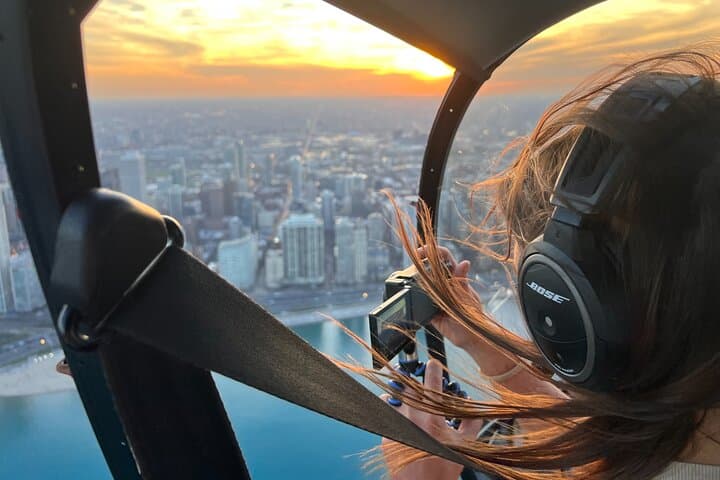
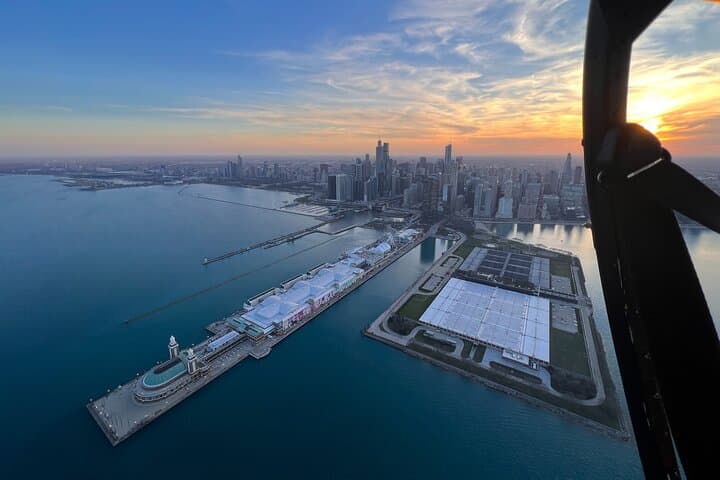
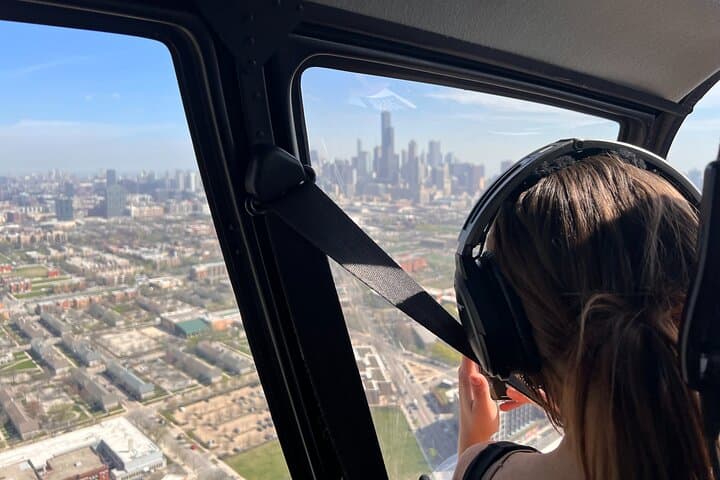
The rotors rise and the city shrinks into a grid of glass and river; within moments you’re three hundred feet over Lake Michigan, the Navy Pier Ferris wheel turning like a small compass and the Chicago River daring you to follow its S-shaped cut through the Loop.
Verified experiences and guided adventures in the surrounding area.
Operated by Fly Heli · Chicago, IL
The rotors rise and the city shrinks into a grid of glass and river; within moments you’re three hundred feet over Lake Michigan, the Navy Pier Ferris wheel turning like a small compass and the Chicago River daring you to follow its S-shaped cut through the Loop.
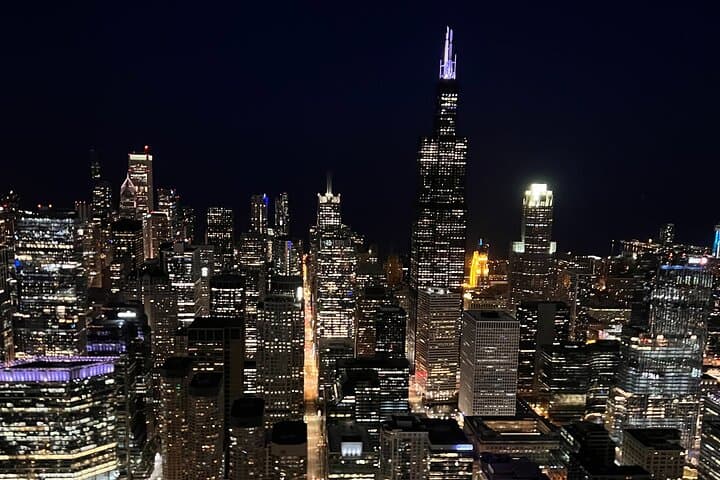
This ten-minute lift is less about distance and more about perspective. From above you see the city that rebuilt itself after the 1871 Great Chicago Fire—an urban laboratory of steel and glass where the early skyscraper experiments of the late 19th century meet modern towers like Willis Tower and the John Hancock Center. Geologically the shoreline that holds Chicago is recent—glacially sculpted lakefronts and reclaimed land that make the city’s bold architecture possible.
Culturally the flight frames Chicago’s civic landmarks: Soldier Field’s colonnades, the museum cluster on the Museum Campus, and the bleached arc of Navy Pier. The river’s bridges lift like welcoming hands; downtown rooftops become stages for the city’s daily theater.
Practical guidance: arrive with government ID, expect a brief safety briefing and weight checks, and plan your photos in the first few minutes when light and angles are best. Weather dictates operations; flights are commonly canceled for wind or storms. For those planning logistics, downtown hotels and the Navy Pier area are the closest staging points. Bring sunglasses and a windproof layer — the helicopter cabin can feel chilly even on warm days. Keep expectations realistic: this is a short, high-impact experience designed to show the skyline’s highlights quickly and memorably. For a compact taste of Chicago from above, it’s hard to beat.
easy.
10 minutes.
No special fitness required; passengers should be able to step into the helicopter and remain seated for the short flight.
Yes—infants are permitted but must sit on an adult’s lap during the flight, per operator policy.
Flights are canceled for unsafe weather; the operator generally refunds cancellations made at least 24 hours prior and will not fly in high winds or storms.
Bookings allow up to three passengers; weight information is collected during booking and at check-in for balance and safety—contact the operator if you have concerns.
Operators typically assist guests with limited mobility to board, but notify them in advance so appropriate assistance can be arranged.
Chicago’s skyline grew rapidly after the Great Fire of 1871, becoming a proving ground for early skyscraper engineering and iconic modern designs.
Helicopter operations can affect urban wildlife and noise levels; choose operators that minimize idling, follow flight corridors, and offset carbon where possible.
Fly Heli operates guided outdoor trips and adventures with an emphasis on safety, stewardship, and memorable experiences.
The rotors rise and the city shrinks into a grid of glass and river; within moments you’re three hundred feet over Lake Michigan, the Navy Pier Ferris wheel turning like a small compass and the Chicago River daring you to follow its S-shaped cut through the Loop.
The rotors rise and the city shrinks into a grid of glass and river; within moments you’re three hundred feet over Lake Michigan, the Navy Pier Ferris wheel turning like a small compass and the Chicago River daring you to follow its S-shaped cut through the Loop.
This ten-minute lift is less about distance and more about perspective. From above you see the city that rebuilt itself after the 1871 Great Chicago Fire—an urban laboratory of steel and glass where the early skyscraper experiments of the late 19th century meet modern towers like Willis Tower and the John Hancock Center. Geologically the shoreline that holds Chicago is recent—glacially sculpted lakefronts and reclaimed land that make the city’s bold architecture possible.
Culturally the flight frames Chicago’s civic landmarks: Soldier Field’s colonnades, the museum cluster on the Museum Campus, and the bleached arc of Navy Pier. The river’s bridges lift like welcoming hands; downtown rooftops become stages for the city’s daily theater.
Practical guidance: arrive with government ID, expect a brief safety briefing and weight checks, and plan your photos in the first few minutes when light and angles are best. Weather dictates operations; flights are commonly canceled for wind or storms. For those planning logistics, downtown hotels and the Navy Pier area are the closest staging points. Bring sunglasses and a windproof layer — the helicopter cabin can feel chilly even on warm days. Keep expectations realistic: this is a short, high-impact experience designed to show the skyline’s highlights quickly and memorably. For a compact taste of Chicago from above, it’s hard to beat.