THE ADVENTURE COLLECTIVE® · Independent discovery and booking for outdoor travel

Play a self-guided ‘heist’ through Millennium Park and the Loop, solving clues at Cloud Gate, Crown Fountain and public sculptures. This 95‑minute city game blends architecture, art history and puzzle-solving—perfect for curious walkers who want a playful way to see Chicago.
Play a self-guided ‘heist’ through Millennium Park and the Loop, solving clues at Cloud Gate, Crown Fountain and public sculptures. This 95‑minute city game blends architecture, art history and puzzle-solving—perfect for curious walkers who want a playful way to see Chicago.
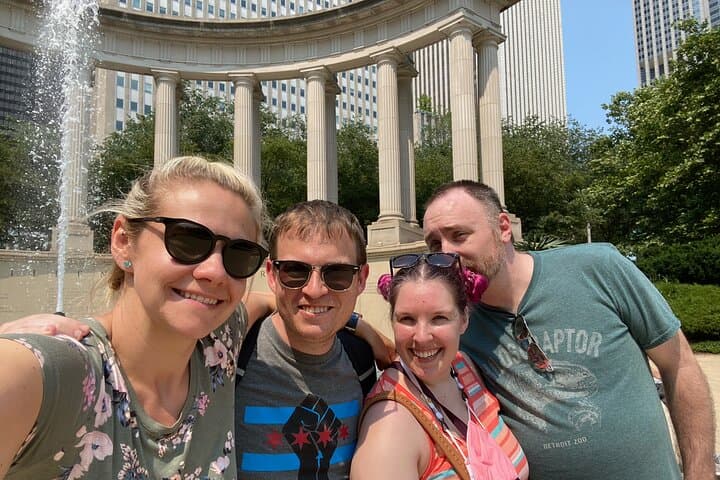
You step out onto the plaza and the city takes its measure of you: glass faces reflecting a sky that moves, stone fountains breathing steam in cold air. The objective feels cinematic—blend in, pass the artwork unnoticed, keep the loot (and your wits). This is less about theft than observation; the game uses Chicago’s public art and civic spaces as a trail of clues that push you from Millennium Park toward the quieter corners of the Loop.
Verified experiences and guided adventures in the surrounding area.
Operated by Questo · Chicago, Illinois
You step out onto the plaza and the city takes its measure of you: glass faces reflecting a sky that moves, stone fountains breathing steam in cold air. The objective feels cinematic—blend in, pass the artwork unnoticed, keep the loot (and your wits). This is less about theft than observation; the game uses Chicago’s public art and civic spaces as a trail of clues that push you from Millennium Park toward the quieter corners of the Loop.
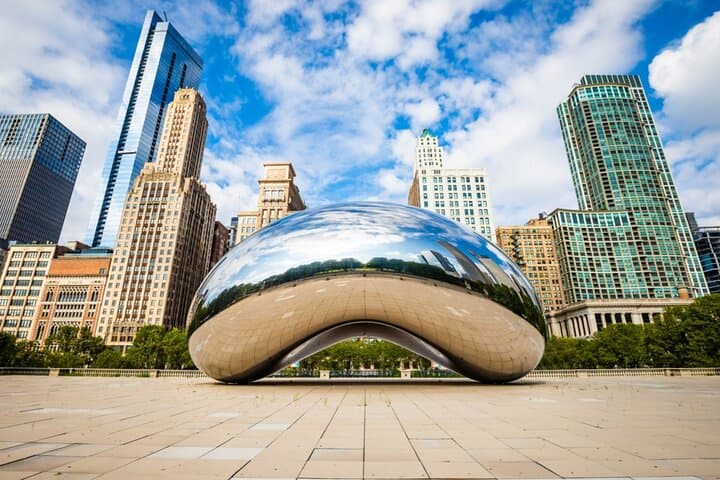
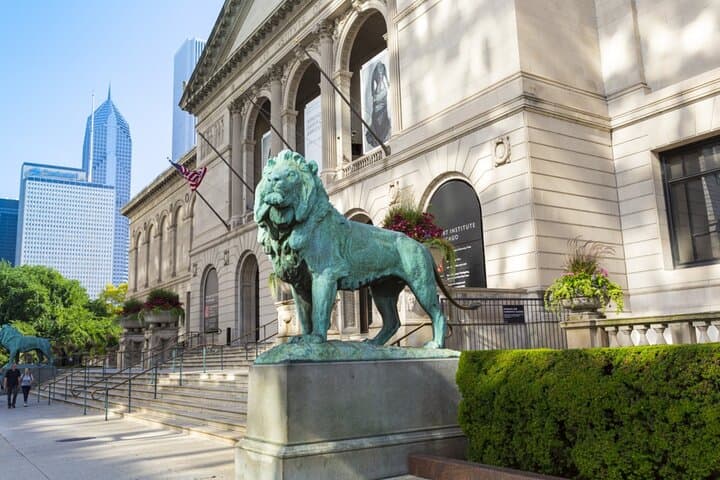
Chicago’s center carries layers of history: a 19th‑century rise from the Great Fire, early-20th-century civic monuments, and late-20th-century public-art interventions. Geology here is shallow—landscaped fill and engineered plazas on top of what was once Lake Michigan shoreline—so the route favors hard surfaces, promenades, and sculpted gardens rather than wilderness. Culture is civic and visual: Calder’s sculptures, Kapoor’s mirrored Cloud Gate, and Plensa’s Crown Fountain all act as narrative waypoints in the game.
Practical guidance: plan on roughly 90–120 minutes of walking on paved city streets with frequent stops to read prompts and scan facades. Download and unlock the Questo app before you start; the game allows offline play once activated. Wear cushioned shoes—hard plazas can fatigue ankles after repeated stops—and carry a small power bank; interactive puzzles rely on your phone’s battery. Start early to avoid peak weekend crowds around Cloud Gate and the fountains. Keep water and a light waterproof layer handy—the wind off Lake Michigan can change the temperature in minutes.
The result is urban play that sharpens your sense of place: you’ll leave with a new map of the city in your head and a sharper eye for the public art that silently directs pedestrian life here.
easy.
1.5–2 hours.
Low-impact walking fitness; suitable for casual walkers who can be on their feet for 90+ minutes
You should unlock the city game in the Questo app before you start; once activated the tour content can be used offline.
Much of the route uses paved plazas and sidewalks; Millennium Park areas are generally accessible, but check specific curb cuts and temporary event closures.
The game is designed for solo play or small groups—there’s no maximum, but puzzles are solved on one device per booking.
Yes—the game is available 24/7, though some monuments and adjacent buildings may be less lit after dark; exercise usual urban safety precautions.
Millennium Park and the Art Institute area were built atop massive engineered fill during the 20th century as Chicago expanded its lakefront promenades; many public artworks arrived from mid‑20th century to present.
Public-art maintenance and park stewardship are supported by city programs; avoid touching sculptures and follow posted rules to reduce wear on high‑traffic installations.
Questo operates guided outdoor trips and adventures with an emphasis on safety, stewardship, and memorable experiences.
You step out onto the plaza and the city takes its measure of you: glass faces reflecting a sky that moves, stone fountains breathing steam in cold air. The objective feels cinematic—blend in, pass the artwork unnoticed, keep the loot (and your wits). This is less about theft than observation; the game uses Chicago’s public art and civic spaces as a trail of clues that push you from Millennium Park toward the quieter corners of the Loop.
You step out onto the plaza and the city takes its measure of you: glass faces reflecting a sky that moves, stone fountains breathing steam in cold air. The objective feels cinematic—blend in, pass the artwork unnoticed, keep the loot (and your wits). This is less about theft than observation; the game uses Chicago’s public art and civic spaces as a trail of clues that push you from Millennium Park toward the quieter corners of the Loop.
Chicago’s center carries layers of history: a 19th‑century rise from the Great Fire, early-20th-century civic monuments, and late-20th-century public-art interventions. Geology here is shallow—landscaped fill and engineered plazas on top of what was once Lake Michigan shoreline—so the route favors hard surfaces, promenades, and sculpted gardens rather than wilderness. Culture is civic and visual: Calder’s sculptures, Kapoor’s mirrored Cloud Gate, and Plensa’s Crown Fountain all act as narrative waypoints in the game.
Practical guidance: plan on roughly 90–120 minutes of walking on paved city streets with frequent stops to read prompts and scan facades. Download and unlock the Questo app before you start; the game allows offline play once activated. Wear cushioned shoes—hard plazas can fatigue ankles after repeated stops—and carry a small power bank; interactive puzzles rely on your phone’s battery. Start early to avoid peak weekend crowds around Cloud Gate and the fountains. Keep water and a light waterproof layer handy—the wind off Lake Michigan can change the temperature in minutes.
The result is urban play that sharpens your sense of place: you’ll leave with a new map of the city in your head and a sharper eye for the public art that silently directs pedestrian life here.