THE ADVENTURE COLLECTIVE® · Independent discovery and booking for outdoor travel

Board a retired Chicago fireboat and glide past bridge mechanics, Art Deco façades, and shoreline legends. Two hours aboard the Fred A Busse mixes architecture narration with first-hand firefighting history—ideal for families, photographers, and history buffs.
Board a retired Chicago fireboat and glide past bridge mechanics, Art Deco façades, and shoreline legends. Two hours aboard the Fred A Busse mixes architecture narration with first-hand firefighting history—ideal for families, photographers, and history buffs.
The deck smells faintly of diesel and varnished wood as the retired fireboat Fred A Busse slides away from the concrete pier between Monroe and DuSable Harbors. On a clear afternoon, the skyline swivels like a mechanical model: glass and limestone, gothic setbacks, and the low, resolute profile of the Art Deco towers that watched over the city through both boom and crisis. Narration comes steady and human—stories of engines and embankments, of river engineering and the oddity that Chicago's water runs the city as surely as its streets.
Verified experiences and guided adventures in the surrounding area.
Operated by Chicago Fireboat Tours · Chicago, Illinois
The deck smells faintly of diesel and varnished wood as the retired fireboat Fred A Busse slides away from the concrete pier between Monroe and DuSable Harbors. On a clear afternoon, the skyline swivels like a mechanical model: glass and limestone, gothic setbacks, and the low, resolute profile of the Art Deco towers that watched over the city through both boom and crisis. Narration comes steady and human—stories of engines and embankments, of river engineering and the oddity that Chicago's water runs the city as surely as its streets.
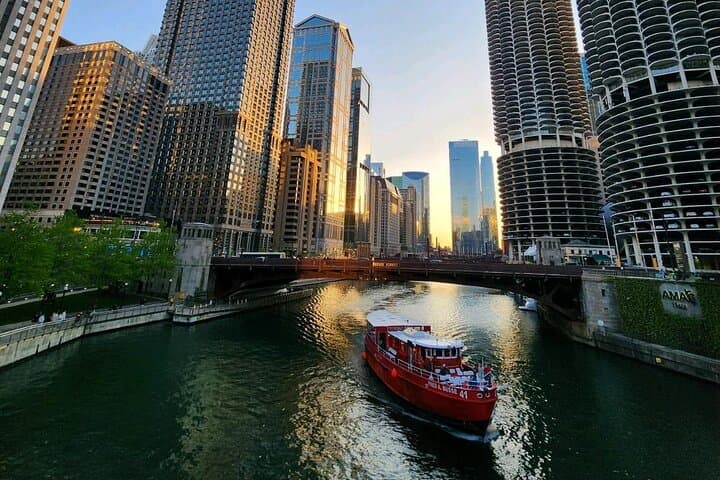
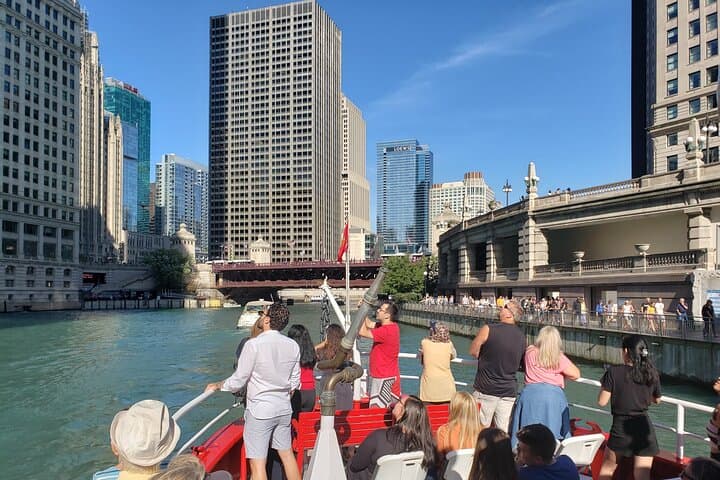
The Busse is more than transport; it is a moving museum. Inside the cabin, faded patches and brass plaques mark campaigns and stations from a lifetime of service (1937–1981). The narrative ties the craft to the city's survival—how fireboats, invented to take the fight to waterfront blazes, became essential after the conflagrations and industrial accidents that shaped 19th- and 20th-century Chicago. As you pass under bascule bridges, guides point out structural details and the geology that made Chicago a port: a shallow continental shelf giving the city a long, accessible shoreline and a river rerouted to serve shipping and sanitation.
Culturally, the cruise stitches neighborhoods together—Gold Coast mansions, the office canyon of LaSalle Street, and the glass faces of the Loop. The river itself performs: turning traffic and tides, daring you to follow its curves past old warehouses now converted into apartments and restaurants. On the lake, the wind gains a voice; gulls wheel and the city broadens into a panorama. For families and historians alike, the ride balances spectacle with detail—how bridges still lift, why certain façades were set back, and what safety looked like when the Busse was called to action.
Practicalities are straightforward. Tours last about two hours; boarding is at the pier just east of Millennium Park, about a mile south of Navy Pier. Bathrooms are onboard, and the vessel is stroller-accessible and pet-friendly for service animals. Wear layers—the lake wind can be sharp even on warm days—and bring a camera with a mid-range zoom for bridge details and skyline shots.
Timing matters: morning light softens the south-facing façades, while late afternoon gives warm, slanted light across the river. The cruise is family-friendly but keep in mind alcohol is only served to guests 21 and over. For photographers, historians, or anyone who enjoys a moving portrait of an American city, the Fred A Busse tour is both classroom and spectacle—two hours where engineering, fire history, and Chicago’s skyline converge on water.
easy.
2 hours.
Suitable for all fitness levels; minimal mobility required for boarding and walking the deck.
Boarding is at the concrete pier between Monroe and DuSable Harbors, east of Millennium & Maggie Daley Parks—about a mile south of Navy Pier.
Yes, bathrooms are available onboard the Fred A Busse.
The tour is stroller-accessible and suitable for most mobility levels; contact the operator for specific accessibility needs.
Service animals are allowed; check with the operator about other pets before booking.
Yes—expert narration about Chicago’s architecture and fire history is included throughout the cruise.
Alcoholic beverages are available only to guests 21 and older; minors will be offered non-alcoholic drinks.
Fireboats like the Fred A Busse became essential after waterfront fires and industrial growth; Engine 41 served Chicago from 1937–1981 and is preserved as a working relic.
Chicago has improved river and lake water quality through dredging and treatment—stay on designated walkways and avoid littering to protect aquatic habitat.
Chicago Fireboat Tours operates guided outdoor trips and adventures with an emphasis on safety, stewardship, and memorable experiences.
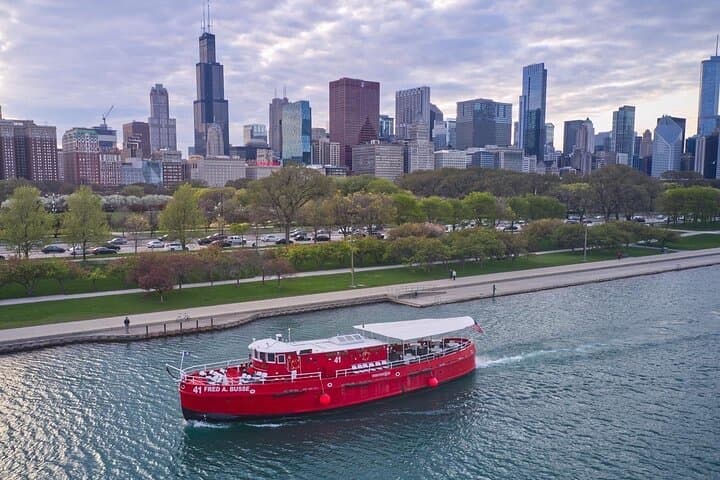
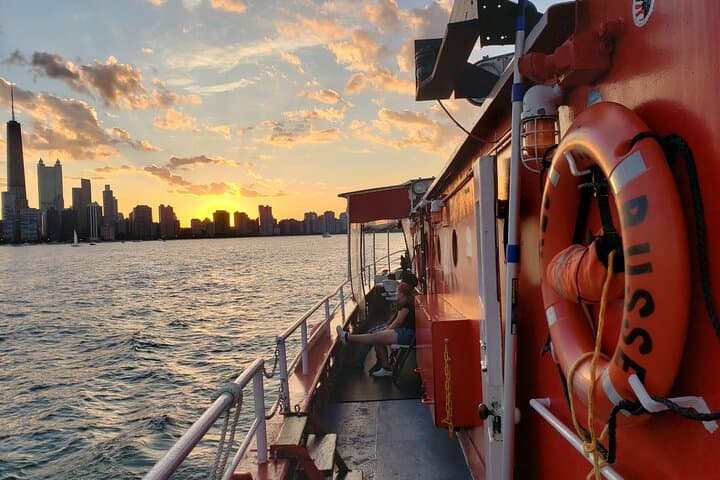
The deck smells faintly of diesel and varnished wood as the retired fireboat Fred A Busse slides away from the concrete pier between Monroe and DuSable Harbors. On a clear afternoon, the skyline swivels like a mechanical model: glass and limestone, gothic setbacks, and the low, resolute profile of the Art Deco towers that watched over the city through both boom and crisis. Narration comes steady and human—stories of engines and embankments, of river engineering and the oddity that Chicago's water runs the city as surely as its streets.
The deck smells faintly of diesel and varnished wood as the retired fireboat Fred A Busse slides away from the concrete pier between Monroe and DuSable Harbors. On a clear afternoon, the skyline swivels like a mechanical model: glass and limestone, gothic setbacks, and the low, resolute profile of the Art Deco towers that watched over the city through both boom and crisis. Narration comes steady and human—stories of engines and embankments, of river engineering and the oddity that Chicago's water runs the city as surely as its streets.
The Busse is more than transport; it is a moving museum. Inside the cabin, faded patches and brass plaques mark campaigns and stations from a lifetime of service (1937–1981). The narrative ties the craft to the city's survival—how fireboats, invented to take the fight to waterfront blazes, became essential after the conflagrations and industrial accidents that shaped 19th- and 20th-century Chicago. As you pass under bascule bridges, guides point out structural details and the geology that made Chicago a port: a shallow continental shelf giving the city a long, accessible shoreline and a river rerouted to serve shipping and sanitation.
Culturally, the cruise stitches neighborhoods together—Gold Coast mansions, the office canyon of LaSalle Street, and the glass faces of the Loop. The river itself performs: turning traffic and tides, daring you to follow its curves past old warehouses now converted into apartments and restaurants. On the lake, the wind gains a voice; gulls wheel and the city broadens into a panorama. For families and historians alike, the ride balances spectacle with detail—how bridges still lift, why certain façades were set back, and what safety looked like when the Busse was called to action.
Practicalities are straightforward. Tours last about two hours; boarding is at the pier just east of Millennium Park, about a mile south of Navy Pier. Bathrooms are onboard, and the vessel is stroller-accessible and pet-friendly for service animals. Wear layers—the lake wind can be sharp even on warm days—and bring a camera with a mid-range zoom for bridge details and skyline shots.
Timing matters: morning light softens the south-facing façades, while late afternoon gives warm, slanted light across the river. The cruise is family-friendly but keep in mind alcohol is only served to guests 21 and over. For photographers, historians, or anyone who enjoys a moving portrait of an American city, the Fred A Busse tour is both classroom and spectacle—two hours where engineering, fire history, and Chicago’s skyline converge on water.