THE ADVENTURE COLLECTIVE® · Independent discovery and booking for outdoor travel

Explore seven downtown stops where cast‑iron storefronts meet contemporary skyline statements. This guided walking tour pairs architectural history with practical context to show how Chicago’s built fabric evolved from the 1890s to modern icons.
Explore seven downtown stops where cast‑iron storefronts meet contemporary skyline statements. This guided walking tour pairs architectural history with practical context to show how Chicago’s built fabric evolved from the 1890s to modern icons.
Step off the curb into downtown Chicago and the city begins to talk — brick, steel and glass trading barbs across a single block. The tour threads seven stops through the Loop and along the lakeward edge, where late‑19th‑century masonry meets mid‑century glass and the newest skyline gestures back at older façades.
Verified experiences and guided adventures in the surrounding area.
Step off the curb into downtown Chicago and the city begins to talk — brick, steel and glass trading barbs across a single block. The tour threads seven stops through the Loop and along the lakeward edge, where late‑19th‑century masonry meets mid‑century glass and the newest skyline gestures back at older façades.
The story here is literal: the Great Chicago Fire of 1871 cleared a blank slate, and architects responded with experiments in steel framing and ornament that became the Chicago School. You’ll stand where cast‑iron storefronts give way to Beaux‑Arts cornices, pass through the Rookery’s transformed light court, and end in Millennium Park where Renzo Piano’s modern pavilions and Gehry’s forms argue with classical monuments. Beneath the sidewalks is a glacial lake plain—Lake Michigan shaped the grid and the river that once powered industry before engineers reversed its flow.
This is as much social history as it is design: immigrant labor, commerce, and civic ambition built the structures you’ll examine, and conservation efforts now protect them as landmarks. Expect lively comparisons between styles and practical notes on materials, technology, and why a façade from 1890 still matters in 2025.
Practical guidance: the walk is roughly 1.5–2 hours on mostly flat city sidewalks with frequent stops, so wear supportive shoes, bring a weather layer, and arrive early for an easy meeting. Tours tend to move quickly between stops; bring water and a charged phone for photos and quick fact‑checking. Tickets support the Chicago Architecture Center’s education programs; consider adding a museum visit before or after the route.
easy.
1.5–2 hours.
Suitable for most fitness levels; requires standing and walking on paved surfaces for the duration
Route details vary by departure but tours typically start in the Loop near a central landmark and finish at Millennium Park for an architectural roundup.
Most sidewalks and park areas are accessible, but some historic building interiors or light courts may have limited access; contact the operator for specifics.
Tours proceed in light rain; heavy storms may cause cancellation or rescheduling—check confirmation emails for the operator’s policy.
Yes—photography for personal use is fine; commercial filming may require permission from building owners or the city.
The Great Chicago Fire (1871) cleared large parts of the city and paved the way for steel‑frame construction and the rise of the Chicago School of architecture.
Many downtown buildings are landmarked; tours emphasize preservation and downtown green space stewardship, and visitors are encouraged to use transit to reduce traffic impact.
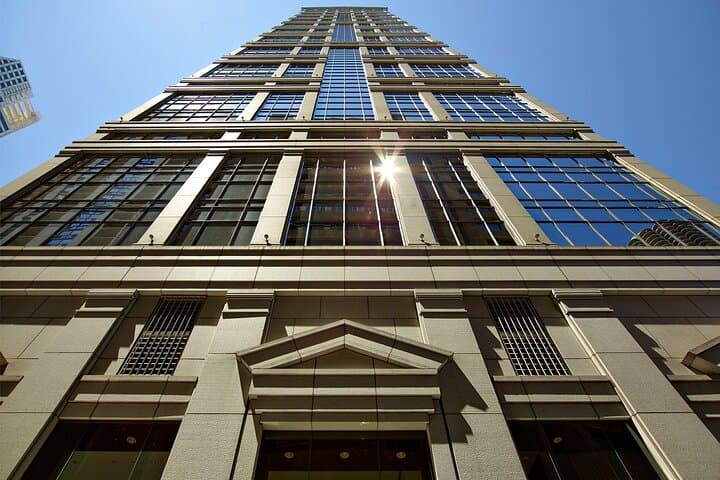
Step off the curb into downtown Chicago and the city begins to talk — brick, steel and glass trading barbs across a single block. The tour threads seven stops through the Loop and along the lakeward edge, where late‑19th‑century masonry meets mid‑century glass and the newest skyline gestures back at older façades.
Step off the curb into downtown Chicago and the city begins to talk — brick, steel and glass trading barbs across a single block. The tour threads seven stops through the Loop and along the lakeward edge, where late‑19th‑century masonry meets mid‑century glass and the newest skyline gestures back at older façades.
The story here is literal: the Great Chicago Fire of 1871 cleared a blank slate, and architects responded with experiments in steel framing and ornament that became the Chicago School. You’ll stand where cast‑iron storefronts give way to Beaux‑Arts cornices, pass through the Rookery’s transformed light court, and end in Millennium Park where Renzo Piano’s modern pavilions and Gehry’s forms argue with classical monuments. Beneath the sidewalks is a glacial lake plain—Lake Michigan shaped the grid and the river that once powered industry before engineers reversed its flow.
This is as much social history as it is design: immigrant labor, commerce, and civic ambition built the structures you’ll examine, and conservation efforts now protect them as landmarks. Expect lively comparisons between styles and practical notes on materials, technology, and why a façade from 1890 still matters in 2025.
Practical guidance: the walk is roughly 1.5–2 hours on mostly flat city sidewalks with frequent stops, so wear supportive shoes, bring a weather layer, and arrive early for an easy meeting. Tours tend to move quickly between stops; bring water and a charged phone for photos and quick fact‑checking. Tickets support the Chicago Architecture Center’s education programs; consider adding a museum visit before or after the route.