THE ADVENTURE COLLECTIVE® · Independent discovery and booking for outdoor travel

Enter a room where Chicago shrinks and expands at once: a 4,200-building city model and interactive exhibits that trace the city’s architectural innovations. Plan 45–60 minutes, bring a voucher, and combine the visit with a Riverwalk stroll.
Enter a room where Chicago shrinks and expands at once: a 4,200-building city model and interactive exhibits that trace the city’s architectural innovations. Plan 45–60 minutes, bring a voucher, and combine the visit with a Riverwalk stroll.
You step off Wacker Drive and the city’s geometry snaps into focus: steel, glass, and riverbanks folding into long sightlines. Inside the Chicago Architecture Center, light falls across a 4,200-building model that compresses the city’s vertical energy into a single, cinematic room—streets and towers become a miniature metropolis you can walk around and study.
Verified experiences and guided adventures in the surrounding area.
Operated by Chicago Architecture Center · Chicago, Illinois
You step off Wacker Drive and the city’s geometry snaps into focus: steel, glass, and riverbanks folding into long sightlines. Inside the Chicago Architecture Center, light falls across a 4,200-building model that compresses the city’s vertical energy into a single, cinematic room—streets and towers become a miniature metropolis you can walk around and study.
The CAC began in 1966 to save Glessner House and has since grown into a public school for the built environment, translating Chicago’s legacy of innovation—from Burnham’s boulevards to Mies’s glass planes—into hands-on exhibits. Beneath the galleries, the Chicago River and Lake Michigan remind visitors that this city grew on glacial plain and engineered waterways; the model itself charts decades of zoning, rebuilding, and architectural daring.
Culturally, the center is both museum and classroom: rotating displays explore neighborhood housing types, landmark preservation, and the social history tied to each block. Local insights include a quieter viewing window in the ArcelorMittal Design Studio where families sketch facades, and interpretive panels that call out the city’s early skyscraper experiments.
Practical guidance: plan 45–60 minutes, arrive earlier to avoid school groups, and present your mobile or printed voucher at the box office—final admissions are 30 minutes before closing. The space is wheelchair- and stroller-accessible; food and drink are not allowed. Combine a visit with a short Riverwalk stroll for outdoor context, and use public transit to reach the center to avoid parking hassles.
easy.
45–60 minutes.
Suitable for all fitness levels; mostly standing and gentle walking
Most visitors spend 45–60 minutes; allow extra time for hands-on exhibits or group programs.
Yes—exhibit areas and surfaces are wheelchair-accessible, and staff can assist with access questions.
Strollers are allowed and the space accommodates infants and small children; large luggage or bags may be restricted.
No—either a mobile or printed voucher is accepted; present it at the box office within 60 days of purchase.
Founded in 1966 to preserve the historic Glessner House, the CAC has grown into a major educational nonprofit documenting Chicago’s architectural evolution.
The center emphasizes sustainable design history and encourages visitors to take public transit; exhibits highlight climate resilience in recent urban projects.
Chicago Architecture Center operates guided outdoor trips and adventures with an emphasis on safety, stewardship, and memorable experiences.
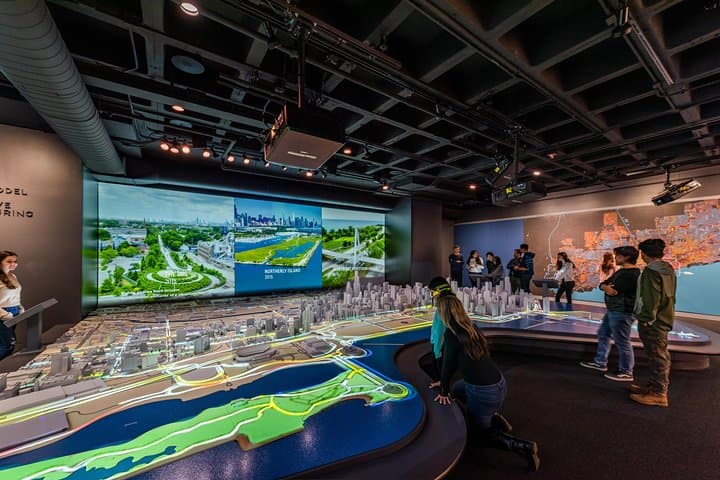
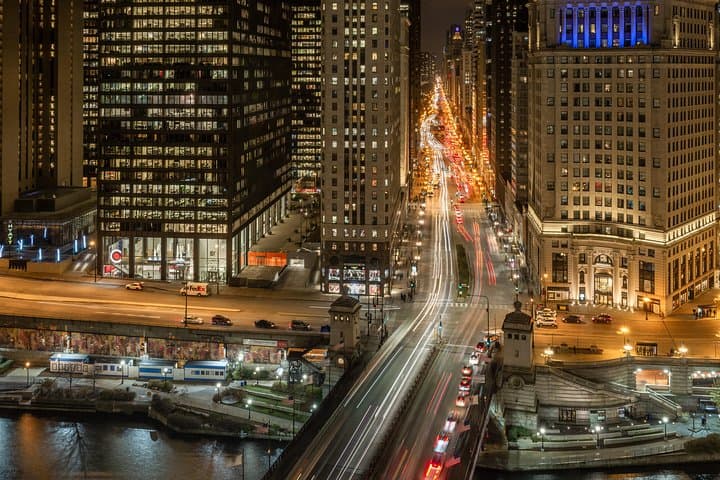
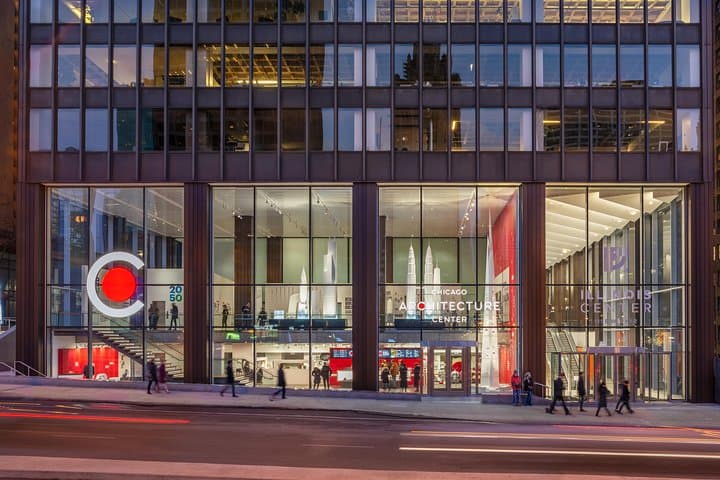
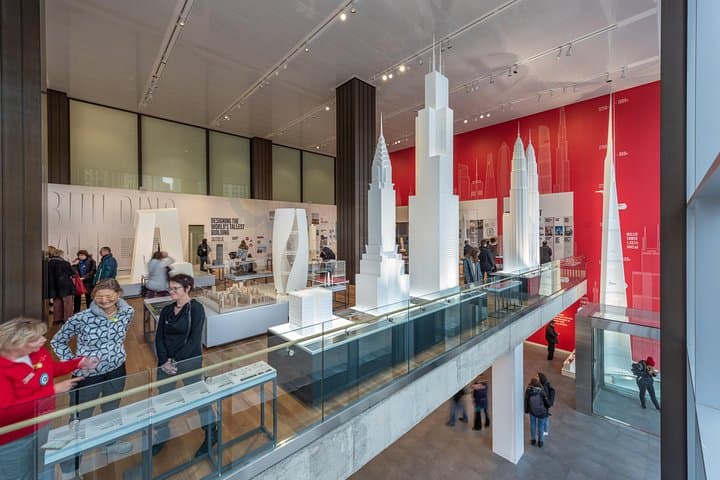
You step off Wacker Drive and the city’s geometry snaps into focus: steel, glass, and riverbanks folding into long sightlines. Inside the Chicago Architecture Center, light falls across a 4,200-building model that compresses the city’s vertical energy into a single, cinematic room—streets and towers become a miniature metropolis you can walk around and study.
You step off Wacker Drive and the city’s geometry snaps into focus: steel, glass, and riverbanks folding into long sightlines. Inside the Chicago Architecture Center, light falls across a 4,200-building model that compresses the city’s vertical energy into a single, cinematic room—streets and towers become a miniature metropolis you can walk around and study.
The CAC began in 1966 to save Glessner House and has since grown into a public school for the built environment, translating Chicago’s legacy of innovation—from Burnham’s boulevards to Mies’s glass planes—into hands-on exhibits. Beneath the galleries, the Chicago River and Lake Michigan remind visitors that this city grew on glacial plain and engineered waterways; the model itself charts decades of zoning, rebuilding, and architectural daring.
Culturally, the center is both museum and classroom: rotating displays explore neighborhood housing types, landmark preservation, and the social history tied to each block. Local insights include a quieter viewing window in the ArcelorMittal Design Studio where families sketch facades, and interpretive panels that call out the city’s early skyscraper experiments.
Practical guidance: plan 45–60 minutes, arrive earlier to avoid school groups, and present your mobile or printed voucher at the box office—final admissions are 30 minutes before closing. The space is wheelchair- and stroller-accessible; food and drink are not allowed. Combine a visit with a short Riverwalk stroll for outdoor context, and use public transit to reach the center to avoid parking hassles.