THE ADVENTURE COLLECTIVE® · Independent discovery and booking for outdoor travel

Walk the crater rim to Laguna Chicabal, a sacred Mam Maya lake framed by cloud forest. This half-day trek from Quetzaltenango combines geology, living ritual, and close-up birdwatching with accessible trails and local guides.
Walk the crater rim to Laguna Chicabal, a sacred Mam Maya lake framed by cloud forest. This half-day trek from Quetzaltenango combines geology, living ritual, and close-up birdwatching with accessible trails and local guides.
A low cloud sits in the crater as you step off the transfer and climb toward the rim — the forest exhales damp pine and moss, and distant altars flicker with candlelight. The trail to Laguna Chicabal threads through a highland cloud forest, opening suddenly onto a nearly circular crater lake whose dark surface mirrors the sky.
Verified experiences and guided adventures in the surrounding area.
Operated by Adrenalina Tours · Quetzaltenango, Quetzaltenango
A low cloud sits in the crater as you step off the transfer and climb toward the rim — the forest exhales damp pine and moss, and distant altars flicker with candlelight. The trail to Laguna Chicabal threads through a highland cloud forest, opening suddenly onto a nearly circular crater lake whose dark surface mirrors the sky.
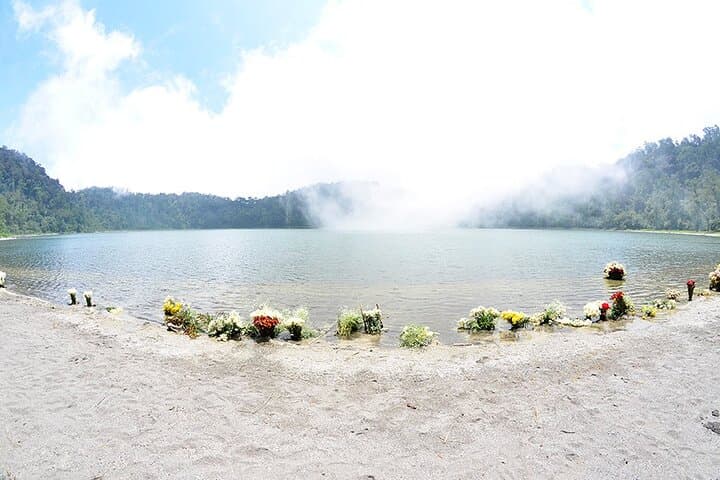
Chicabal is a volcanic crater formed during past eruptions; its caldera now holds a deep, still lagoon that the Mam Maya regard as sacred. For centuries local communities from San Martín Sacatepéquez have held ceremonies along the shore, leaving altars of flowers, candles and crosses on specific calendar dates (notably May 3 and about 40 days after Easter). The rim trail passes through oak and pine woods, with volcanic soils supporting agricultural terraces on lower slopes. Birdlife is abundant — quetzal sightings are rare but possible; more commonly you’ll hear toucanets, hummingbirds and woodcreepers.
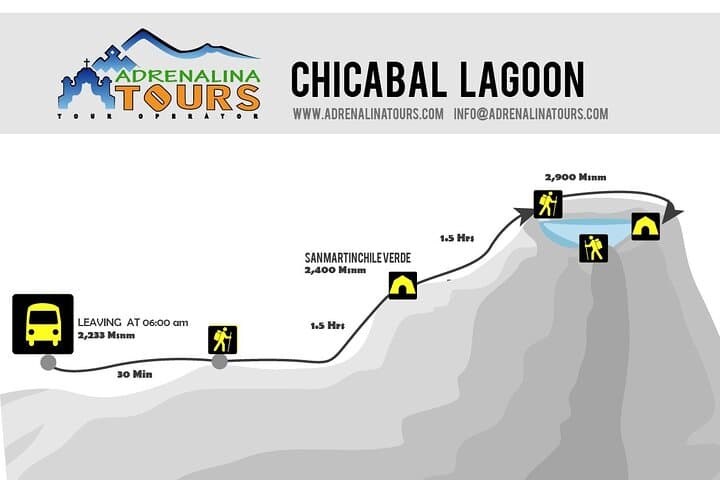
Practically, expect cool, often wet conditions and some steep, uneven sections; the entire outing from Quetzaltenango is a half- to full-day (driving plus 1–2 hours on foot at the site). Local guides explain ritual significance and point out native plants while asking visitors to respect sacred spaces. Camping is permitted seasonally (October–May) with local gear available by arrangement.
Bring layered rain protection, sturdy footwear for slippery volcanic soil, and water; move respectfully around altars and avoid swimming. The site is protected — leave no trace, follow your guide’s instructions, and allow time for the slow, contemplative pace the place invites.
moderate.
4–7 hours.
Suitable for people with moderate fitness — expect uneven terrain and some short steep sections; children and elders can join with slower pace or motor transport.
Most visitors spend 1–2 hours hiking the rim and lakeshore; the full excursion from Quetzaltenango including transfers and guide time runs about 4–7 hours.
You may observe with permission; always ask the guide before photographing ceremonies and never interfere with offerings or ritual activity.
Swimming is discouraged out of respect for the site’s sacred status and because access points are often muddy and slippery.
Dry season months (roughly November–April) tend to have clearer skies and firmer trails; however, mornings can still be foggy and cool.
Laguna Chicabal is a volcanic caldera long used by the Mam Maya for ritual observances; the living tradition continues with altars and ceremonies tied to the Mayan calendar.
Chicabal lies within a protected area and is managed to balance cultural practice and ecology — visitors should follow guides, avoid disturbing altars, and carry out all trash.
Adrenalina Tours operates guided outdoor trips and adventures with an emphasis on safety, stewardship, and memorable experiences.
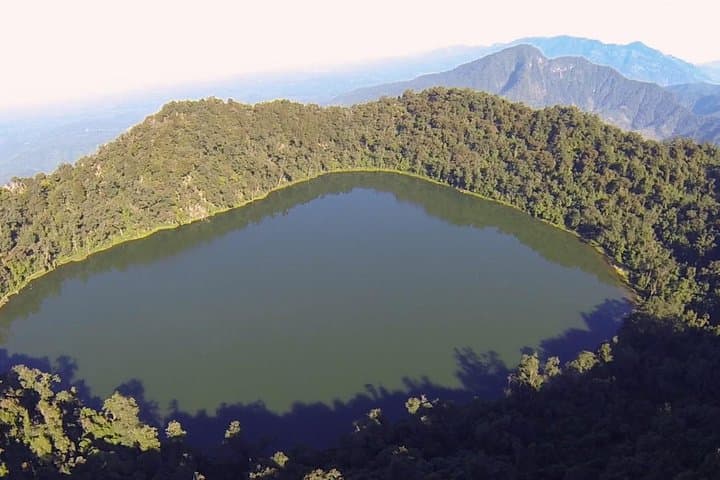
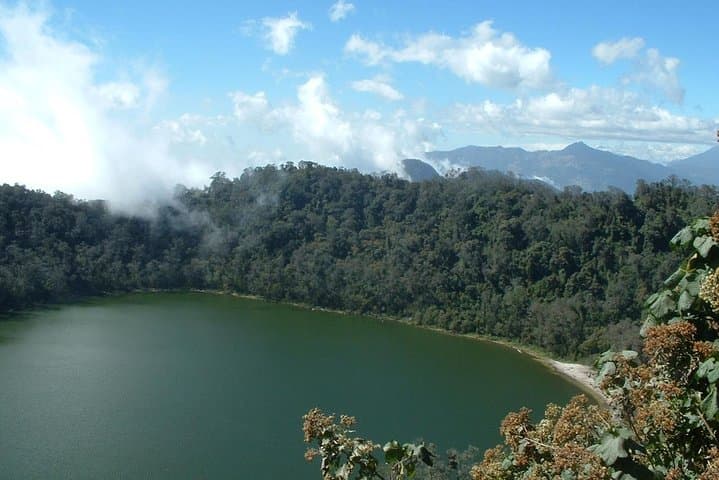
A low cloud sits in the crater as you step off the transfer and climb toward the rim — the forest exhales damp pine and moss, and distant altars flicker with candlelight. The trail to Laguna Chicabal threads through a highland cloud forest, opening suddenly onto a nearly circular crater lake whose dark surface mirrors the sky.
A low cloud sits in the crater as you step off the transfer and climb toward the rim — the forest exhales damp pine and moss, and distant altars flicker with candlelight. The trail to Laguna Chicabal threads through a highland cloud forest, opening suddenly onto a nearly circular crater lake whose dark surface mirrors the sky.
Chicabal is a volcanic crater formed during past eruptions; its caldera now holds a deep, still lagoon that the Mam Maya regard as sacred. For centuries local communities from San Martín Sacatepéquez have held ceremonies along the shore, leaving altars of flowers, candles and crosses on specific calendar dates (notably May 3 and about 40 days after Easter). The rim trail passes through oak and pine woods, with volcanic soils supporting agricultural terraces on lower slopes. Birdlife is abundant — quetzal sightings are rare but possible; more commonly you’ll hear toucanets, hummingbirds and woodcreepers.
Practically, expect cool, often wet conditions and some steep, uneven sections; the entire outing from Quetzaltenango is a half- to full-day (driving plus 1–2 hours on foot at the site). Local guides explain ritual significance and point out native plants while asking visitors to respect sacred spaces. Camping is permitted seasonally (October–May) with local gear available by arrangement.
Bring layered rain protection, sturdy footwear for slippery volcanic soil, and water; move respectfully around altars and avoid swimming. The site is protected — leave no trace, follow your guide’s instructions, and allow time for the slow, contemplative pace the place invites.