THE ADVENTURE COLLECTIVE® · Independent discovery and booking for outdoor travel

Swap Florence’s piazzas for sunlit Chianti hills on a five-hour day trip that visits two family wineries. Expect cellar tours, 4–5 tastings per estate, regional snacks and sweeping vineyard views—ideal for first-time tasters and small groups.
Swap Florence’s piazzas for sunlit Chianti hills on a five-hour day trip that visits two family wineries. Expect cellar tours, 4–5 tastings per estate, regional snacks and sweeping vineyard views—ideal for first-time tasters and small groups.
You step off the coach where Florence’s train noise softens into the hush of cypress-lined lanes; within an hour the city’s stone roofs dissolve into rolling vineyards and sun-burnished olive groves. The itinerary moves at an easy pace: two family-run estates, cellar tours, and long windows that frame Chianti’s ribbed hills.
Verified experiences and guided adventures in the surrounding area.
Operated by Smart Trip Europe · Florence, Tuscany
You step off the coach where Florence’s train noise softens into the hush of cypress-lined lanes; within an hour the city’s stone roofs dissolve into rolling vineyards and sun-burnished olive groves. The itinerary moves at an easy pace: two family-run estates, cellar tours, and long windows that frame Chianti’s ribbed hills.
Chianti’s history is read in its stone farmhouses and terraced vines—an agricultural landscape shaped by Etruscan and medieval land divisions and refined by generations of winemakers. Geologically, the region sits on limestone marl and schist soils that give Sangiovese its tensile acidity; you’ll hear about these soil signatures during cellar talks. Local culture favors conviviality: tastings are social lessons in food pairing, from pecorino to balsamic and bruschetta.
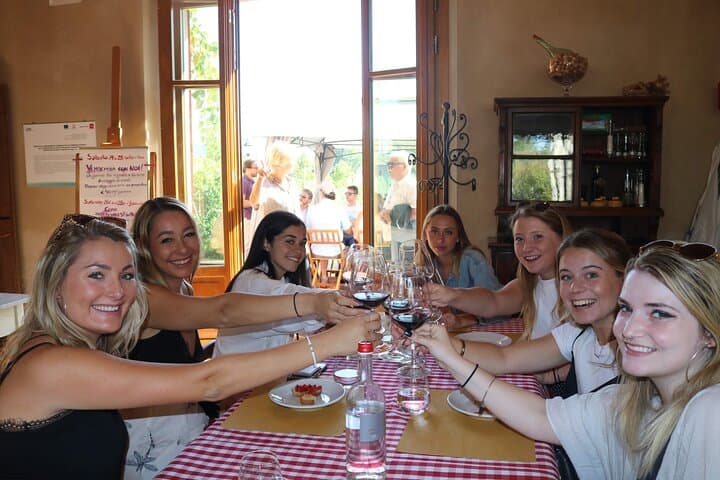
Expect guided vineyard walks and 4–5 pours per estate, paired with olive oil, cured meats and local cheeses. Hosts explain fermentation, oak aging and Chianti’s DOCG rules in plain language; many estates will offer shipping on purchases for international travelers. Photo stops are frequent—bring a camera for rooftops, old stone farmhouses and a classic rooster on the lawn.
Practical guidance: the tour lasts about five hours and includes round-trip coach transport from Piazzale Montelungo near Santa Maria Novella. Dress for walking on gravel and gentle slopes, carry ID for purchases and flights, and plan transport back to your lodging in Florence. If you’re sensitive to alcohol, sip water between tastings and notify the guide—tours welcome dietary needs. Book in advance for weekends and harvest season (September–October) when vineyards are busiest.
easy.
5 hours.
Suitable for most fitness levels; involves short walks on uneven gravel and standing during tastings.
Meet at Piazzale Montelungo (behind Santa Maria Novella station) in Florence; the coach ride to Chianti takes about 45 minutes each way.
Yes—each winery provides guided tastings (about 4–5 wines) and regional samples like cheeses, salami, olive oil and bruschetta.
Yes—vegetarian and gluten-free options are available; notify the operator when booking or at check-in.
Most estates offer bottle sales and international shipping; bring ID and a credit card, and ask hosts about shipping rates and timing.
Chianti’s pattern of smallholders and villa estates dates to medieval land divisions and was codified in wine law in the 18th–19th centuries, shaping modern Chianti Classico.
Many estates practice sustainable viticulture and water-saving techniques; visitors are asked to respect private property and follow estate directions to limit trampling and waste.
Smart Trip Europe operates guided outdoor trips and adventures with an emphasis on safety, stewardship, and memorable experiences.

You step off the coach where Florence’s train noise softens into the hush of cypress-lined lanes; within an hour the city’s stone roofs dissolve into rolling vineyards and sun-burnished olive groves. The itinerary moves at an easy pace: two family-run estates, cellar tours, and long windows that frame Chianti’s ribbed hills.
You step off the coach where Florence’s train noise softens into the hush of cypress-lined lanes; within an hour the city’s stone roofs dissolve into rolling vineyards and sun-burnished olive groves. The itinerary moves at an easy pace: two family-run estates, cellar tours, and long windows that frame Chianti’s ribbed hills.
Chianti’s history is read in its stone farmhouses and terraced vines—an agricultural landscape shaped by Etruscan and medieval land divisions and refined by generations of winemakers. Geologically, the region sits on limestone marl and schist soils that give Sangiovese its tensile acidity; you’ll hear about these soil signatures during cellar talks. Local culture favors conviviality: tastings are social lessons in food pairing, from pecorino to balsamic and bruschetta.
Expect guided vineyard walks and 4–5 pours per estate, paired with olive oil, cured meats and local cheeses. Hosts explain fermentation, oak aging and Chianti’s DOCG rules in plain language; many estates will offer shipping on purchases for international travelers. Photo stops are frequent—bring a camera for rooftops, old stone farmhouses and a classic rooster on the lawn.
Practical guidance: the tour lasts about five hours and includes round-trip coach transport from Piazzale Montelungo near Santa Maria Novella. Dress for walking on gravel and gentle slopes, carry ID for purchases and flights, and plan transport back to your lodging in Florence. If you’re sensitive to alcohol, sip water between tastings and notify the guide—tours welcome dietary needs. Book in advance for weekends and harvest season (September–October) when vineyards are busiest.