THE ADVENTURE COLLECTIVE® · Independent discovery and booking for outdoor travel

Spend a day moving through Chiang Rai’s most arresting sites: the surreal White Temple, the cobalt Blue Temple, a mountain tea estate, hill‑tribe culture and the Golden Triangle. This practical guide outlines what to expect, how to prepare, and the cultural etiquette to honor along the way.
Spend a day moving through Chiang Rai’s most arresting sites: the surreal White Temple, the cobalt Blue Temple, a mountain tea estate, hill‑tribe culture and the Golden Triangle. This practical guide outlines what to expect, how to prepare, and the cultural etiquette to honor along the way.
You step off the air-conditioned van into a dry, highland light and the White Temple arrests your attention — a frosted structure that seems to glow against the northern Thai sky. Over ten hours the landscape keeps changing: from lacquered ceramics and carved gables at contemporary temples to the folded green of high-elevation tea estates and the slow, brown flow of the Mekong at the Golden Triangle.
Verified experiences and guided adventures in the surrounding area.
Operated by Scorpions Tours · Chiang Rai, Chiang Rai Province
You step off the air-conditioned van into a dry, highland light and the White Temple arrests your attention — a frosted structure that seems to glow against the northern Thai sky. Over ten hours the landscape keeps changing: from lacquered ceramics and carved gables at contemporary temples to the folded green of high-elevation tea estates and the slow, brown flow of the Mekong at the Golden Triangle.
Northern Thailand’s geology is folded hills and steep river valleys carved by tributaries of the Mekong. The area around Chiang Rai carries a layered history — ancient Lanna influences, the recent creative surge of artists like Chalermchai Kositpipat at Wat Rong Khun, and the complicated legacy of opium cultivation visible in museums and borderlands.
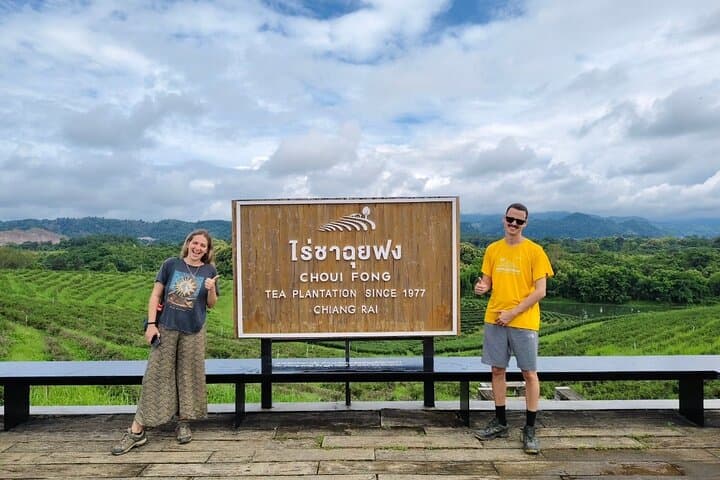
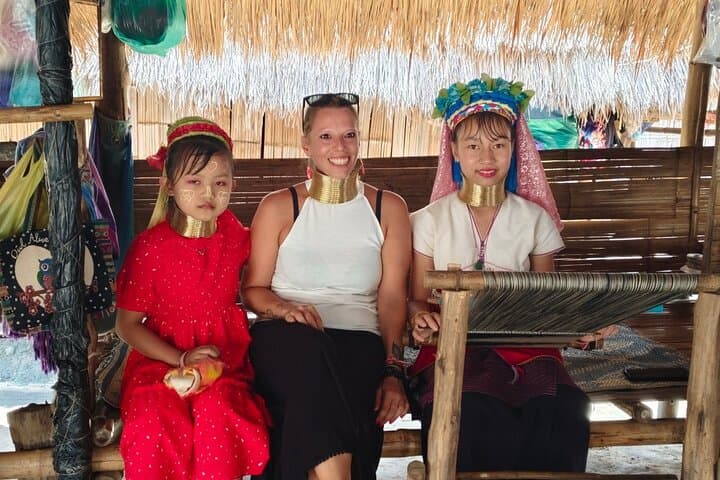
Culturally the day mixes museum rooms and living craft: the Black House’s dark timber and collected curios, a hill‑tribe village where observation should be quiet and respectful, and Choui Fong’s terraces where tea plants slope like ribs down the mountain.
Practical guidance: this is a full, guided 10‑hour circuit with short walking windows (30–45 minutes per stop). Wear modest clothing for temples (shoulders and knees covered), comfortable walking shoes for uneven paths, and bring sunscreen, insect repellent and a small daypack. Bottled water and a buffet lunch are included; expect multiple short photo stops rather than long hikes. Note the tour is listed as suitable for most fitness levels but not recommended for pregnant travelers or those with serious back or heart conditions. Timing matters — mornings are cooler at the high tea farms, while late afternoon light favors the Golden Triangle viewpoint.
easy.
10 hours.
Suitable for most fitness levels; involves short walks of 30–45 minutes at each stop and standing during visits.
The tour runs about 10 hours and includes an English-speaking guide, air-conditioned transport, bottled water, and a buffet lunch; some attraction admissions are not included.
Yes — the itinerary is classified as physically easy with short walks, but it’s not recommended for pregnant travelers or those with serious back or heart conditions.
There are short windows at cultural sites and plantations where small shops operate; carry cash for purchases and local snacks.
Always ask first; treat visits as cultural exchanges—photography may be restricted depending on the community’s preference.
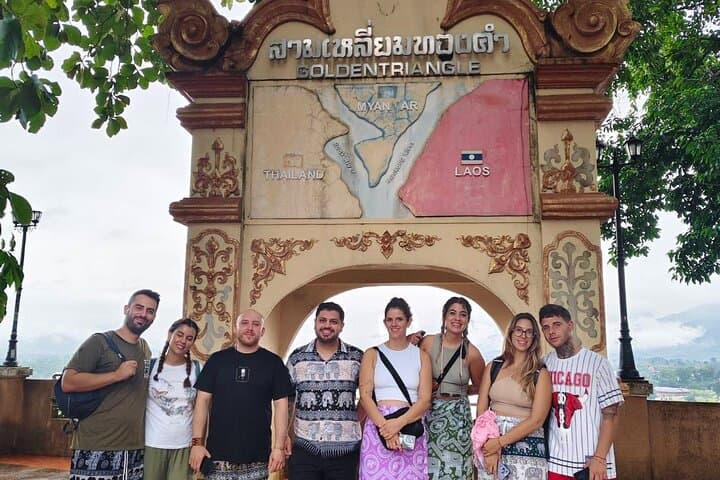
The Golden Triangle area was a major opium-producing region through the 20th century; museums and border exhibits trace that transition to legal crops and tourism.
Tea plantations here are increasingly promoting sustainable farming and community tourism; when visiting, favor locally produced goods and avoid products made from animal parts.
Scorpions Tours operates guided outdoor trips and adventures with an emphasis on safety, stewardship, and memorable experiences.
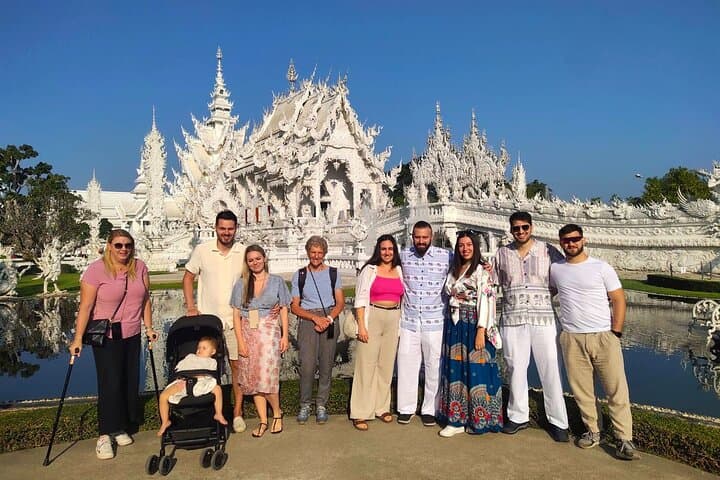
You step off the air-conditioned van into a dry, highland light and the White Temple arrests your attention — a frosted structure that seems to glow against the northern Thai sky. Over ten hours the landscape keeps changing: from lacquered ceramics and carved gables at contemporary temples to the folded green of high-elevation tea estates and the slow, brown flow of the Mekong at the Golden Triangle.
You step off the air-conditioned van into a dry, highland light and the White Temple arrests your attention — a frosted structure that seems to glow against the northern Thai sky. Over ten hours the landscape keeps changing: from lacquered ceramics and carved gables at contemporary temples to the folded green of high-elevation tea estates and the slow, brown flow of the Mekong at the Golden Triangle.
Northern Thailand’s geology is folded hills and steep river valleys carved by tributaries of the Mekong. The area around Chiang Rai carries a layered history — ancient Lanna influences, the recent creative surge of artists like Chalermchai Kositpipat at Wat Rong Khun, and the complicated legacy of opium cultivation visible in museums and borderlands.
Culturally the day mixes museum rooms and living craft: the Black House’s dark timber and collected curios, a hill‑tribe village where observation should be quiet and respectful, and Choui Fong’s terraces where tea plants slope like ribs down the mountain.
Practical guidance: this is a full, guided 10‑hour circuit with short walking windows (30–45 minutes per stop). Wear modest clothing for temples (shoulders and knees covered), comfortable walking shoes for uneven paths, and bring sunscreen, insect repellent and a small daypack. Bottled water and a buffet lunch are included; expect multiple short photo stops rather than long hikes. Note the tour is listed as suitable for most fitness levels but not recommended for pregnant travelers or those with serious back or heart conditions. Timing matters — mornings are cooler at the high tea farms, while late afternoon light favors the Golden Triangle viewpoint.