THE ADVENTURE COLLECTIVE® · Independent discovery and booking for outdoor travel

Spend a long day exploring Chiang Rai’s top sights: the modern White Temple, Chiang Saen ruins, a Mekong boat ride and the Golden Triangle viewpoint. This full‑day tour from Chiang Mai blends architecture, history and river scenery with practical transport and lunch included.
Spend a long day exploring Chiang Rai’s top sights: the modern White Temple, Chiang Saen ruins, a Mekong boat ride and the Golden Triangle viewpoint. This full‑day tour from Chiang Mai blends architecture, history and river scenery with practical transport and lunch included.
The day starts before dawn on an air‑conditioned minivan and the road hums north, rice fields sliding past like pages. By midmorning you arrive at Wat Rong Khun — the White Temple — its mirrored mosaics flashing under a clear northern Thai sky; the structure feels contemporary and pointed, a modern artist’s take on Buddhist motifs.
Verified experiences and guided adventures in the surrounding area.
Operated by Touring Center · Chiang Rai, Chiang Rai Province
The day starts before dawn on an air‑conditioned minivan and the road hums north, rice fields sliding past like pages. By midmorning you arrive at Wat Rong Khun — the White Temple — its mirrored mosaics flashing under a clear northern Thai sky; the structure feels contemporary and pointed, a modern artist’s take on Buddhist motifs.
Further along the itinerary the landscape flattens toward the Mekong: the river dares you to read its history in the brown current. At the Golden Triangle viewpoint you look across the bend where Thailand, Laos and Myanmar converge — a place shaped by geology and trade routes and the 20th‑century opium economy. The House of Opium offers context, explaining how this remote highland region was once central to an international drug trade and how communities transitioned afterward.
Chiang Saen’s ruins and riverside temples reveal older Lan Na styles, low stucco chedis and time‑smoothed brickwork that hint at a 13th–16th century kingdom. A long‑tail boat ride on the Mekong provides a close, wet perspective — egrets and kingfishers move with you while the current pushes the boat gently downstream.
Practical edge: plan a very early pickup from Chiang Mai since the round trip runs 13–14 hours; bring sun protection, a refillable water bottle, and comfortable walking shoes for temple grounds. Expect light walking with some steps and uneven surfaces. The trip is best on clear days for visibility at the Golden Triangle and cooler months for comfort.
moderate.
13–14 hours.
Requires moderate stamina for a long day of travel, short walks, and some standing at viewpoints and museums.
The tour offers round‑trip pickup and drop‑off from selected hotels in Chiang Mai; exact pickup times depend on traffic and location and may span about 30 minutes.
A Thai set lunch is included; vegetarian options are available if requested in advance when booking.
Most stops require light to moderate walking—temple grounds, viewpoints and museum exhibits involve steps and uneven surfaces but no technical hiking.
Yes—infants may ride in strollers and lap seats are required for children under 2; the tour advises moderate fitness and has some restrictions for pregnant travelers and those with back/heart problems.
The Golden Triangle became notorious in the 20th century as an epicenter of the opium trade; local museums trace how cross‑border commerce and agricultural shifts reshaped communities.
Riverine habitats face pressure from tourism and upstream development—minimizing plastic waste and following local guidelines helps protect Mekong fisheries and birds.
Touring Center operates guided outdoor trips and adventures with an emphasis on safety, stewardship, and memorable experiences.
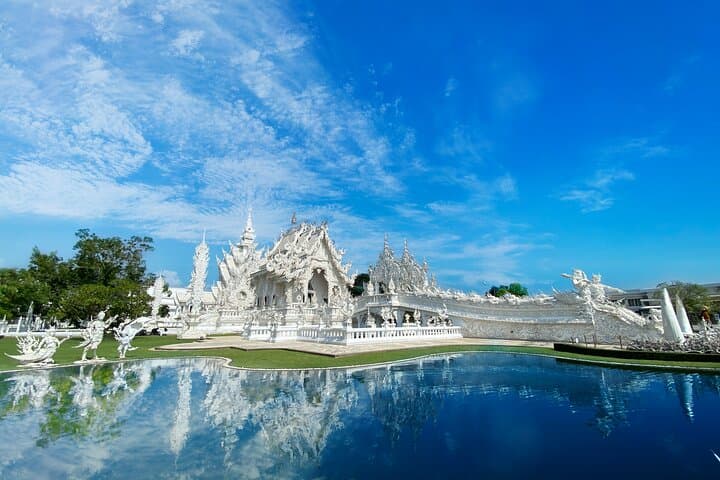
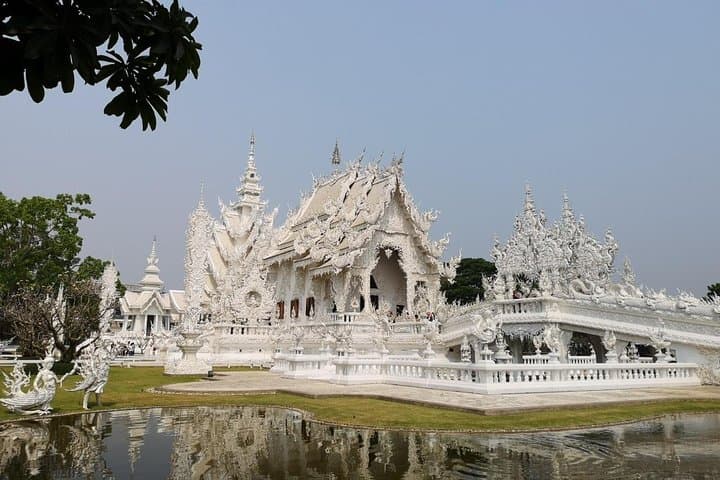
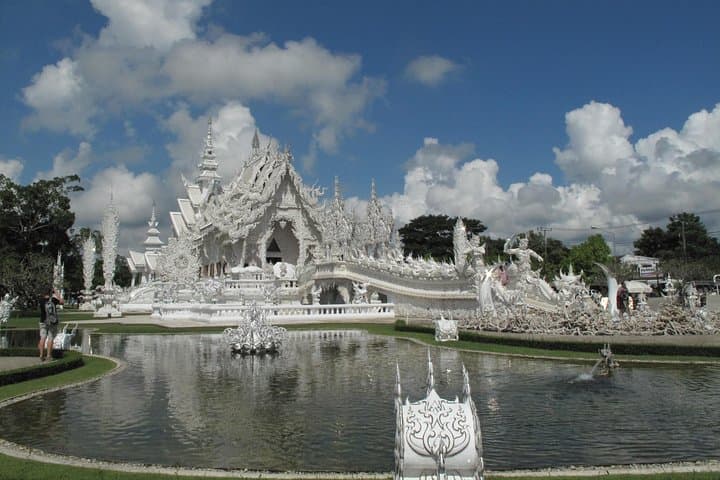
The day starts before dawn on an air‑conditioned minivan and the road hums north, rice fields sliding past like pages. By midmorning you arrive at Wat Rong Khun — the White Temple — its mirrored mosaics flashing under a clear northern Thai sky; the structure feels contemporary and pointed, a modern artist’s take on Buddhist motifs.
The day starts before dawn on an air‑conditioned minivan and the road hums north, rice fields sliding past like pages. By midmorning you arrive at Wat Rong Khun — the White Temple — its mirrored mosaics flashing under a clear northern Thai sky; the structure feels contemporary and pointed, a modern artist’s take on Buddhist motifs.
Further along the itinerary the landscape flattens toward the Mekong: the river dares you to read its history in the brown current. At the Golden Triangle viewpoint you look across the bend where Thailand, Laos and Myanmar converge — a place shaped by geology and trade routes and the 20th‑century opium economy. The House of Opium offers context, explaining how this remote highland region was once central to an international drug trade and how communities transitioned afterward.
Chiang Saen’s ruins and riverside temples reveal older Lan Na styles, low stucco chedis and time‑smoothed brickwork that hint at a 13th–16th century kingdom. A long‑tail boat ride on the Mekong provides a close, wet perspective — egrets and kingfishers move with you while the current pushes the boat gently downstream.
Practical edge: plan a very early pickup from Chiang Mai since the round trip runs 13–14 hours; bring sun protection, a refillable water bottle, and comfortable walking shoes for temple grounds. Expect light walking with some steps and uneven surfaces. The trip is best on clear days for visibility at the Golden Triangle and cooler months for comfort.