THE ADVENTURE COLLECTIVE® · Independent discovery and booking for outdoor travel

A two-day, private tour from Chiang Mai to Chiang Rai combining a scenic Mae Kok River boat ride, Wat Huay Pla Kung’s giant Buddha, the White and Blue Temples, and the Golden Triangle. Expect easy walking, long drives, and culturally rich stops.
A two-day, private tour from Chiang Mai to Chiang Rai combining a scenic Mae Kok River boat ride, Wat Huay Pla Kung’s giant Buddha, the White and Blue Temples, and the Golden Triangle. Expect easy walking, long drives, and culturally rich stops.
You step into the day with the road unwinding ahead — rice paddies give way to forested slopes, and the engine hum becomes a steady companion as you head north from Chiang Mai toward Chiang Rai.
Verified experiences and guided adventures in the surrounding area.
Operated by GoWithJoe · Chiang Rai, Chiang Rai Province
You step into the day with the road unwinding ahead — rice paddies give way to forested slopes, and the engine hum becomes a steady companion as you head north from Chiang Mai toward Chiang Rai.
A short boat ride down the Mae Kok teases your sense of place: riverbanks pushing past, villagers tending small plots, and a wooden pier at Bann Ruammit where the mountain slopes feel close enough to touch. Later, Wat Huay Pla Kung’s vast white Buddha crowns a hill and watches over the valley, a quiet, commanding presence.
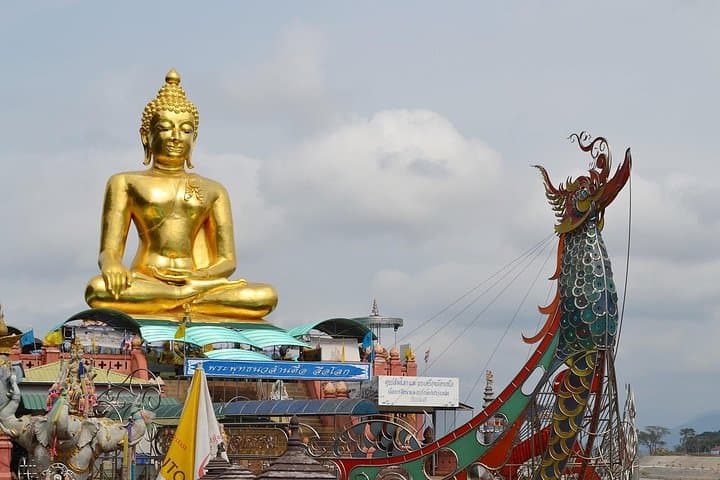
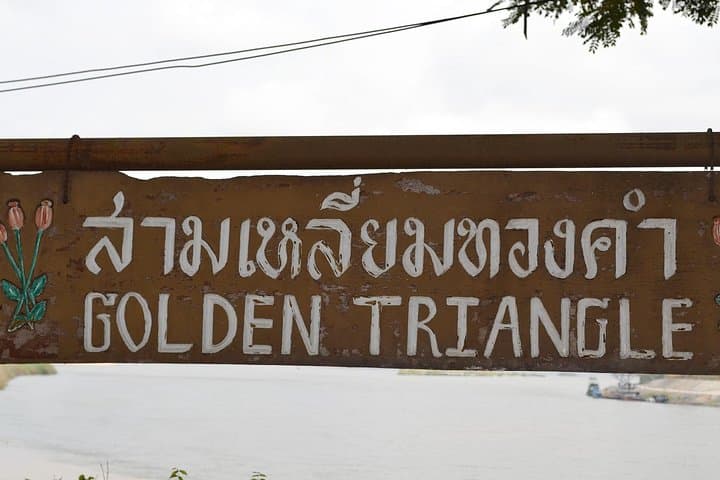
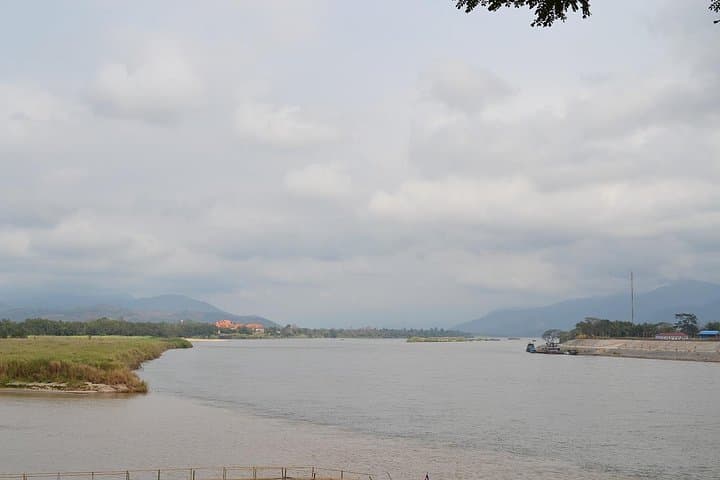
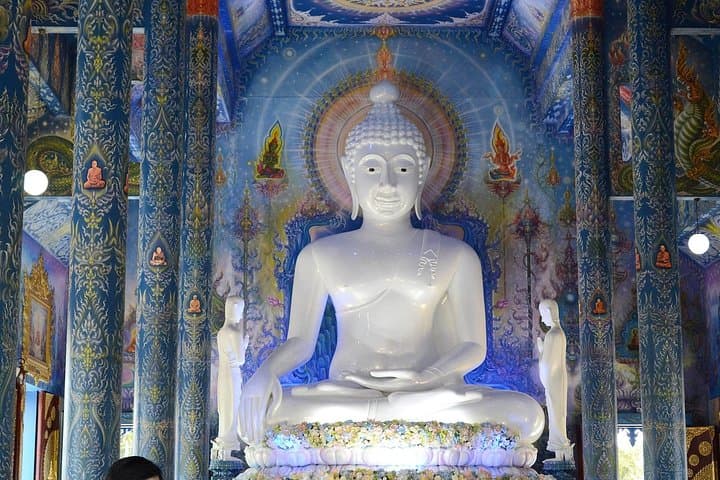
On day two the tour threads together Chiang Rai’s modern and historical layers: Wat Rong Khun (the White Temple) reimagines sacred art with mirrored glass and sharp white forms, while Wat Rong Suea Ten (the Blue Temple) contrasts with saturated color and floral motifs. Then the Golden Triangle, where the Ruak meets the Mekong, speaks to the region’s geology and the fraught opium trade that once defined this borderland; the small Opium Museum gives context without spectacle.
Practicalities are straightforward: expect long but easy travel days with frequent short walks, an air‑conditioned vehicle, one night’s twin-share accommodation in Chiang Rai, and two lunches included. Dress respectfully for temples (shoulders and knees covered), bring sun protection and swimwear for the hot-spring stop, and carry some Thai baht for small vendors and optional fees like Doi Tung royal villa (payable locally). Start early to beat afternoon heat and crowds; the rhythm of this trip alternates calm river moments with sharply detailed temples — a focused, approachable introduction to northern Thailand.
easy.
2 days (approx. 10–12 hours total per day).
Suitable for all fitness levels; expect mostly vehicle travel with short, flat walks and some steps at temple sites.
Yes — the tour offers pickup from Chiang Mai hotels as noted in the itinerary.
Lunches for both days and most admissions listed (White Temple, Blue Temple, Golden Triangle) are included; optional sites like Doi Tung have an extra local fee.
Yes — the tour is rated easy and suitable for all fitness levels, though it involves long vehicle transfers and some stairs at viewpoints and temples.
Yes — optional visits such as Doi Tung Royal Villa (approx. 600 THB per person) are paid directly to the guide or at the site, usually in cash.
The Golden Triangle’s river confluence shaped cross-border trade routes and, in the 20th century, became notorious for the opium trade; museums in the area contextualize that history.
Riverbank communities are sensitive to tourist pressure — stick to marked paths, avoid single-use plastics, and support local vendors to keep economic benefits local.
GoWithJoe operates guided outdoor trips and adventures with an emphasis on safety, stewardship, and memorable experiences.
You step into the day with the road unwinding ahead — rice paddies give way to forested slopes, and the engine hum becomes a steady companion as you head north from Chiang Mai toward Chiang Rai.
You step into the day with the road unwinding ahead — rice paddies give way to forested slopes, and the engine hum becomes a steady companion as you head north from Chiang Mai toward Chiang Rai.
A short boat ride down the Mae Kok teases your sense of place: riverbanks pushing past, villagers tending small plots, and a wooden pier at Bann Ruammit where the mountain slopes feel close enough to touch. Later, Wat Huay Pla Kung’s vast white Buddha crowns a hill and watches over the valley, a quiet, commanding presence.
On day two the tour threads together Chiang Rai’s modern and historical layers: Wat Rong Khun (the White Temple) reimagines sacred art with mirrored glass and sharp white forms, while Wat Rong Suea Ten (the Blue Temple) contrasts with saturated color and floral motifs. Then the Golden Triangle, where the Ruak meets the Mekong, speaks to the region’s geology and the fraught opium trade that once defined this borderland; the small Opium Museum gives context without spectacle.
Practicalities are straightforward: expect long but easy travel days with frequent short walks, an air‑conditioned vehicle, one night’s twin-share accommodation in Chiang Rai, and two lunches included. Dress respectfully for temples (shoulders and knees covered), bring sun protection and swimwear for the hot-spring stop, and carry some Thai baht for small vendors and optional fees like Doi Tung royal villa (payable locally). Start early to beat afternoon heat and crowds; the rhythm of this trip alternates calm river moments with sharply detailed temples — a focused, approachable introduction to northern Thailand.