THE ADVENTURE COLLECTIVE® · Independent discovery and booking for outdoor travel

Spend a full day exploring Mae Wang by chauffeur-driven tuk tuk—remote mountain temple, a short forest waterfall hike, a visit to a community elephant home, and a calm bamboo raft on the local river. This small-group tour combines cultural insight with light adventure for an accessible, action-packed day.
Spend a full day exploring Mae Wang by chauffeur-driven tuk tuk—remote mountain temple, a short forest waterfall hike, a visit to a community elephant home, and a calm bamboo raft on the local river. This small-group tour combines cultural insight with light adventure for an accessible, action-packed day.
You pull up a fold-down seat in a converted Bangkok-style tuk tuk as morning light slices across rice paddies; the engine hums and your driver navigates narrow country lanes toward the foothills of Mae Wang. The day unfolds like a map of local life—temple roofs glinting on a ridgeline, farmers tending terraces, and a cool valley where a forest waterfall waits at the end of a short country hike.
Verified experiences and guided adventures in the surrounding area.
Operated by The Tuk Tuk Club · Chiang Mai, Chiang Mai Province
You pull up a fold-down seat in a converted Bangkok-style tuk tuk as morning light slices across rice paddies; the engine hums and your driver navigates narrow country lanes toward the foothills of Mae Wang. The day unfolds like a map of local life—temple roofs glinting on a ridgeline, farmers tending terraces, and a cool valley where a forest waterfall waits at the end of a short country hike.
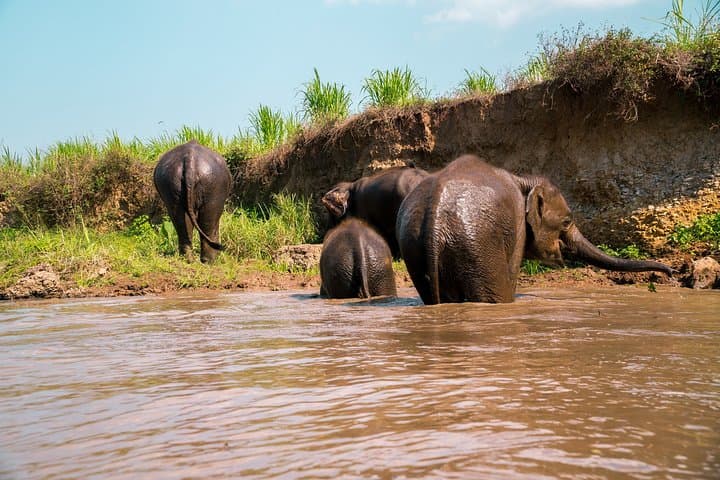
Mae Wang sits on the western flank of Chiang Mai province, where late-Tertiary uplift created steep valleys and fast feeder streams that feed the Ping River. The tour threads cultural cues through the landscape: a mountainside temple used by nearby villages, a small elephant home where mahouts prepare food and bathe animals at the river, and riverside villages where bamboo rafting remains a practical, low-tech way to move along slow reaches. Expect encounters with everyday northern Thai life—rice-growing families, temple bells, and casual roadside markets.
Practically, this is a full-day (roughly 10-hour) guided circuit best suited to travelers comfortable moving between roadside stops, short hikes, and light water activity. Hikes to the waterfall are brief with modest elevation gain; wear trainers and bring light rain protection during monsoon months. Hydrate, bring a change of clothes for rafting, and carry small cash for village snacks or offerings. The pace is deliberate: active but accessible, and anchored by the quirky intimacy of two-up tuk tuk travel—equal parts local transportation and open-air viewing platform.
easy.
10 hours (full day).
Suitable for most fitness levels — able to board a tuk tuk, walk short forest trails and step onto a raft.
The hike is a short forest walk—typically 20–40 minutes round-trip—over modestly uneven terrain with minimal elevation gain.
Yes; the itinerary includes a visit to a local elephant home where you can watch feeding and see elephants being bathed at the river, with guidance from mahouts.
Tuk tuks are modified for two passengers and are suitable for most ages; children must be accompanied by an adult and the tour is rated easy physically.
Wear quick-dry clothes or swimwear, bring a spare change of clothes, and put electronics in a waterproof pouch — life jackets are typically provided.
Mae Wang’s valleys have long supported small rice-growing communities and hill-tribe villages; temples on ridgelines served as spiritual and social centers for scattered settlements.
Elephant facilities in the region vary—choose operators that prioritize feeding, bathing, and non-ridden interactions; avoid programs that promote riding. Stay on trails and minimize single-use plastics to reduce local impact.
The Tuk Tuk Club operates guided outdoor trips and adventures with an emphasis on safety, stewardship, and memorable experiences.
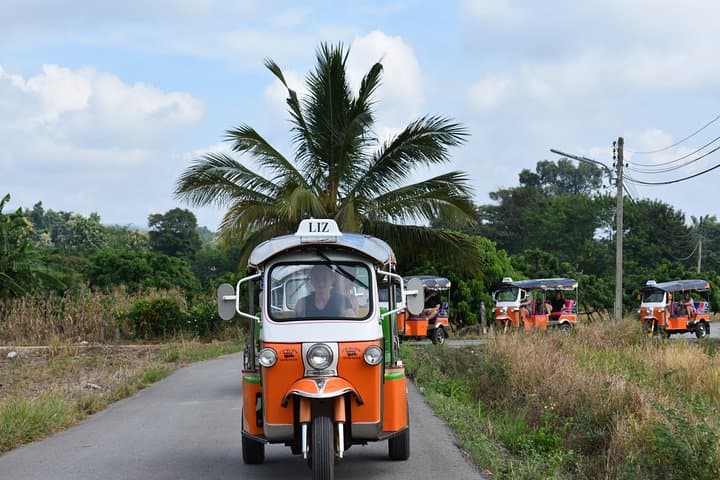
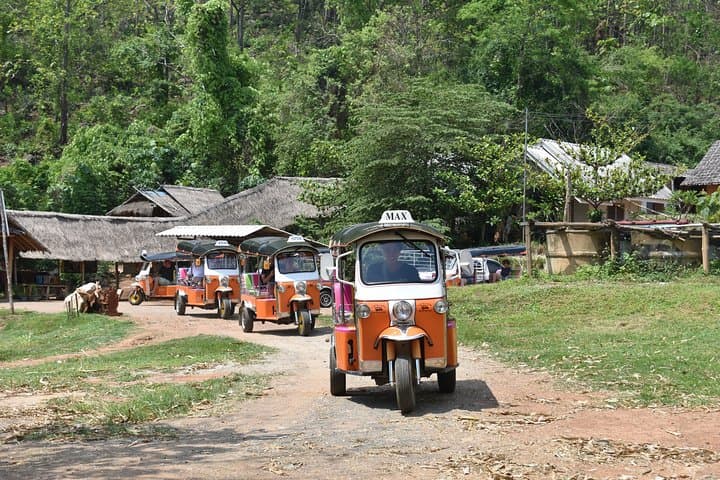
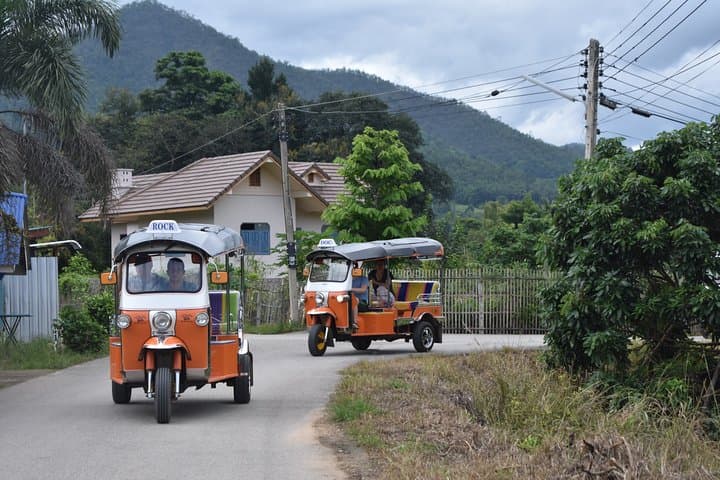
You pull up a fold-down seat in a converted Bangkok-style tuk tuk as morning light slices across rice paddies; the engine hums and your driver navigates narrow country lanes toward the foothills of Mae Wang. The day unfolds like a map of local life—temple roofs glinting on a ridgeline, farmers tending terraces, and a cool valley where a forest waterfall waits at the end of a short country hike.
You pull up a fold-down seat in a converted Bangkok-style tuk tuk as morning light slices across rice paddies; the engine hums and your driver navigates narrow country lanes toward the foothills of Mae Wang. The day unfolds like a map of local life—temple roofs glinting on a ridgeline, farmers tending terraces, and a cool valley where a forest waterfall waits at the end of a short country hike.
Mae Wang sits on the western flank of Chiang Mai province, where late-Tertiary uplift created steep valleys and fast feeder streams that feed the Ping River. The tour threads cultural cues through the landscape: a mountainside temple used by nearby villages, a small elephant home where mahouts prepare food and bathe animals at the river, and riverside villages where bamboo rafting remains a practical, low-tech way to move along slow reaches. Expect encounters with everyday northern Thai life—rice-growing families, temple bells, and casual roadside markets.
Practically, this is a full-day (roughly 10-hour) guided circuit best suited to travelers comfortable moving between roadside stops, short hikes, and light water activity. Hikes to the waterfall are brief with modest elevation gain; wear trainers and bring light rain protection during monsoon months. Hydrate, bring a change of clothes for rafting, and carry small cash for village snacks or offerings. The pace is deliberate: active but accessible, and anchored by the quirky intimacy of two-up tuk tuk travel—equal parts local transportation and open-air viewing platform.