THE ADVENTURE COLLECTIVE® · Independent discovery and booking for outdoor travel

A private two-day itinerary from Chiang Mai to Sukhothai that pairs Lanna temples and UNESCO-listed ruins with easy bike loops and a local village visit. Ideal for travelers who want cultural depth without roughing it.
A private two-day itinerary from Chiang Mai to Sukhothai that pairs Lanna temples and UNESCO-listed ruins with easy bike loops and a local village visit. Ideal for travelers who want cultural depth without roughing it.
You step into the morning from Chiang Mai as the hired minivan hums south, field edges and low karst ridges sliding past the windows. After an hour and a half the wooden gables of Wat Phra That Lampang Luang rise against an open sky — a Lanna chedi that anchors the route — and by midday you’re circling the low moats of Sukhothai Historical Park, seat of Thailand’s 13th-century capital.
Verified experiences and guided adventures in the surrounding area.
Operated by Quality Thai Guide by Quality Experiences · Sukhothai, Sukhothai Province
You step into the morning from Chiang Mai as the hired minivan hums south, field edges and low karst ridges sliding past the windows. After an hour and a half the wooden gables of Wat Phra That Lampang Luang rise against an open sky — a Lanna chedi that anchors the route — and by midday you’re circling the low moats of Sukhothai Historical Park, seat of Thailand’s 13th-century capital.
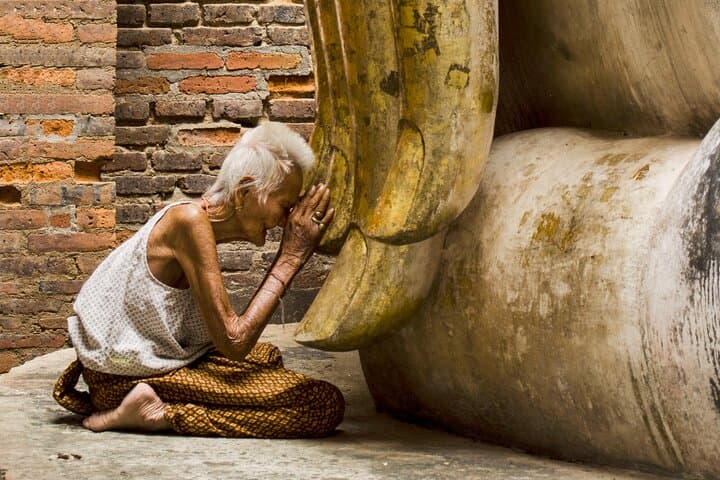
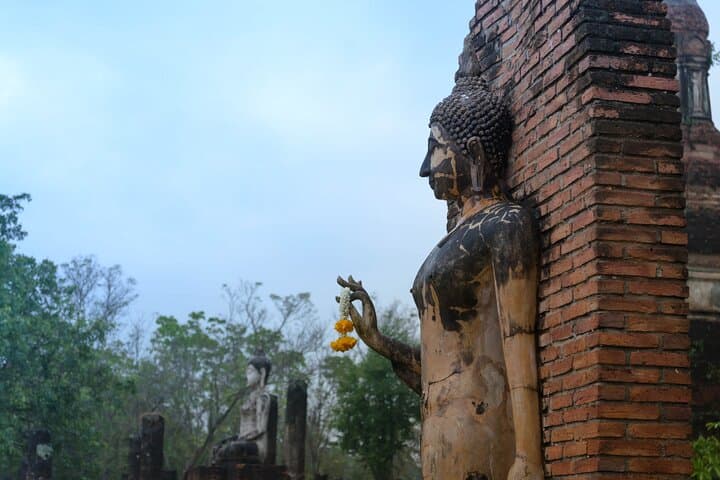
Sukhothai and nearby Si Satchanalai are where Thai statecraft and sacred art crystallized: brick-and-stucco chedis, lotus-bud stupas and the famously severe seated Buddha at Wat Sri Chum speak to a polity that organized water, rice fields and temple precincts in a deliberate grid. Geologically the plain is soft alluvium cut by small rivers and ponds, which makes the park flat and ideal for bicycles; culturally the villages around it still practice traditional pottery and weaving.
Practical details are straightforward: the tour is private, starts with a 07:00 pickup in Chiang Mai, includes English guide, hotel in Sukhothai (twin share with breakfast), admissions and insurance. Expect two long drives (≈1.5 hours to Lampang, ≈3 hours to Sukhothai) and easy walking on packed-earth and paved temple roads. Bring sun protection, a refillable bottle, and clothing that covers shoulders and knees for temple visits. Bicycling around the main ruin zones covers short circuits (roughly 6–12 km depending on the route) and is low-impact but can be hot; early starts and late-afternoon rides are the most pleasant.
Respect religious rules (remove shoes where required), stay on marked paths, and allow time in villages like Ban Na Ton Chan to see crafts that keep Sukhothai’s living culture connected to its ruins.
easy.
2 days (approx. 48 hours total; 6–8 hours touring per day).
Suitable for light to moderate fitness: short walks, standing, and optional easy bicycle rides of 6–12 km.
Yes — all admissions listed in the itinerary for Sukhothai and Si Satchanalai are included in the tour price.
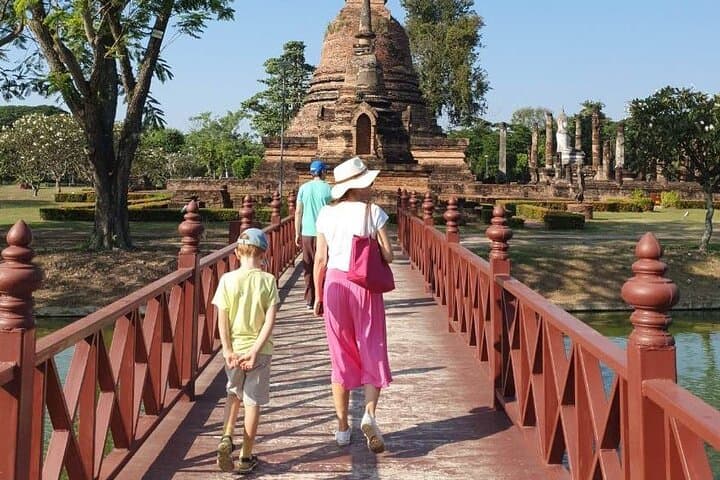
Cycling is optional but recommended to see more sites; routes are flat and suitable for casual cyclists using straightforward city-style bikes.
Yes — pickups can be arranged from hotels, the airport or the train station in Chiang Mai when you provide the pickup point at booking.
All sales are final; this itinerary does not offer refunds for cancellations or no-shows, so confirm plans before booking.
Sukhothai was the seat of an early Thai kingdom in the 13th century; its planners arranged temples, moats and rice fields around ceremonial axes, while nearby Lampang preserves distinctive Lanna wood and stucco temple forms.
Stick to marked paths around the ruins, avoid climbing on fragile masonry and support village enterprises to help local communities benefit from tourism.
Quality Thai Guide by Quality Experiences operates guided outdoor trips and adventures with an emphasis on safety, stewardship, and memorable experiences.
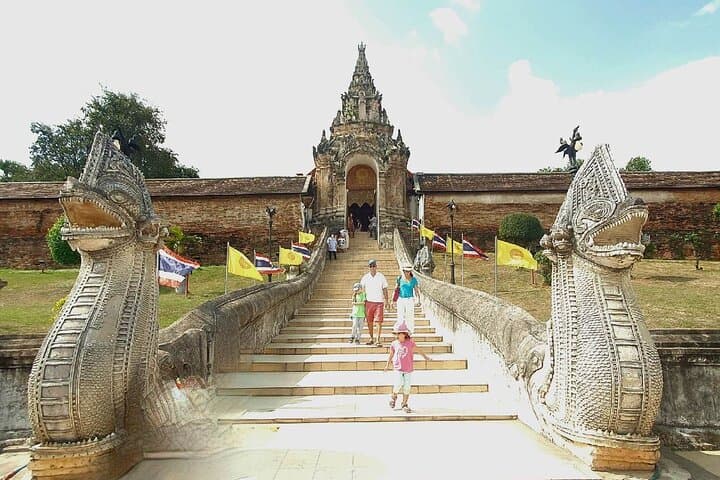
You step into the morning from Chiang Mai as the hired minivan hums south, field edges and low karst ridges sliding past the windows. After an hour and a half the wooden gables of Wat Phra That Lampang Luang rise against an open sky — a Lanna chedi that anchors the route — and by midday you’re circling the low moats of Sukhothai Historical Park, seat of Thailand’s 13th-century capital.
You step into the morning from Chiang Mai as the hired minivan hums south, field edges and low karst ridges sliding past the windows. After an hour and a half the wooden gables of Wat Phra That Lampang Luang rise against an open sky — a Lanna chedi that anchors the route — and by midday you’re circling the low moats of Sukhothai Historical Park, seat of Thailand’s 13th-century capital.
Sukhothai and nearby Si Satchanalai are where Thai statecraft and sacred art crystallized: brick-and-stucco chedis, lotus-bud stupas and the famously severe seated Buddha at Wat Sri Chum speak to a polity that organized water, rice fields and temple precincts in a deliberate grid. Geologically the plain is soft alluvium cut by small rivers and ponds, which makes the park flat and ideal for bicycles; culturally the villages around it still practice traditional pottery and weaving.
Practical details are straightforward: the tour is private, starts with a 07:00 pickup in Chiang Mai, includes English guide, hotel in Sukhothai (twin share with breakfast), admissions and insurance. Expect two long drives (≈1.5 hours to Lampang, ≈3 hours to Sukhothai) and easy walking on packed-earth and paved temple roads. Bring sun protection, a refillable bottle, and clothing that covers shoulders and knees for temple visits. Bicycling around the main ruin zones covers short circuits (roughly 6–12 km depending on the route) and is low-impact but can be hot; early starts and late-afternoon rides are the most pleasant.
Respect religious rules (remove shoes where required), stay on marked paths, and allow time in villages like Ban Na Ton Chan to see crafts that keep Sukhothai’s living culture connected to its ruins.