THE ADVENTURE COLLECTIVE® · Independent discovery and booking for outdoor travel

Travel north from Chiang Mai to Chiang Rai with a private transfer that includes a 20-minute stop at Wiang Pa Pao Hot Springs. Expect scenic highway stretches, a short thermal soak, and cultural glimpses of Lanna and hill-tribe country.
Travel north from Chiang Mai to Chiang Rai with a private transfer that includes a 20-minute stop at Wiang Pa Pao Hot Springs. Expect scenic highway stretches, a short thermal soak, and cultural glimpses of Lanna and hill-tribe country.
The van eases out of Chiang Mai at dawn, the city receding while rice paddies and low teak forests stretch like a shifting patchwork. Mountain ridges lift ahead; the road curves and reveals distant peaks that seem to push you north. Midway, the driver pulls into Wiang Pa Pao Hot Springs — steam rising from rock-lined pools, vendors selling sticky rice and boiled eggs, and a brief chance to stretch surrounded by humid, mineral-scented air.
Verified experiences and guided adventures in the surrounding area.
Operated by Fantasia Wedding and Travel · Chiang Mai, Chiang Mai Province
The van eases out of Chiang Mai at dawn, the city receding while rice paddies and low teak forests stretch like a shifting patchwork. Mountain ridges lift ahead; the road curves and reveals distant peaks that seem to push you north. Midway, the driver pulls into Wiang Pa Pao Hot Springs — steam rising from rock-lined pools, vendors selling sticky rice and boiled eggs, and a brief chance to stretch surrounded by humid, mineral-scented air.
The route between Chiang Mai and Chiang Rai follows ancient trade corridors that threaded hilltribe communities and river valleys. Geologically, northern Thailand is a fold-and-fault landscape: granite outcrops, volcanic hot springs, and alluvial plains carved by the Kok and Ping river systems. Culturally, the drive crosses zones influenced by Lanna history and contemporary hill-tribe villages; roadside shrines and wooden temples punctuate the way.
Practical guidance: the transfer covers roughly 180–200 km and takes about 3–4 hours depending on traffic. Roads are paved and mostly two-lane highways with occasional steep stretches; motion-sensitive travelers should plan accordingly. The 20-minute stop at Wiang Pa Pao lets you use facilities, buy snacks, and—time permitting—soak feet in thermal pools; bring a small towel and slip-on shoes. Pack a light layer for cooler highland mornings, sunscreen for exposed stretches, and your passport or ID for checkpoints.
Timing matters: early departures avoid heavy mid-day traffic and give you clearer views. The journey is straightforward but offers repeated reminders that travel here is as much about the road as the destination: rivers daring you to look over the guardrail, steam pushing skyward from hidden springs.
easy.
3–4 hours.
Suitable for most fitness levels; passengers should be comfortable sitting for several hours with brief stops
The transfer typically takes about 3–4 hours depending on traffic and weather; the route is approximately 180–200 km by road.
Yes—there is a scheduled 20-minute stop where you can stretch, use facilities, buy snacks, and, time permitting, soak your feet or enter public pools; bring a towel.
Yes, the 20-minute stop at Wiang Pa Pao includes restroom access; drivers may make additional brief stops if needed and safe.
Yes, this is a private transfer with pickup and drop-off included; provide your pickup point and full names when booking.
The corridor linking Chiang Mai and Chiang Rai traces routes used by Lanna-era traders and hill-tribe communities; remnants of wooden temples and roadside stupas mark this history.
Stick to designated parking and pool areas at hot springs to protect thermal features; support local vendors to keep small-community economies viable.
Fantasia Wedding and Travel operates guided outdoor trips and adventures with an emphasis on safety, stewardship, and memorable experiences.
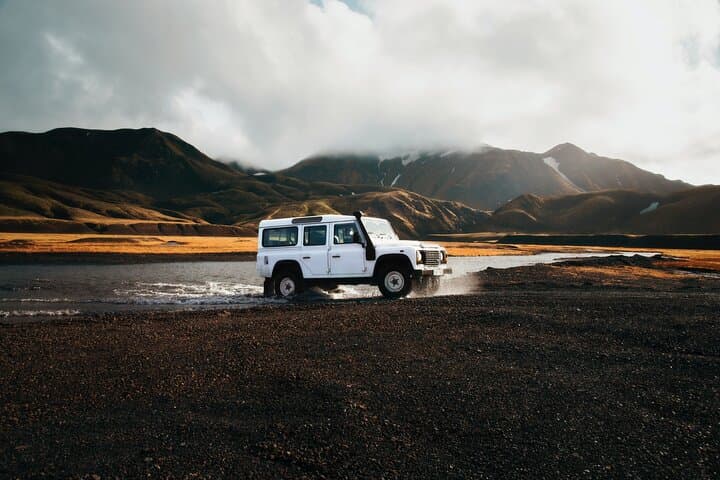

The van eases out of Chiang Mai at dawn, the city receding while rice paddies and low teak forests stretch like a shifting patchwork. Mountain ridges lift ahead; the road curves and reveals distant peaks that seem to push you north. Midway, the driver pulls into Wiang Pa Pao Hot Springs — steam rising from rock-lined pools, vendors selling sticky rice and boiled eggs, and a brief chance to stretch surrounded by humid, mineral-scented air.
The van eases out of Chiang Mai at dawn, the city receding while rice paddies and low teak forests stretch like a shifting patchwork. Mountain ridges lift ahead; the road curves and reveals distant peaks that seem to push you north. Midway, the driver pulls into Wiang Pa Pao Hot Springs — steam rising from rock-lined pools, vendors selling sticky rice and boiled eggs, and a brief chance to stretch surrounded by humid, mineral-scented air.
The route between Chiang Mai and Chiang Rai follows ancient trade corridors that threaded hilltribe communities and river valleys. Geologically, northern Thailand is a fold-and-fault landscape: granite outcrops, volcanic hot springs, and alluvial plains carved by the Kok and Ping river systems. Culturally, the drive crosses zones influenced by Lanna history and contemporary hill-tribe villages; roadside shrines and wooden temples punctuate the way.
Practical guidance: the transfer covers roughly 180–200 km and takes about 3–4 hours depending on traffic. Roads are paved and mostly two-lane highways with occasional steep stretches; motion-sensitive travelers should plan accordingly. The 20-minute stop at Wiang Pa Pao lets you use facilities, buy snacks, and—time permitting—soak feet in thermal pools; bring a small towel and slip-on shoes. Pack a light layer for cooler highland mornings, sunscreen for exposed stretches, and your passport or ID for checkpoints.
Timing matters: early departures avoid heavy mid-day traffic and give you clearer views. The journey is straightforward but offers repeated reminders that travel here is as much about the road as the destination: rivers daring you to look over the guardrail, steam pushing skyward from hidden springs.