THE ADVENTURE COLLECTIVE® · Independent discovery and booking for outdoor travel

Explore Chiang Mai’s major temples with guided hotel pickup, visiting Doi Suthep’s mountain temple plus Wat Suan Dok and Wat Chedi Luang. This half‑day tour pairs historical context with practical logistics for an accessible, culturally rich outing.
Explore Chiang Mai’s major temples with guided hotel pickup, visiting Doi Suthep’s mountain temple plus Wat Suan Dok and Wat Chedi Luang. This half‑day tour pairs historical context with practical logistics for an accessible, culturally rich outing.
You arrive at the foot of Doi Suthep as the mountain exhales cool air; incense curls from the stairway and the city below brightens like a map. The tour moves from the elevated terraces of Wat Phra That Doi Suthep—where stupas and naga balustrades watch over the valley—down into the heart of the old city, stopping at Wat Suan Dok’s white chedis and the hulking, centuries‑old ruins of Wat Chedi Luang.
Verified experiences and guided adventures in the surrounding area.
Operated by I Asia Thailand · Chiang Mai, Chiang Mai Province
You arrive at the foot of Doi Suthep as the mountain exhales cool air; incense curls from the stairway and the city below brightens like a map. The tour moves from the elevated terraces of Wat Phra That Doi Suthep—where stupas and naga balustrades watch over the valley—down into the heart of the old city, stopping at Wat Suan Dok’s white chedis and the hulking, centuries‑old ruins of Wat Chedi Luang.
Chiang Mai was founded as the Lanna capital in 1296, and its temples are layered records: Lanna timberwork, later Burmese repairs, and 20th‑century restorations. Geologically, Doi Suthep is part of the high ridge west of the Ping River; the slope channels cooler air and thicker forest which gives the temple its high, contemplative feel.
Culturally the sites remain active places of worship—monks walk the grounds, families bring offerings, and festivals animate the precincts. Local insight: early morning or late afternoon light delivers the best photos and quieter spaces for reflection.
Practical guidance: hotel pickup simplifies transit between dispersed sites; wear shoulders‑ and knee‑covering clothes for shrine entry, and expect paved steps and short walks rather than long hikes. Bring water, respectful footwear (you’ll remove shoes in temples), and a compact rain layer during the wet season. Guides typically include entrance fees and explain iconography, freeing you to focus on the architecture and ritual. For a half‑day of concentrated history and sensory detail, this tour balances accessibility with authentic cultural immersion.
easy.
3–4 hours.
Suitable for most fitness levels; requires short walks, stair climbs, and standing during visits
Yes—this tour includes entrance fees for the listed temples as part of the package.
Pickup and drop‑off from Chiang Mai city hotels are included; confirm your pickup location at booking.
Shoulders and knees must be covered; avoid see‑through fabrics and sportswear—bring a scarf or sarong if needed.
Infants and small children may use strollers; children under 11 must be accompanied by a paying adult and some stairs may limit stroller use at specific sites.
Chiang Mai was founded as the capital of the Lanna Kingdom in 1296; many city temples date from the 14th century and reflect Lanna architecture and later restorations.
Temples and parks ask visitors to respect sanctified areas, avoid littering and feeding wildlife, and use refillable water bottles to reduce plastic waste.
I Asia Thailand operates guided outdoor trips and adventures with an emphasis on safety, stewardship, and memorable experiences.
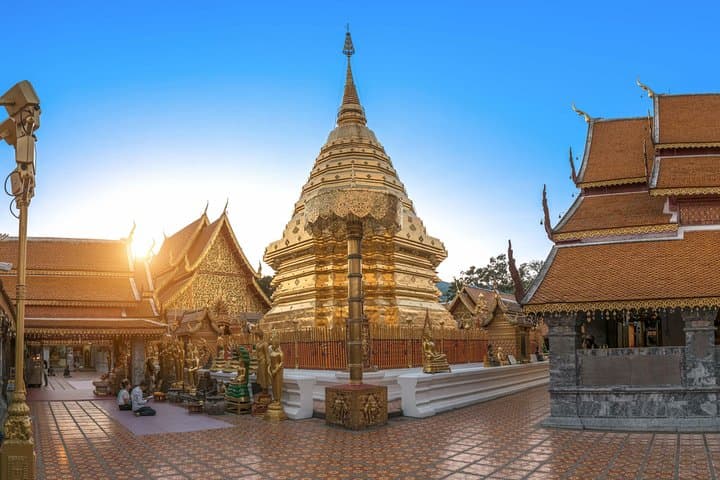
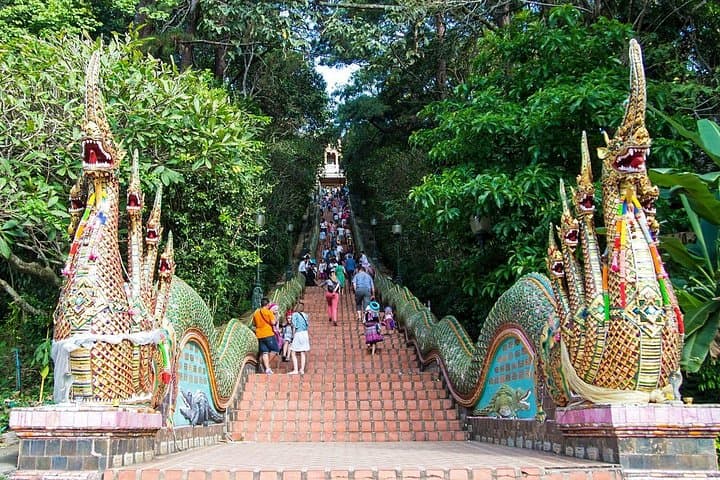


You arrive at the foot of Doi Suthep as the mountain exhales cool air; incense curls from the stairway and the city below brightens like a map. The tour moves from the elevated terraces of Wat Phra That Doi Suthep—where stupas and naga balustrades watch over the valley—down into the heart of the old city, stopping at Wat Suan Dok’s white chedis and the hulking, centuries‑old ruins of Wat Chedi Luang.
You arrive at the foot of Doi Suthep as the mountain exhales cool air; incense curls from the stairway and the city below brightens like a map. The tour moves from the elevated terraces of Wat Phra That Doi Suthep—where stupas and naga balustrades watch over the valley—down into the heart of the old city, stopping at Wat Suan Dok’s white chedis and the hulking, centuries‑old ruins of Wat Chedi Luang.
Chiang Mai was founded as the Lanna capital in 1296, and its temples are layered records: Lanna timberwork, later Burmese repairs, and 20th‑century restorations. Geologically, Doi Suthep is part of the high ridge west of the Ping River; the slope channels cooler air and thicker forest which gives the temple its high, contemplative feel.
Culturally the sites remain active places of worship—monks walk the grounds, families bring offerings, and festivals animate the precincts. Local insight: early morning or late afternoon light delivers the best photos and quieter spaces for reflection.
Practical guidance: hotel pickup simplifies transit between dispersed sites; wear shoulders‑ and knee‑covering clothes for shrine entry, and expect paved steps and short walks rather than long hikes. Bring water, respectful footwear (you’ll remove shoes in temples), and a compact rain layer during the wet season. Guides typically include entrance fees and explain iconography, freeing you to focus on the architecture and ritual. For a half‑day of concentrated history and sensory detail, this tour balances accessibility with authentic cultural immersion.