THE ADVENTURE COLLECTIVE® · Independent discovery and booking for outdoor travel

Combine two of Chiang Mai’s oldest temples with the one-of-a-kind Bua Tong “Sticky” Waterfall on a six-hour day trip. Expect Lanna architecture, a local lunch, and hands-on climbing on mineral-coated limestone falls.
Combine two of Chiang Mai’s oldest temples with the one-of-a-kind Bua Tong “Sticky” Waterfall on a six-hour day trip. Expect Lanna architecture, a local lunch, and hands-on climbing on mineral-coated limestone falls.
Morning light slips through the city moat as a guide leads the group past century-old teak and stucco — the air already fragrant with incense and street-side coffee. The first stop is Wat Chiang Man, where worn elephant buttresses anchor a Lanna chedi and a quietness that feels older than the city itself. Later, Wat Chet Yot’s multi-influenced architecture offers a different pulse: stone steps, carved niches and a chedi that once hosted a world Buddhist council.
Verified experiences and guided adventures in the surrounding area.
Operated by GoWithJoe · Chiang Mai, Chiang Mai
Morning light slips through the city moat as a guide leads the group past century-old teak and stucco — the air already fragrant with incense and street-side coffee. The first stop is Wat Chiang Man, where worn elephant buttresses anchor a Lanna chedi and a quietness that feels older than the city itself. Later, Wat Chet Yot’s multi-influenced architecture offers a different pulse: stone steps, carved niches and a chedi that once hosted a world Buddhist council.
By afternoon the scene shifts from stone to water. Bua Tong — the “Sticky Waterfall” — is a karst limestone cascade that resists slipperiness: mineral-laden rock gives hands and feet improbable purchase, so visitors can climb into the current as small torrents push around your ankles.
This day trip threads local history with outdoor action: the two temples map Chiang Mai’s Lanna and regional connections, while the falls reveal northern Thailand’s limestone geology and seasonal flow. Expect temple courtyards, brief guided explanations of iconography, and a local lunch—khao soi or noodle soup—before some wet, playful scrambling on the falls.
Practical notes: wear quick-dry clothes, shoes that grip in water, and bring sun protection. The temple visits require respectful dress (shoulders and knees covered). The itinerary fits a six-hour window and is accessible for most people, though anyone with serious spinal, cardiovascular, or pregnancy concerns should skip the waterfall climb. Timing your visit to avoid mid-day heat or heavy rains makes both the city and the falls more enjoyable.
moderate.
6 hours.
Light to moderate fitness; comfortable walking, short uneven climbs and modest scrambling required.
This is a roughly six-hour private tour that includes hotel pickup and drop-off.
Yes, the itinerary includes admission where required and local lunch is provided.
Children can join if supervised; the falls are climbable but require care—avoid during heavy rain and keep younger kids close.
Conservative clothing that covers shoulders and knees; bring a sarong or light cover-up if needed.
Wat Chiang Man dates to 1296 under King Mengrai and represents early Lanna architecture; Wat Chet Yot was a 15th-century royal temple linked to the Lanna kingdom and a historic Buddhist council.
The falls are sensitive to visitor impact—stick to designated paths, avoid soap or detergents in pools, and follow local guidance to limit erosion and litter.
GoWithJoe operates guided outdoor trips and adventures with an emphasis on safety, stewardship, and memorable experiences.


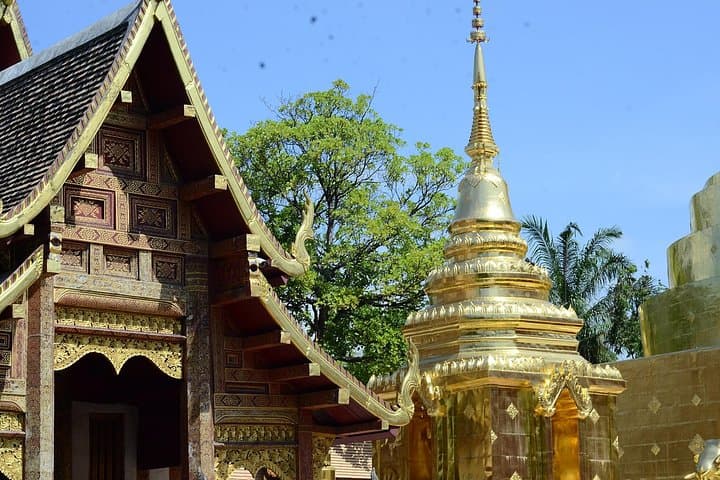
Morning light slips through the city moat as a guide leads the group past century-old teak and stucco — the air already fragrant with incense and street-side coffee. The first stop is Wat Chiang Man, where worn elephant buttresses anchor a Lanna chedi and a quietness that feels older than the city itself. Later, Wat Chet Yot’s multi-influenced architecture offers a different pulse: stone steps, carved niches and a chedi that once hosted a world Buddhist council.
Morning light slips through the city moat as a guide leads the group past century-old teak and stucco — the air already fragrant with incense and street-side coffee. The first stop is Wat Chiang Man, where worn elephant buttresses anchor a Lanna chedi and a quietness that feels older than the city itself. Later, Wat Chet Yot’s multi-influenced architecture offers a different pulse: stone steps, carved niches and a chedi that once hosted a world Buddhist council.
By afternoon the scene shifts from stone to water. Bua Tong — the “Sticky Waterfall” — is a karst limestone cascade that resists slipperiness: mineral-laden rock gives hands and feet improbable purchase, so visitors can climb into the current as small torrents push around your ankles.
This day trip threads local history with outdoor action: the two temples map Chiang Mai’s Lanna and regional connections, while the falls reveal northern Thailand’s limestone geology and seasonal flow. Expect temple courtyards, brief guided explanations of iconography, and a local lunch—khao soi or noodle soup—before some wet, playful scrambling on the falls.
Practical notes: wear quick-dry clothes, shoes that grip in water, and bring sun protection. The temple visits require respectful dress (shoulders and knees covered). The itinerary fits a six-hour window and is accessible for most people, though anyone with serious spinal, cardiovascular, or pregnancy concerns should skip the waterfall climb. Timing your visit to avoid mid-day heat or heavy rains makes both the city and the falls more enjoyable.