THE ADVENTURE COLLECTIVE® · Independent discovery and booking for outdoor travel

Visit three of Chiang Mai’s most magnetic temples in one half-day tour: climb Doi Suthep’s stairway for city panoramas, stand beneath the fractured majesty of Wat Chedi Luang, and follow a stream-side path to the quieter Wat Pha Lat. Practical tips and local context help you plan the perfect temple run.
Visit three of Chiang Mai’s most magnetic temples in one half-day tour: climb Doi Suthep’s stairway for city panoramas, stand beneath the fractured majesty of Wat Chedi Luang, and follow a stream-side path to the quieter Wat Pha Lat. Practical tips and local context help you plan the perfect temple run.
Morning light slides across Chiang Mai’s tiled roofs as the van winds up toward Doi Suthep and the city loosens into forest. You arrive at steps and gilded balustrades; incense threads through the air and the city below feels held in a quiet, ancient pocket. Later, in the Old City, the battered bricks of Wat Chedi Luang rise like a memory—columns and naga staircases reminding you that this place has been reworked by time and earthquake. Down the mountain at Wat Pha Lat, a stream dares you to slow down; moss and waterfalls provide the kind of calm where a simple seat becomes a meditation.
Verified experiences and guided adventures in the surrounding area.
Operated by Sightseeing Chiang Mai · Chiang Mai, Chiang Mai Province
Morning light slides across Chiang Mai’s tiled roofs as the van winds up toward Doi Suthep and the city loosens into forest. You arrive at steps and gilded balustrades; incense threads through the air and the city below feels held in a quiet, ancient pocket. Later, in the Old City, the battered bricks of Wat Chedi Luang rise like a memory—columns and naga staircases reminding you that this place has been reworked by time and earthquake. Down the mountain at Wat Pha Lat, a stream dares you to slow down; moss and waterfalls provide the kind of calm where a simple seat becomes a meditation.
These three temples map Chiang Mai’s history: Lanna-era craft, a Chedi once 280 feet high before the 1545 quake, and the mountain shrine that anchors local pilgrimage routes. Geologically the area is the western edge of the Shan Hills, where granite and sandstone give way to forested ridgelines that catch mist and rain.
Expect short walks, temple courtyards, and steep staircases (Doi Suthep’s main stairway is around 300 steps). Tours typically include hotel pickup, an English-speaking guide, admission fees and bottled water; shared options run roughly 3–4 hours, private and add-on itineraries extend to 7–9 hours.
Practical guide: wear modest, quick-dry clothes; closed-toe shoes for uneven paths; bring sun protection, cash for small donations, and a light rain layer in monsoon months. Move respectfully through prayer spaces, keep a steady pace on stairs, and leave no trace—these sites are living places of worship as well as photographic viewpoints.
easy.
3–4 hours (shared); 7–9 hours (private/add-ons).
Suitable for most fitness levels; participants should be able to climb several flights of stairs and walk on uneven surfaces.
Most shared tours include admission to the featured temples; private options typically include fees as well—confirm at booking.
The main naga stairway has roughly 300–310 steps; there is also a road and a temple access road if you prefer to avoid stairs.
Accessibility is limited—many temple areas involve steps or uneven ground; contact the operator in advance to discuss transfer options and nearest accessible viewpoints.
Yes—English-speaking guides are provided for these tours; private multilingual guides are available on some packages.
The temples reflect Chiang Mai’s Lanna heritage; Wat Chedi Luang once housed the Emerald Buddha and the area was reshaped by a massive 1545 earthquake.
Respect temple sanctity—avoid single-use plastics, don’t feed wildlife, and stick to marked paths in Suthep-Pui Park to protect fragile forest and stream habitats.
Sightseeing Chiang Mai operates guided outdoor trips and adventures with an emphasis on safety, stewardship, and memorable experiences.

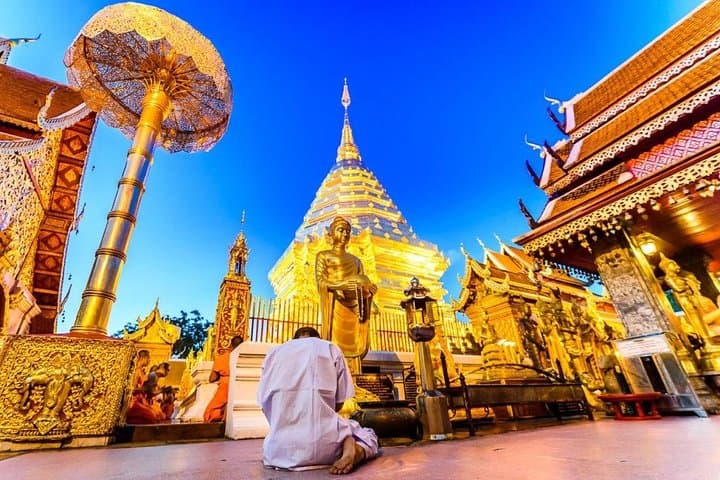
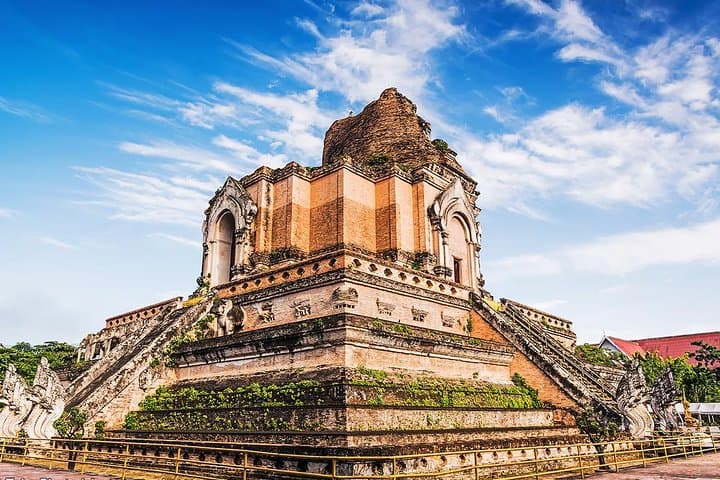
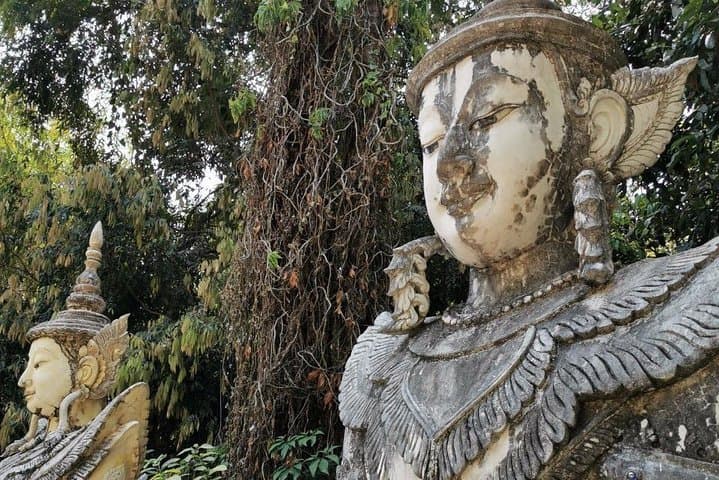
Morning light slides across Chiang Mai’s tiled roofs as the van winds up toward Doi Suthep and the city loosens into forest. You arrive at steps and gilded balustrades; incense threads through the air and the city below feels held in a quiet, ancient pocket. Later, in the Old City, the battered bricks of Wat Chedi Luang rise like a memory—columns and naga staircases reminding you that this place has been reworked by time and earthquake. Down the mountain at Wat Pha Lat, a stream dares you to slow down; moss and waterfalls provide the kind of calm where a simple seat becomes a meditation.
Morning light slides across Chiang Mai’s tiled roofs as the van winds up toward Doi Suthep and the city loosens into forest. You arrive at steps and gilded balustrades; incense threads through the air and the city below feels held in a quiet, ancient pocket. Later, in the Old City, the battered bricks of Wat Chedi Luang rise like a memory—columns and naga staircases reminding you that this place has been reworked by time and earthquake. Down the mountain at Wat Pha Lat, a stream dares you to slow down; moss and waterfalls provide the kind of calm where a simple seat becomes a meditation.
These three temples map Chiang Mai’s history: Lanna-era craft, a Chedi once 280 feet high before the 1545 quake, and the mountain shrine that anchors local pilgrimage routes. Geologically the area is the western edge of the Shan Hills, where granite and sandstone give way to forested ridgelines that catch mist and rain.
Expect short walks, temple courtyards, and steep staircases (Doi Suthep’s main stairway is around 300 steps). Tours typically include hotel pickup, an English-speaking guide, admission fees and bottled water; shared options run roughly 3–4 hours, private and add-on itineraries extend to 7–9 hours.
Practical guide: wear modest, quick-dry clothes; closed-toe shoes for uneven paths; bring sun protection, cash for small donations, and a light rain layer in monsoon months. Move respectfully through prayer spaces, keep a steady pace on stairs, and leave no trace—these sites are living places of worship as well as photographic viewpoints.