THE ADVENTURE COLLECTIVE® · Independent discovery and booking for outdoor travel

Watch sunset from Doi Suthep’s golden terrace and explore the forested tunnels of Wat Umong on an evening tour that avoids daytime crowds. This half-day trip pairs cultural insight with mountain views and monk-led ceremonies.
Watch sunset from Doi Suthep’s golden terrace and explore the forested tunnels of Wat Umong on an evening tour that avoids daytime crowds. This half-day trip pairs cultural insight with mountain views and monk-led ceremonies.
Sunlight thins to gold as the minivan threads up the flanks of Doi Suthep. Cool mountain air pushes at the windows and the city below begins to scatter lights; by the time you emerge onto the temple terrace, Chiang Mai’s grid is a glittering plain. Here an evening tour trades the daytime crush for long shadows, chanting monks and a chedi catching the last sun.
Verified experiences and guided adventures in the surrounding area.
Operated by TripGuru Thailand · Chiang Mai, Chiang Mai Province
Sunlight thins to gold as the minivan threads up the flanks of Doi Suthep. Cool mountain air pushes at the windows and the city below begins to scatter lights; by the time you emerge onto the temple terrace, Chiang Mai’s grid is a glittering plain. Here an evening tour trades the daytime crush for long shadows, chanting monks and a chedi catching the last sun.
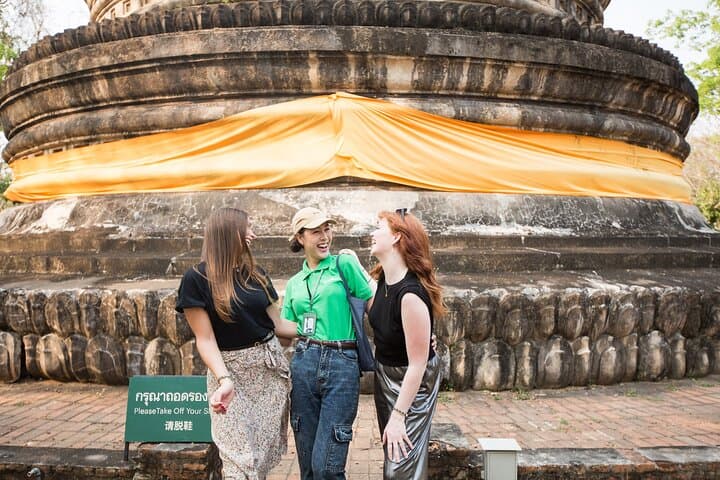
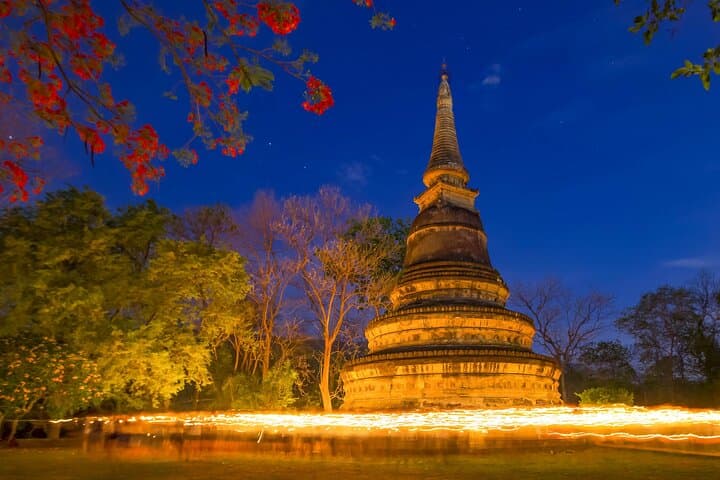
Wat Umong, older and quieter, greets visitors with mossed brick tunnels and forested grounds where stupas and Buddha images feel lived-in rather than staged. The tunnel passages—built centuries ago as a meditation aid—pull you into a hushed, subterranean geometry. A short drive and a climb (or drive to the upper parking) takes you to Wat Phra That Doi Suthep. The 309 steps are famous, but many travelers opt to ride; either way the summit view and the golden pagoda, rimmed by evening light, explain why the mountain is sacred.
Culturally, both sites tie into Lanna history and Chiang Mai’s role as a northern kingdom; Doi Suthep in particular has been a pilgrimage point since the 14th century. Geologically, the temple sits on granite ridges that frame river valleys below, making sunsets dramatic and winds decisive.
Practical notes: dress respectfully (shoulders and knees covered), bring a light layer for mountain breeze, and carry Thai baht for small purchases or donations. Tours commonly include hotel pickup, bottled water and entrance fees; plan for a five-hour window and expect gentle walking with brief climbs. Arrive ready to trade heat and crowds for cooler air, ritual quiet and a broad, lighted city view under the stars.
easy.
4–5 hours.
Suitable for most fitness levels; involves short walks and optional stair climbs (309 steps)
The tour runs about five hours, typically timed to reach Doi Suthep at sunset.
No—there is a roadway and parking area for visitors who prefer not to climb; the steps are optional.
Standard tours note entrance fees for Doi Suthep (around THB50) and Wat Umong (around THB20) are included—confirm at booking.
Yes; the walking is gentle and the tour offers vehicle transport between sites, but the steps at Doi Suthep may be challenging for some.
Doi Suthep became a pilgrimage site in the 14th century tied to Lanna royalty; Wat Umong predates modern Chiang Mai and served as a meditation center with underground tunnels for seclusion.
Respect temple grounds by using marked paths and disposing of trash; mountain erosion from foot traffic is a local concern, so stick to established trails and avoid feeding wildlife.
TripGuru Thailand operates guided outdoor trips and adventures with an emphasis on safety, stewardship, and memorable experiences.
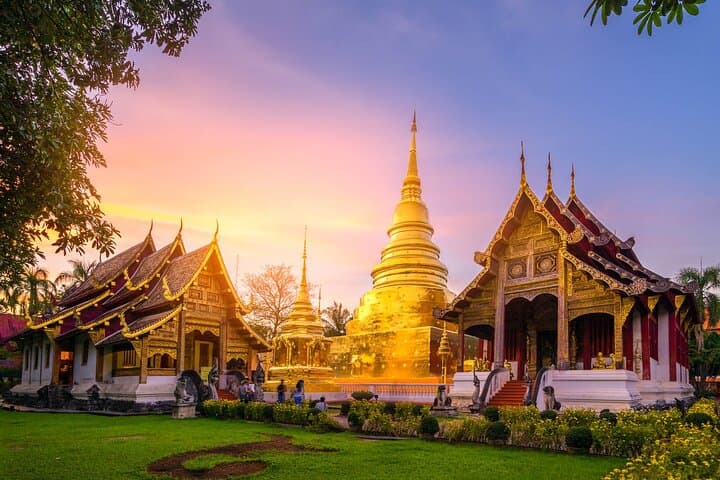
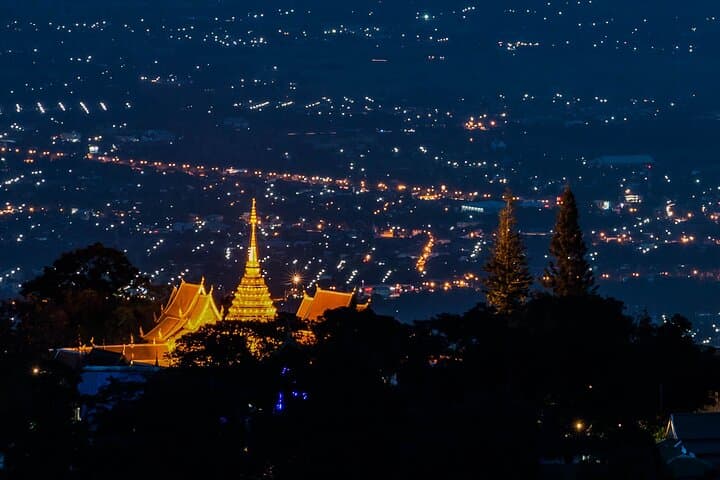
Sunlight thins to gold as the minivan threads up the flanks of Doi Suthep. Cool mountain air pushes at the windows and the city below begins to scatter lights; by the time you emerge onto the temple terrace, Chiang Mai’s grid is a glittering plain. Here an evening tour trades the daytime crush for long shadows, chanting monks and a chedi catching the last sun.
Sunlight thins to gold as the minivan threads up the flanks of Doi Suthep. Cool mountain air pushes at the windows and the city below begins to scatter lights; by the time you emerge onto the temple terrace, Chiang Mai’s grid is a glittering plain. Here an evening tour trades the daytime crush for long shadows, chanting monks and a chedi catching the last sun.
Wat Umong, older and quieter, greets visitors with mossed brick tunnels and forested grounds where stupas and Buddha images feel lived-in rather than staged. The tunnel passages—built centuries ago as a meditation aid—pull you into a hushed, subterranean geometry. A short drive and a climb (or drive to the upper parking) takes you to Wat Phra That Doi Suthep. The 309 steps are famous, but many travelers opt to ride; either way the summit view and the golden pagoda, rimmed by evening light, explain why the mountain is sacred.
Culturally, both sites tie into Lanna history and Chiang Mai’s role as a northern kingdom; Doi Suthep in particular has been a pilgrimage point since the 14th century. Geologically, the temple sits on granite ridges that frame river valleys below, making sunsets dramatic and winds decisive.
Practical notes: dress respectfully (shoulders and knees covered), bring a light layer for mountain breeze, and carry Thai baht for small purchases or donations. Tours commonly include hotel pickup, bottled water and entrance fees; plan for a five-hour window and expect gentle walking with brief climbs. Arrive ready to trade heat and crowds for cooler air, ritual quiet and a broad, lighted city view under the stars.