THE ADVENTURE COLLECTIVE® · Independent discovery and booking for outdoor travel

Ride a shared red songthaew from Chiang Mai to Bua Thong (Sticky Waterfall), pause briefly at a local market, then spend unstructured time climbing mineral-rich limestone tiers and cooling off in clear pools. This budget-friendly trip is ideal for independent travelers who want an easy taste of northern Thailand’s natural side.
Ride a shared red songthaew from Chiang Mai to Bua Thong (Sticky Waterfall), pause briefly at a local market, then spend unstructured time climbing mineral-rich limestone tiers and cooling off in clear pools. This budget-friendly trip is ideal for independent travelers who want an easy taste of northern Thailand’s natural side.
Stepping from a red songthaew into the shaded grounds of Bua Thong National Park feels like slipping into a different rhythm—water daring you forward, limestone tiers offering unexpected footholds. The so-called Sticky Waterfall (Bua Thong) is immediately tactile: mineral-rich calcium carbonate has built rough, grippy surfaces that allow visitors to climb the cascades where other falls would be slick and treacherous.
Verified experiences and guided adventures in the surrounding area.
Operated by Discova Thailand · Mae Taeng, Chiang Mai Province
Stepping from a red songthaew into the shaded grounds of Bua Thong National Park feels like slipping into a different rhythm—water daring you forward, limestone tiers offering unexpected footholds. The so-called Sticky Waterfall (Bua Thong) is immediately tactile: mineral-rich calcium carbonate has built rough, grippy surfaces that allow visitors to climb the cascades where other falls would be slick and treacherous.
Geologically the falls are an expression of travertine deposition over decades; water deposits minerals as it flows, creating terraces and pools that hold clear, cool water. Culturally the site has become a simple, everyday escape for people from Chiang Mai—families, vendors, and songthaew drivers who ferry guests the thirty- to sixty-minute ride from the city. Nearby market stops give a quick look at northern Thai snacks—sticky rice, fresh fruit, and simple sweets—without a formal tasting or lengthy detour.
Visitors get roughly 90–120 minutes to explore independently: climb the limestone tiers, cool off in shallow pools, walk forested paths, or check out Nam Phu Chet Si, the park’s colorful mineral spring. The experience suits independent travelers who prefer unstructured time over guided interpretation.
Practical notes: wear water shoes or grippy sandals, bring a swim towel and sun protection, and expect uneven, wet surfaces; the falls are family-friendly but not stroller-accessible. Avoid peak midday crowds by taking an early or late songthaew and pack a reusable bottle—the drive and market stop are part of the charm, and leave-no-trace practices help preserve the delicate mineral terraces for the next climbers.
easy.
3–4 hours.
Suitable for casual walkers and families; you should be comfortable with short climbs on wet, uneven rock surfaces.
The songthaew ride typically takes 40–60 minutes depending on traffic and exact pickup location in Chiang Mai.
Yes—the trip offers unguided free time; the limestone surface is grippy but you should take care and supervise children.
Yes—there are shallow pools suitable for wading and cooling off; avoid deep spots if you’re not a strong swimmer.
Basic facilities and small vendor stalls are near the parking area, but bring water and minor supplies since amenities are limited.
Bua Thong’s terraces formed over time as mineral-laden water deposited calcium carbonate; the site has grown in popularity locally as an accessible natural attraction outside Chiang Mai.
The park is sensitive to erosion and litter; visitors should stick to trails, avoid soaps in pools, and carry out trash to help preserve the mineral terraces.
Discova Thailand operates guided outdoor trips and adventures with an emphasis on safety, stewardship, and memorable experiences.
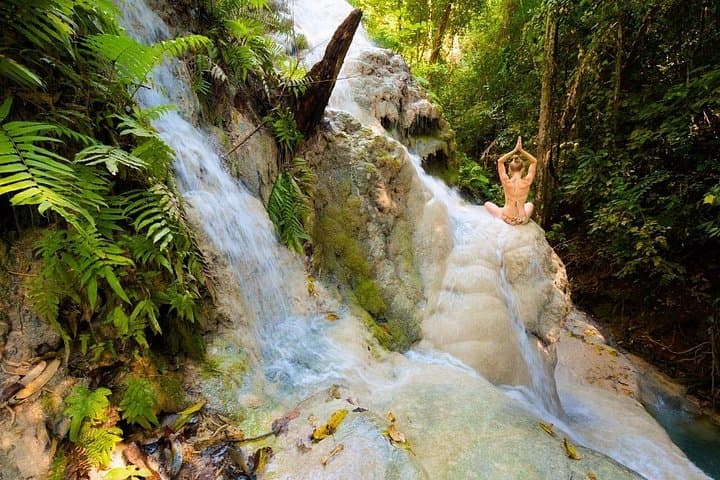
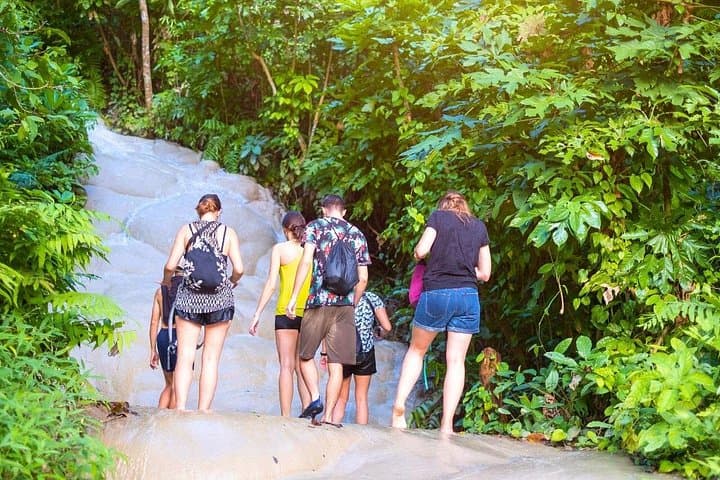

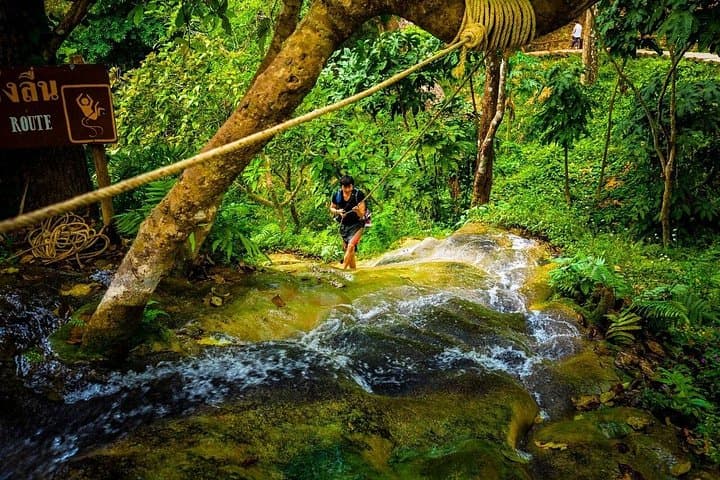
Stepping from a red songthaew into the shaded grounds of Bua Thong National Park feels like slipping into a different rhythm—water daring you forward, limestone tiers offering unexpected footholds. The so-called Sticky Waterfall (Bua Thong) is immediately tactile: mineral-rich calcium carbonate has built rough, grippy surfaces that allow visitors to climb the cascades where other falls would be slick and treacherous.
Stepping from a red songthaew into the shaded grounds of Bua Thong National Park feels like slipping into a different rhythm—water daring you forward, limestone tiers offering unexpected footholds. The so-called Sticky Waterfall (Bua Thong) is immediately tactile: mineral-rich calcium carbonate has built rough, grippy surfaces that allow visitors to climb the cascades where other falls would be slick and treacherous.
Geologically the falls are an expression of travertine deposition over decades; water deposits minerals as it flows, creating terraces and pools that hold clear, cool water. Culturally the site has become a simple, everyday escape for people from Chiang Mai—families, vendors, and songthaew drivers who ferry guests the thirty- to sixty-minute ride from the city. Nearby market stops give a quick look at northern Thai snacks—sticky rice, fresh fruit, and simple sweets—without a formal tasting or lengthy detour.
Visitors get roughly 90–120 minutes to explore independently: climb the limestone tiers, cool off in shallow pools, walk forested paths, or check out Nam Phu Chet Si, the park’s colorful mineral spring. The experience suits independent travelers who prefer unstructured time over guided interpretation.
Practical notes: wear water shoes or grippy sandals, bring a swim towel and sun protection, and expect uneven, wet surfaces; the falls are family-friendly but not stroller-accessible. Avoid peak midday crowds by taking an early or late songthaew and pack a reusable bottle—the drive and market stop are part of the charm, and leave-no-trace practices help preserve the delicate mineral terraces for the next climbers.