THE ADVENTURE COLLECTIVE® · Independent discovery and booking for outdoor travel

Ascend the Monk Trail from the rim above Chiang Mai to Wat Doi Suthep in three hours of shaded forest, historic temple visits, and valley views. Practical tips, route character, and what to expect on this near-city mountain hike.
Ascend the Monk Trail from the rim above Chiang Mai to Wat Doi Suthep in three hours of shaded forest, historic temple visits, and valley views. Practical tips, route character, and what to expect on this near-city mountain hike.
The trail begins in the cool hush above Chiang Mai, where humid city air gives way to a shaded canopy and the path narrows into a monk’s route of roots and stone.
Verified experiences and guided adventures in the surrounding area.
Operated by Chiang Mai Mountain Biking & Kayaks · Chiang Mai, Chiang Mai Province
The trail begins in the cool hush above Chiang Mai, where humid city air gives way to a shaded canopy and the path narrows into a monk’s route of roots and stone.
You step into Doi Pui National Park on a walk that rises steadily from about 400 meters above the zoo to Wat Doi Suthep at roughly 1,100 meters. The route threads through mixed evergreen forest and stands of teak; tree roots form natural steps while small clearings open to valley views. Guides point out native plants and call attention to birdcalls that punctuate the climb.
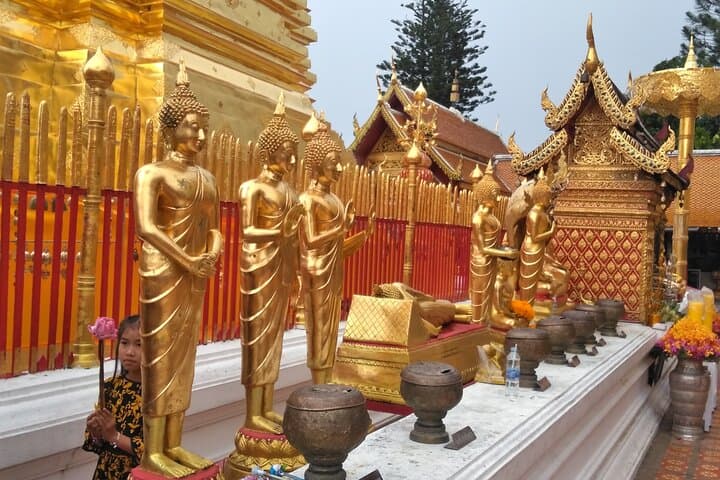
Wat Doi Suthep itself dates back to the 14th century and sits on a ridge that has long been both a religious site and a lookout for the Chiang Mai basin. Geologically the hill is part of the Thanon Thong Chai Range—weathered igneous and metamorphic rock overlain by forest soils that hold the trail firm when dry but turn slick after rain.
Culturally, a temple visit includes a respectful circuit of stupas, incense offerings, and the chance to observe morning chants if timing aligns. Locals prize the route for quiet reflection as much as for exercise.
Practical guidance: start early to avoid midday heat, wear grippy footwear for uneven roots, and carry at least 1–1.5 liters of water. Trails can be partially closed during the fire season (check local notices through April), and guides commonly provide hydration packs and a light brunch at the temple. For the return you can walk down at an easy pace or arrange a short (20-minute) bike descent back toward the city.
moderate.
2–3 hours.
Suitable for those with regular walking or light hiking fitness; expect steady uphill sections and uneven footing.
It’s rated moderate: steady uphill for about 2 hours with uneven roots and natural steps, suitable for those who do regular walks or light hikes.
Pickup in an air-conditioned van is commonly provided; confirm pickup details and times when booking and provide exact address if staying in an Airbnb.
Yes — many operators offer an optional 20-minute downhill bike transfer back toward the city as an alternative to walking down.
Most of the year yes, but some park trails can close during fire season (through April) or after heavy rains; check with the operator before your trip.
Wat Doi Suthep was established in the late 14th century and remains a major spiritual site for northern Thai Lanna culture, historically serving both religious and regional lookout roles.
Doi Pui National Park manages seasonal trail closures to reduce wildfire risk and erosion; stay on the marked track to prevent hillside damage and avoid littering.
Chiang Mai Mountain Biking & Kayaks operates guided outdoor trips and adventures with an emphasis on safety, stewardship, and memorable experiences.



The trail begins in the cool hush above Chiang Mai, where humid city air gives way to a shaded canopy and the path narrows into a monk’s route of roots and stone.
The trail begins in the cool hush above Chiang Mai, where humid city air gives way to a shaded canopy and the path narrows into a monk’s route of roots and stone.
You step into Doi Pui National Park on a walk that rises steadily from about 400 meters above the zoo to Wat Doi Suthep at roughly 1,100 meters. The route threads through mixed evergreen forest and stands of teak; tree roots form natural steps while small clearings open to valley views. Guides point out native plants and call attention to birdcalls that punctuate the climb.
Wat Doi Suthep itself dates back to the 14th century and sits on a ridge that has long been both a religious site and a lookout for the Chiang Mai basin. Geologically the hill is part of the Thanon Thong Chai Range—weathered igneous and metamorphic rock overlain by forest soils that hold the trail firm when dry but turn slick after rain.
Culturally, a temple visit includes a respectful circuit of stupas, incense offerings, and the chance to observe morning chants if timing aligns. Locals prize the route for quiet reflection as much as for exercise.
Practical guidance: start early to avoid midday heat, wear grippy footwear for uneven roots, and carry at least 1–1.5 liters of water. Trails can be partially closed during the fire season (check local notices through April), and guides commonly provide hydration packs and a light brunch at the temple. For the return you can walk down at an easy pace or arrange a short (20-minute) bike descent back toward the city.