THE ADVENTURE COLLECTIVE® · Independent discovery and booking for outdoor travel

Test your balance and nerves on Chiang Mai’s largest high ropes course—48 obstacles ranging from beginner bridges to extreme aerial elements. This guide covers what to expect, safety basics, and practical tips for timing, gear, and fitness.
Test your balance and nerves on Chiang Mai’s largest high ropes course—48 obstacles ranging from beginner bridges to extreme aerial elements. This guide covers what to expect, safety basics, and practical tips for timing, gear, and fitness.
You clip in, feel the harness cinch, and the rainforest breathes around you—humid air, the distant calls of hornbills, and a canopy that dares you to move faster.
Verified experiences and guided adventures in the surrounding area.
Operated by Oh-Hoo · Chiang Mai, Chiang Mai Province
You clip in, feel the harness cinch, and the rainforest breathes around you—humid air, the distant calls of hornbills, and a canopy that dares you to move faster.
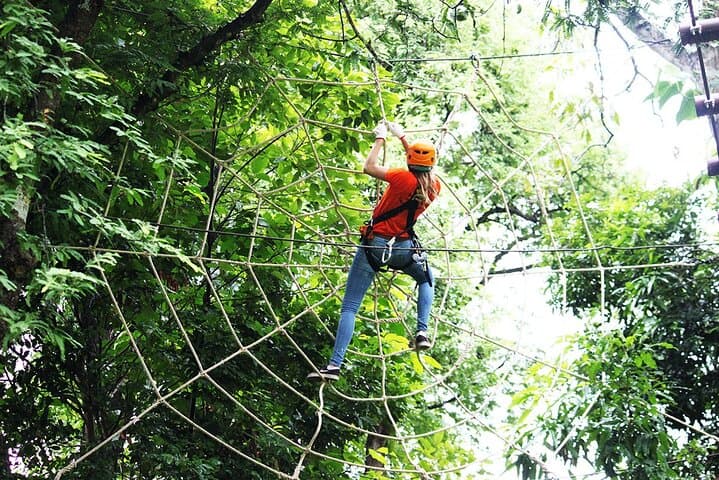
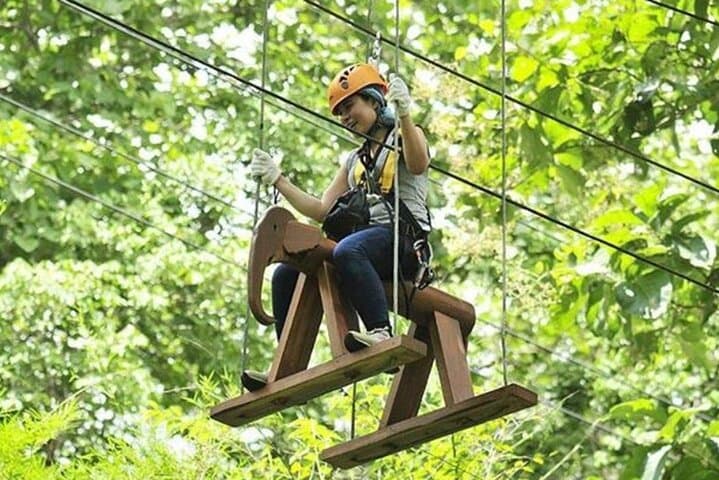
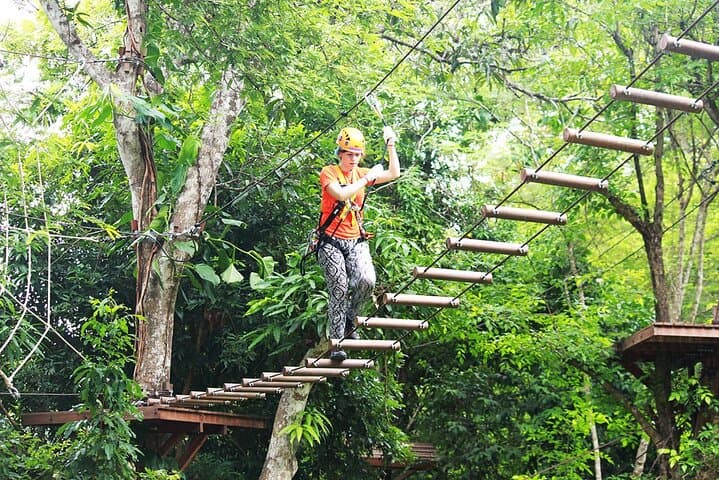
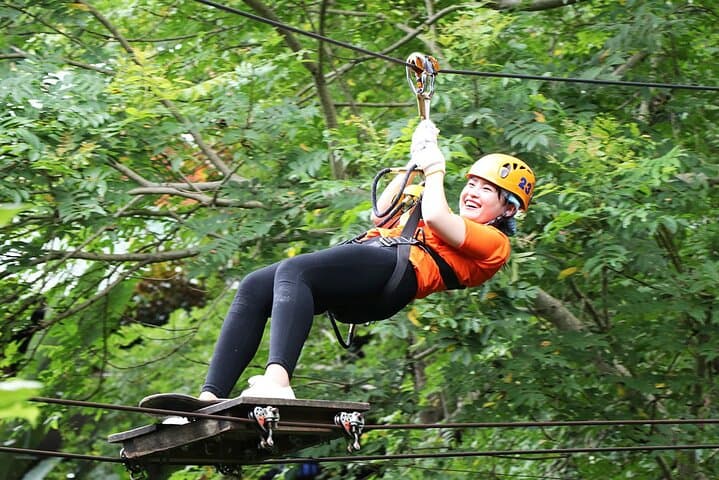
Set a short drive from Chiang Mai’s old city into the Mae Rim foothills, this high ropes course threads platforms and cables through native dipterocarp and teak trees. The route puts height and speed together: swinging bridges wobble like a nervous friend, bamboo poles test balance, and the Hmong go-kart delivers a sudden, grin-making descent. The park’s layout reflects a modern outdoor-recreation ethic—modular courses that range from beginner-friendly walks to extreme aerial challenges that require steady footing and calm breathing.
Chiang Mai’s hills are volcanic in origin with soils that sustain dense, multi-layered forest; local hill-tribe culture influenced early eco-tourism here, and contemporary operators often employ guides from surrounding villages. Expect an emphasis on safety: ground-school briefings, certified harnesses, and continuous belay systems are standard.
Practical side: plan about two hours for the activity plus time for transport and a post-course meal. Footwear must be closed-toe; lightweight long sleeves protect against ropes and insects. Morning sessions are cooler and drier; afternoons can get humid or wet during the monsoon. Staff usually handle fitting and clipping, but listen closely during the equipment demo and ask to repeat any technique you’re unsure of.
This is an exercise in balance, focus, and small, repeated risks—the kind that leaves you tired in the best way and looking at the forest differently on the walk back to the van.
moderate.
2 hours.
Suitable for people with average fitness and basic balance; expect stair climbs, short bursts of upper-body work, and continuous standing.
Participants are typically 6–65 years old; the park usually enforces a maximum weight limit around 110 kg (243 lbs). Children 6–12 must be supervised by an adult.
No—staff provide ground school and constant belay systems; basic comfort with heights and balance is sufficient.
Operators may delay or cancel activities in heavy rain or lightning for safety; check cancellation policy and expect rescheduling or a refund for weather-related cancellations.
Round-trip transfers are often included within a 5 km radius of Chiang Mai Old City—confirm your pickup point when booking.
The Mae Rim area developed as a leisure and agro-forestry zone in the 20th century; treetop parks grew with eco-tourism and local community involvement.
Operators commonly limit foot traffic to platforms and maintain replanting programs; visitors should stay on marked routes and avoid feeding wildlife.
Oh-Hoo operates guided outdoor trips and adventures with an emphasis on safety, stewardship, and memorable experiences.
You clip in, feel the harness cinch, and the rainforest breathes around you—humid air, the distant calls of hornbills, and a canopy that dares you to move faster.
You clip in, feel the harness cinch, and the rainforest breathes around you—humid air, the distant calls of hornbills, and a canopy that dares you to move faster.
Set a short drive from Chiang Mai’s old city into the Mae Rim foothills, this high ropes course threads platforms and cables through native dipterocarp and teak trees. The route puts height and speed together: swinging bridges wobble like a nervous friend, bamboo poles test balance, and the Hmong go-kart delivers a sudden, grin-making descent. The park’s layout reflects a modern outdoor-recreation ethic—modular courses that range from beginner-friendly walks to extreme aerial challenges that require steady footing and calm breathing.
Chiang Mai’s hills are volcanic in origin with soils that sustain dense, multi-layered forest; local hill-tribe culture influenced early eco-tourism here, and contemporary operators often employ guides from surrounding villages. Expect an emphasis on safety: ground-school briefings, certified harnesses, and continuous belay systems are standard.
Practical side: plan about two hours for the activity plus time for transport and a post-course meal. Footwear must be closed-toe; lightweight long sleeves protect against ropes and insects. Morning sessions are cooler and drier; afternoons can get humid or wet during the monsoon. Staff usually handle fitting and clipping, but listen closely during the equipment demo and ask to repeat any technique you’re unsure of.
This is an exercise in balance, focus, and small, repeated risks—the kind that leaves you tired in the best way and looking at the forest differently on the walk back to the van.