THE ADVENTURE COLLECTIVE® · Independent discovery and booking for outdoor travel

Explore Chiang Mai’s old city by tuk‑tuk, samlor and red car on a private half‑day tour that combines bustling markets, teak Lanna temples and the monumental Chedi Luang. Ideal for travelers wanting a concentrated cultural primer with local transport and a licensed guide.
Explore Chiang Mai’s old city by tuk‑tuk, samlor and red car on a private half‑day tour that combines bustling markets, teak Lanna temples and the monumental Chedi Luang. Ideal for travelers wanting a concentrated cultural primer with local transport and a licensed guide.
A morning in Chiang Mai begins with the city’s pulse — tuk‑tuks rattling, vendors calling and the smell of grilled satay drifting from market stalls. This half‑day tour threads you through Warorot Market’s crowded aisles, eases past Tha Phae Gate into the compact old city, and pauses at teak halls and towering stupas that mark Lanna Chiang Mai’s layered past.
Verified experiences and guided adventures in the surrounding area.
Operated by AP Good@travel · Chiang Mai, Chiang Mai Province
A morning in Chiang Mai begins with the city’s pulse — tuk‑tuks rattling, vendors calling and the smell of grilled satay drifting from market stalls. This half‑day tour threads you through Warorot Market’s crowded aisles, eases past Tha Phae Gate into the compact old city, and pauses at teak halls and towering stupas that mark Lanna Chiang Mai’s layered past.
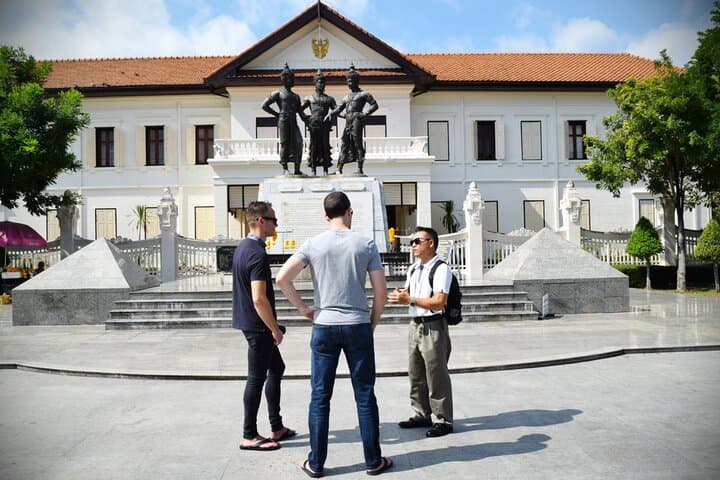
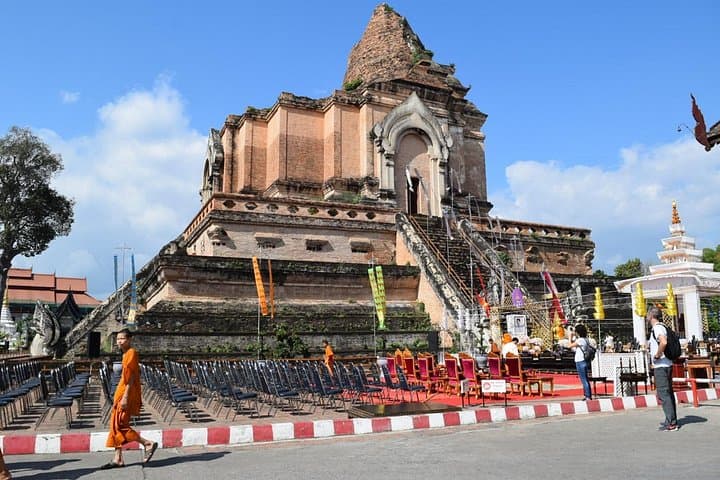
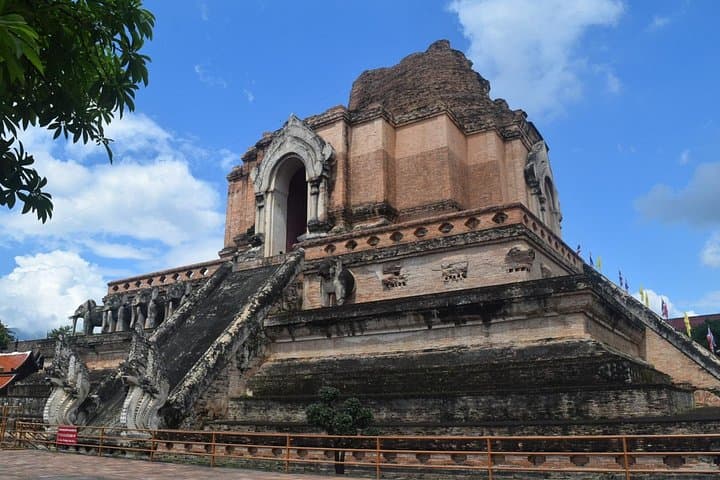
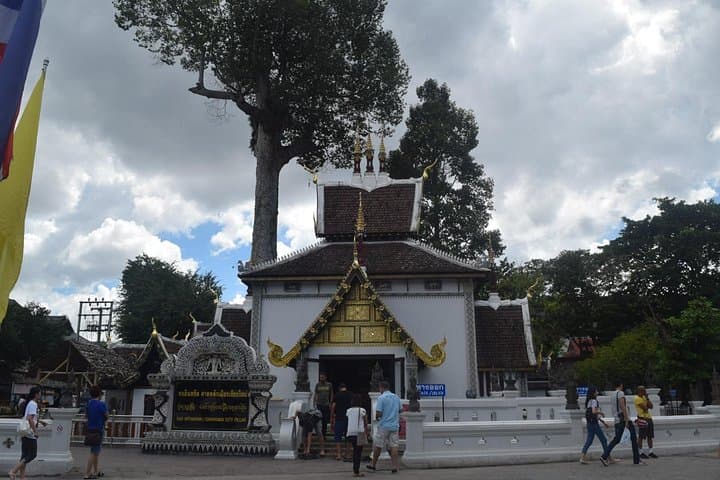
Chiang Mai sits on the Mae Ping floodplain where alluvial soils fed the region’s rice economy; the city walls and moats were built in the 13th century under King Mengrai to guard a rising northern kingdom. At the Three Kings Monument you’ll find civic memory carved in bronze; at Pantao Temple, moulded teak panels and giant pillars recall the craft traditions of Lanna carpentry. Chedi Luang’s ruined stupa — once home to the Emerald Buddha — speaks to trade, religion, and seismic history that reshaped its silhouette.
Practical rhythm matters: this private, 3–4 hour loop uses tuk‑tuk, samlor trishaw and a red car for short hops, minimizing long walks but exposing you to sun and market crowds. Carry a lightweight shirt that covers shoulders for temples, bring cash for small vendors and step respectfully into temple spaces (remove shoes, speak softly). Expect warm, humid conditions much of the year and easily walkable surfaces in the old city; mobility is accessible but uneven flagstones are common. With a licensed English guide and hotel pickup, the tour is a compact primer on Chiang Mai’s civic heart — efficient, sensory and rooted in local rhythms.
easy.
3–4 hours.
Suitable for most fitness levels; minimal sustained walking but involves short climbs of temple steps and standing in markets.
Some temple grounds are free to enter, but specific sites like Chedi Luang may request a small admission fee on site; check with your guide.
Yes — the pace is gentle with vehicle transfers; infants should sit on laps and mobility limitations should be noted at booking for appropriate pickup/drop‑off assistance.
This listing includes an English‑speaking guide with a Tourism Authority of Thailand (TAT) license; confirm other languages when booking.
This is a private tour so the guide can adjust timing and pauses within the 3–4 hour window, but core stops like Warorot Market and Chedi Luang are standard.
Founded in 1296 by King Mengrai, Chiang Mai served as the Lanna Kingdom capital; its walls and temples reflect centuries of trade, craftsmanship and occasional seismic rebuilding.
City conservation focuses on protecting teak buildings and reducing waste in busy markets; visitors are encouraged to avoid single‑use plastics and respect temple upkeep.
AP Good@travel operates guided outdoor trips and adventures with an emphasis on safety, stewardship, and memorable experiences.
A morning in Chiang Mai begins with the city’s pulse — tuk‑tuks rattling, vendors calling and the smell of grilled satay drifting from market stalls. This half‑day tour threads you through Warorot Market’s crowded aisles, eases past Tha Phae Gate into the compact old city, and pauses at teak halls and towering stupas that mark Lanna Chiang Mai’s layered past.
A morning in Chiang Mai begins with the city’s pulse — tuk‑tuks rattling, vendors calling and the smell of grilled satay drifting from market stalls. This half‑day tour threads you through Warorot Market’s crowded aisles, eases past Tha Phae Gate into the compact old city, and pauses at teak halls and towering stupas that mark Lanna Chiang Mai’s layered past.
Chiang Mai sits on the Mae Ping floodplain where alluvial soils fed the region’s rice economy; the city walls and moats were built in the 13th century under King Mengrai to guard a rising northern kingdom. At the Three Kings Monument you’ll find civic memory carved in bronze; at Pantao Temple, moulded teak panels and giant pillars recall the craft traditions of Lanna carpentry. Chedi Luang’s ruined stupa — once home to the Emerald Buddha — speaks to trade, religion, and seismic history that reshaped its silhouette.
Practical rhythm matters: this private, 3–4 hour loop uses tuk‑tuk, samlor trishaw and a red car for short hops, minimizing long walks but exposing you to sun and market crowds. Carry a lightweight shirt that covers shoulders for temples, bring cash for small vendors and step respectfully into temple spaces (remove shoes, speak softly). Expect warm, humid conditions much of the year and easily walkable surfaces in the old city; mobility is accessible but uneven flagstones are common. With a licensed English guide and hotel pickup, the tour is a compact primer on Chiang Mai’s civic heart — efficient, sensory and rooted in local rhythms.