THE ADVENTURE COLLECTIVE® · Independent discovery and booking for outdoor travel

Spend a day with free-roaming elephants and climb the mineral-coated rocks of Bua Tong Sticky Waterfall. This small-group tour mixes hands-on sanctuary work with a refreshing, uniquely grippy waterfall swim.
Spend a day with free-roaming elephants and climb the mineral-coated rocks of Bua Tong Sticky Waterfall. This small-group tour mixes hands-on sanctuary work with a refreshing, uniquely grippy waterfall swim.
Morning humidity lifts over the Mae Taeng foothills as a small group steps from an air-conditioned van into a clearing. Elephants move with quiet curiosity, trunks sweeping at grass and sugarcane while mahouts—keepers steeped in Lanna tradition—work beside visitors to prepare feed. Later the tour slips into the limestone ribs of Bua Tong’s sticky waterfall: surprisingly grippy calcium deposits let you climb wet rocks and stand with a valley breeze in your face.
Verified experiences and guided adventures in the surrounding area.
Operated by tourhubasia · Chiang Mai, Chiang Mai Province
Morning humidity lifts over the Mae Taeng foothills as a small group steps from an air-conditioned van into a clearing. Elephants move with quiet curiosity, trunks sweeping at grass and sugarcane while mahouts—keepers steeped in Lanna tradition—work beside visitors to prepare feed. Later the tour slips into the limestone ribs of Bua Tong’s sticky waterfall: surprisingly grippy calcium deposits let you climb wet rocks and stand with a valley breeze in your face.
The region has long been tied to elephants—working animals in northern Thailand and central to ceremonial life—while the sticky falls owe their traction to mineral-rich tufa and travertine layers that form on limestone over decades. Local villages reflect northern Thai culture; you’ll catch hints of teak houses, chilies drying on racks, and small family-run cafés serving khao soi and strong coffee.
Expect a hands-on, low-impact sanctuary visit—no riding, no chains—and a playful water stop where footing is unusual but forgiving. The day blends wildlife observation, light physical work (cutting grasses, carrying feed), and easy scrambling on irregular rock. Guides explain elephant behavior, conservation challenges, and how local agriculture shapes habitat.
Practicalities: pickup windows typically start 7:30–8:00 AM from Chiang Mai Old City with return mid-to-late afternoon. Wear quick-dry layers, closed-toe shoes that can get muddy, and bring insect repellent, sunscreen, and a waterproof phone case. Hydration and respectful distance around animals are non-negotiable—these are wild-tempered, rehabilitated elephants, not props.
moderate.
7 hours.
Requires moderate fitness: able to walk on uneven ground, climb low rock ledges, and participate in light manual tasks.
Yes; the sanctuary operates with free-roaming elephants, no chaining or riding, and emphasizes feeding, observation, and light caregiving under mahout supervision.
Yes—visitors commonly swim and climb the mineral-coated rocks, but follow guides’ safety instructions and wear secure footwear.
Pickup is typically offered between 7:30–8:00 AM from Chiang Mai Old City and nearby accommodations—confirm your pickup point when booking.
Lunch is included with vegetarian and vegan options available if requested in advance.
Elephants have been integral to northern Thai livelihoods and ceremonial life for centuries; many modern sanctuaries grew from efforts to retire working elephants and promote welfare.
Small-group, hands-on programs like this can support sanctuary income while minimizing stress on animals—follow guide rules to reduce disturbance and leave no waste.
tourhubasia operates guided outdoor trips and adventures with an emphasis on safety, stewardship, and memorable experiences.
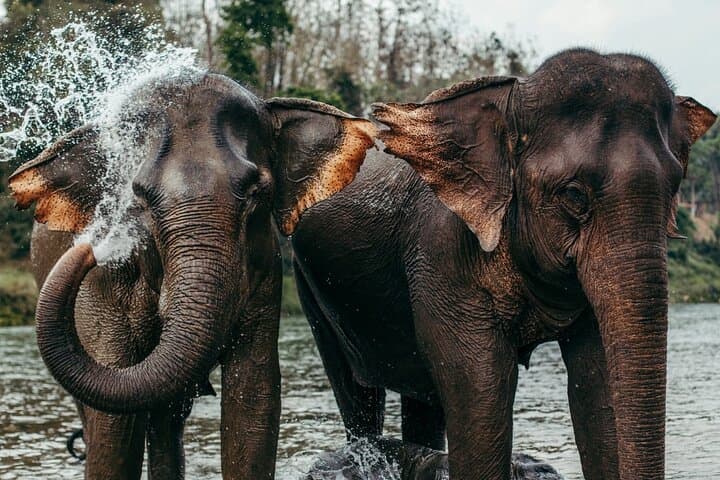
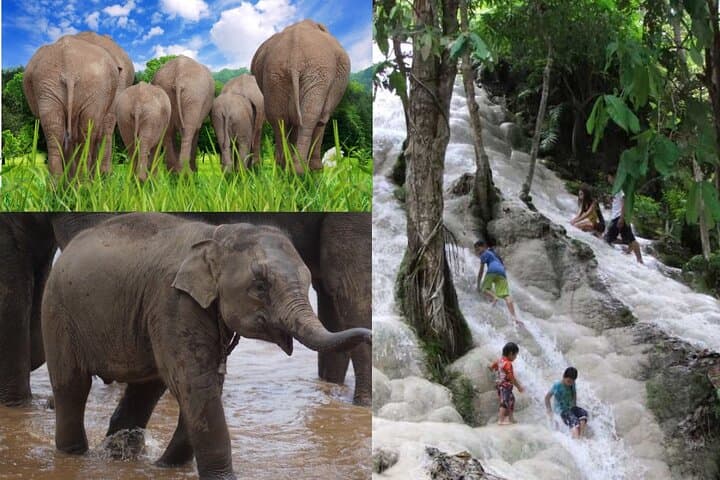
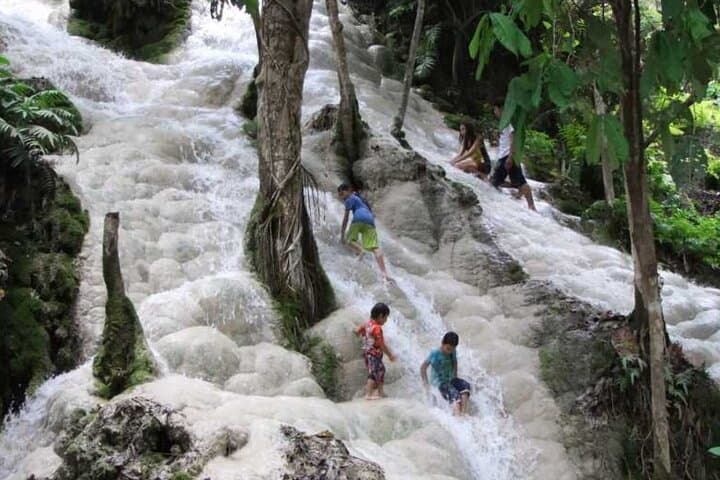
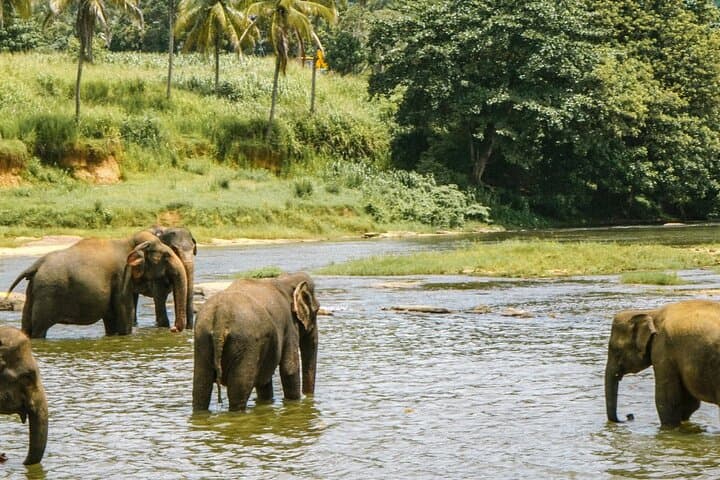
Morning humidity lifts over the Mae Taeng foothills as a small group steps from an air-conditioned van into a clearing. Elephants move with quiet curiosity, trunks sweeping at grass and sugarcane while mahouts—keepers steeped in Lanna tradition—work beside visitors to prepare feed. Later the tour slips into the limestone ribs of Bua Tong’s sticky waterfall: surprisingly grippy calcium deposits let you climb wet rocks and stand with a valley breeze in your face.
Morning humidity lifts over the Mae Taeng foothills as a small group steps from an air-conditioned van into a clearing. Elephants move with quiet curiosity, trunks sweeping at grass and sugarcane while mahouts—keepers steeped in Lanna tradition—work beside visitors to prepare feed. Later the tour slips into the limestone ribs of Bua Tong’s sticky waterfall: surprisingly grippy calcium deposits let you climb wet rocks and stand with a valley breeze in your face.
The region has long been tied to elephants—working animals in northern Thailand and central to ceremonial life—while the sticky falls owe their traction to mineral-rich tufa and travertine layers that form on limestone over decades. Local villages reflect northern Thai culture; you’ll catch hints of teak houses, chilies drying on racks, and small family-run cafés serving khao soi and strong coffee.
Expect a hands-on, low-impact sanctuary visit—no riding, no chains—and a playful water stop where footing is unusual but forgiving. The day blends wildlife observation, light physical work (cutting grasses, carrying feed), and easy scrambling on irregular rock. Guides explain elephant behavior, conservation challenges, and how local agriculture shapes habitat.
Practicalities: pickup windows typically start 7:30–8:00 AM from Chiang Mai Old City with return mid-to-late afternoon. Wear quick-dry layers, closed-toe shoes that can get muddy, and bring insect repellent, sunscreen, and a waterproof phone case. Hydration and respectful distance around animals are non-negotiable—these are wild-tempered, rehabilitated elephants, not props.