THE ADVENTURE COLLECTIVE® · Independent discovery and booking for outdoor travel

Take a 90-minute guided walk along the old Chesapeake Beach Railway Trail to explore marsh habitats, view war memorial sites, and visit the Chesapeake Railway Museum. This easy-to-moderate stroll blends natural scenery with local history—call 24 hours ahead to confirm the tour minimum.
Take a 90-minute guided walk along the old Chesapeake Beach Railway Trail to explore marsh habitats, view war memorial sites, and visit the Chesapeake Railway Museum. This easy-to-moderate stroll blends natural scenery with local history—call 24 hours ahead to confirm the tour minimum.
The tour begins under the open pavilion at Kellam Field, where the salt air and the low, reedy marsh call you toward the old railbed. Walkers fall into a steady rhythm: boards and crushed stone beneath their boots, Fishing Creek to one side daring you to pause for another frame of marsh grass and glassy water.
Verified experiences and guided adventures in the surrounding area.
Operated by Chesapeake Windsail Cruises Corporation · Chesapeake Beach, MD
The tour begins under the open pavilion at Kellam Field, where the salt air and the low, reedy marsh call you toward the old railbed. Walkers fall into a steady rhythm: boards and crushed stone beneath their boots, Fishing Creek to one side daring you to pause for another frame of marsh grass and glassy water.
The Railway Trail follows the footprint of the Chesapeake Beach Railway that once ferried weekenders from Washington and Baltimore in the early 20th century. Without the Bay Bridge, the town grew as a coastal escape—you’ll pass plaques honoring local veterans and the modest brick of the Chesapeake Railway Museum, which gathers artifacts and stories of resort-era transportation and local life.
Geologically the route crosses a low coastal plain of marine clays and estuarine deposits; the trail sits slightly above tidal marsh and gives unexpected long views when the sky opens. Culture here is small-town Chesapeake Bay: anglers tending nets, wooden groins and docks, and seasonal seafood stands. The guide fills gaps with period photos and local lore.
Practically: the pace is unhurried but expect 1.5 hours of steady walking on mostly flat, firm surfaces with short uneven sections. Bring layered footwear for damp spots, a camera with a zoom for birds, and water. Call 24 hours ahead to confirm the four-walker minimum and museum hours. The route is wheelchair accessible in parts, but boardwalks and narrow sections can be limiting. Timing your visit for morning light or late afternoon brings active birdlife and cooler temperatures — the marsh will welcome you, and the trail will carry you back through Chesapeake Beach’s quieter, storied side.
moderate.
1.5 hours (90 minutes).
Participants should be comfortable walking on flat but uneven surfaces for 90 minutes; moderate fitness recommended.
The tour lasts about 90 minutes and covers the flat historic rail corridor; expect roughly 1.5–3 miles depending on route and stops.
Parts of the trail and the tour start are wheelchair and stroller accessible, but boardwalks and narrow sections may be restrictive—contact the operator if accessibility is essential.
Museum entry depends on its operating hours; guides aim to include it but you should call ahead to confirm its schedule.
Tours can be canceled for bad weather or if the minimum group size isn’t met; cancel at least 24 hours ahead for a full refund if needed.
Chesapeake Beach grew as a seaside resort in the early 1900s reached by the Chesapeake Beach Railway; the town’s resort-era boom preceded the construction of the Chesapeake Bay Bridge in 1952.
The marshes along Fishing Creek are sensitive estuarine habitats; staying on the trail and avoiding disturbance helps protect nesting birds and water quality.
Chesapeake Windsail Cruises Corporation operates guided outdoor trips and adventures with an emphasis on safety, stewardship, and memorable experiences.
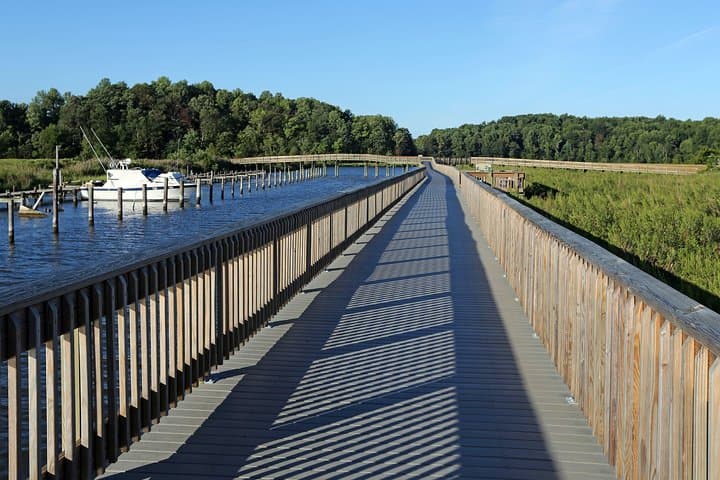
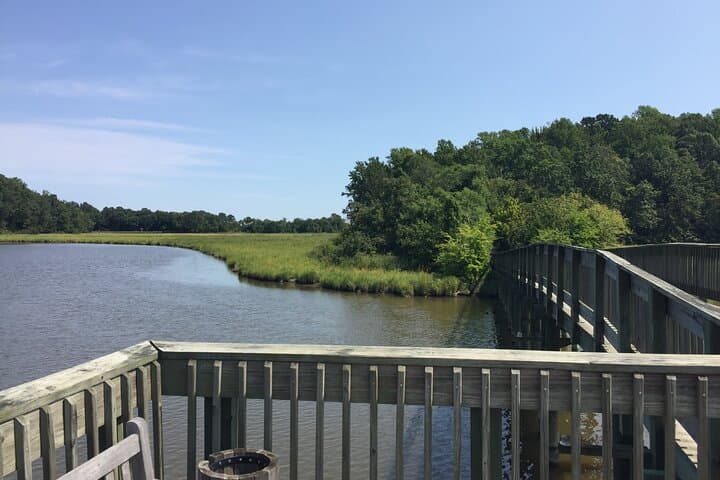
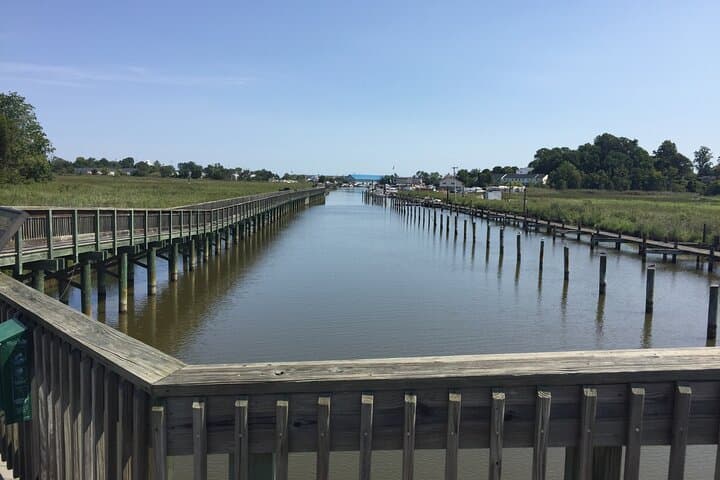
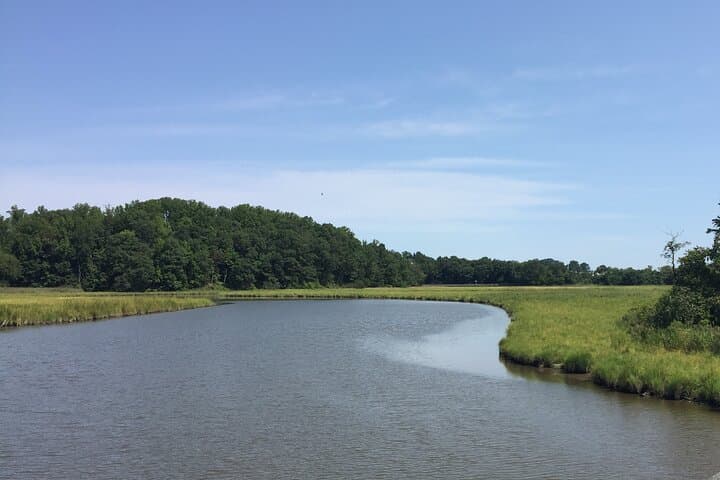
The tour begins under the open pavilion at Kellam Field, where the salt air and the low, reedy marsh call you toward the old railbed. Walkers fall into a steady rhythm: boards and crushed stone beneath their boots, Fishing Creek to one side daring you to pause for another frame of marsh grass and glassy water.
The tour begins under the open pavilion at Kellam Field, where the salt air and the low, reedy marsh call you toward the old railbed. Walkers fall into a steady rhythm: boards and crushed stone beneath their boots, Fishing Creek to one side daring you to pause for another frame of marsh grass and glassy water.
The Railway Trail follows the footprint of the Chesapeake Beach Railway that once ferried weekenders from Washington and Baltimore in the early 20th century. Without the Bay Bridge, the town grew as a coastal escape—you’ll pass plaques honoring local veterans and the modest brick of the Chesapeake Railway Museum, which gathers artifacts and stories of resort-era transportation and local life.
Geologically the route crosses a low coastal plain of marine clays and estuarine deposits; the trail sits slightly above tidal marsh and gives unexpected long views when the sky opens. Culture here is small-town Chesapeake Bay: anglers tending nets, wooden groins and docks, and seasonal seafood stands. The guide fills gaps with period photos and local lore.
Practically: the pace is unhurried but expect 1.5 hours of steady walking on mostly flat, firm surfaces with short uneven sections. Bring layered footwear for damp spots, a camera with a zoom for birds, and water. Call 24 hours ahead to confirm the four-walker minimum and museum hours. The route is wheelchair accessible in parts, but boardwalks and narrow sections can be limiting. Timing your visit for morning light or late afternoon brings active birdlife and cooler temperatures — the marsh will welcome you, and the trail will carry you back through Chesapeake Beach’s quieter, storied side.