THE ADVENTURE COLLECTIVE® · Independent discovery and booking for outdoor travel

A full-day coach tour from Seoul that pairs the eerie depths of the Second Tunnel with the river-carved rock house of Goseokjeong Pavilion. Expect short walks, underground passages, and a direct look at Cheorwon’s wartime legacy.
A full-day coach tour from Seoul that pairs the eerie depths of the Second Tunnel with the river-carved rock house of Goseokjeong Pavilion. Expect short walks, underground passages, and a direct look at Cheorwon’s wartime legacy.
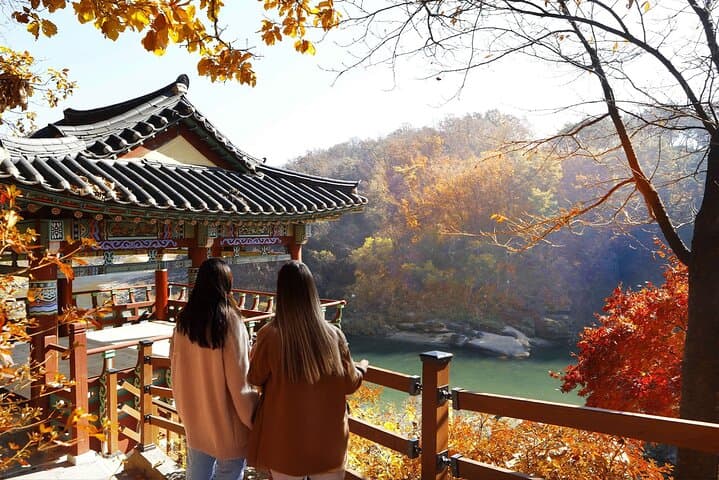
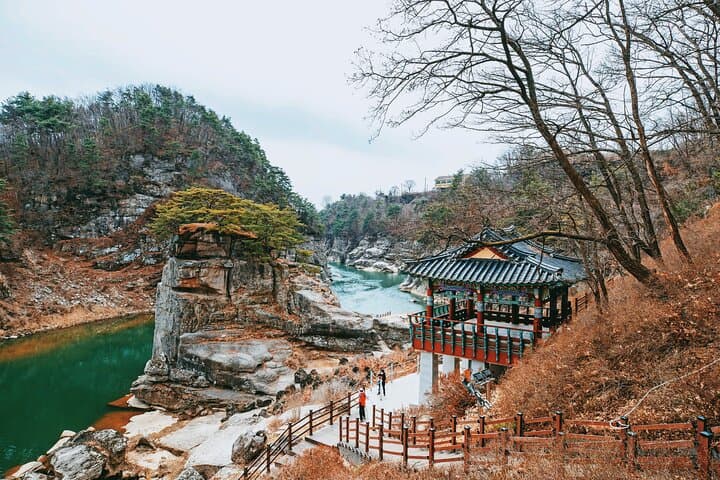
You step off the coach into a wide rice plain where wind pushes across low hills and the sky feels unusually open—this is Cheorwon, the buffer of a divided peninsula. A short walk brings you to Goseokjeong Pavilion, its stones hewn and poised above a clear river that quietly grooves through basalt and granite outcrops; the water seems to dare you to pause and look back toward a landscape shaped by both geology and geopolitics.
Verified experiences and guided adventures in the surrounding area.
Operated by Lecirt · Cheorwon, Gangwon-do
You step off the coach into a wide rice plain where wind pushes across low hills and the sky feels unusually open—this is Cheorwon, the buffer of a divided peninsula. A short walk brings you to Goseokjeong Pavilion, its stones hewn and poised above a clear river that quietly grooves through basalt and granite outcrops; the water seems to dare you to pause and look back toward a landscape shaped by both geology and geopolitics.
The day threads natural features with 20th-century history. The Second Tunnel, unearthed in 1975, reveals a low, dim man-made vein bored beneath the DMZ—engineered for infiltration, now a sealed lesson in strategy and mistrust. Nearby, the Korean Workers' Party Headquarters dates to the immediate postwar years and stands as an austere, concrete page of local memory.
Geology here is plain and firm: glacially scoured valleys, exposed bedrock, and river-polished boulders that guided both settlement and conflict. Culturally, Cheorwon balances agrarian rhythms with a tourism economy centered on security tours; local festivals and flower fields change the tone by season.
Practical guidance: this is a full-day, coach-based tour with short walks, stairs and an underground passage with low ceilings—wear sturdy shoes, bring ID, and expect controlled photo rules at sensitive sites. Hydrate and pack a lightweight jacket; Korean-language signage varies outside major stops. The itinerary is fixed but may be adjusted for security or scheduling. For travelers based in Seoul, this is a compact way to encounter the physical traces of Korea’s division while walking across open fields and into an underground corridor that keeps history palpable.
easy.
12 hours.
Suitable for most fitness levels; involves short walks, stair descents into the tunnel, and standing during transfers
Yes—most security checkpoints for DMZ-area tours require government-issued photo ID; bring your passport or national ID card.
Photography rules vary by site; in many DMZ areas photos are restricted—follow the tour guide’s instructions to avoid issues.
The tunnel is a low-ceilinged, stair-access site; visitors should be able to handle stairs and some stooping, but no advanced fitness is required.
Yes—the route can be adjusted for security, weather, or scheduling; operators generally notify passengers in advance when possible.
Cheorwon sits along the historical front line between North and South Korea; several sites, including the Second Tunnel and labor party headquarters, reflect post-1945 military and administrative history.
The DMZ corridor acts as an unintended wildlife refuge; visitors should stay on paths, avoid disturbing habitat, and follow local rules to minimize impact.
Lecirt operates guided outdoor trips and adventures with an emphasis on safety, stewardship, and memorable experiences.

You step off the coach into a wide rice plain where wind pushes across low hills and the sky feels unusually open—this is Cheorwon, the buffer of a divided peninsula. A short walk brings you to Goseokjeong Pavilion, its stones hewn and poised above a clear river that quietly grooves through basalt and granite outcrops; the water seems to dare you to pause and look back toward a landscape shaped by both geology and geopolitics.
You step off the coach into a wide rice plain where wind pushes across low hills and the sky feels unusually open—this is Cheorwon, the buffer of a divided peninsula. A short walk brings you to Goseokjeong Pavilion, its stones hewn and poised above a clear river that quietly grooves through basalt and granite outcrops; the water seems to dare you to pause and look back toward a landscape shaped by both geology and geopolitics.
The day threads natural features with 20th-century history. The Second Tunnel, unearthed in 1975, reveals a low, dim man-made vein bored beneath the DMZ—engineered for infiltration, now a sealed lesson in strategy and mistrust. Nearby, the Korean Workers' Party Headquarters dates to the immediate postwar years and stands as an austere, concrete page of local memory.
Geology here is plain and firm: glacially scoured valleys, exposed bedrock, and river-polished boulders that guided both settlement and conflict. Culturally, Cheorwon balances agrarian rhythms with a tourism economy centered on security tours; local festivals and flower fields change the tone by season.
Practical guidance: this is a full-day, coach-based tour with short walks, stairs and an underground passage with low ceilings—wear sturdy shoes, bring ID, and expect controlled photo rules at sensitive sites. Hydrate and pack a lightweight jacket; Korean-language signage varies outside major stops. The itinerary is fixed but may be adjusted for security or scheduling. For travelers based in Seoul, this is a compact way to encounter the physical traces of Korea’s division while walking across open fields and into an underground corridor that keeps history palpable.