THE ADVENTURE COLLECTIVE® · Independent discovery and booking for outdoor travel

Spend a day with Chengdu’s iconic pandas and the awe-inspiring Leshan Giant Buddha on this private, all‑inclusive tour. Expect hotel pickup, a guided visit to the panda research base, a Sichuan lunch, and time at the UNESCO-listed Buddha—all in about nine hours.
Spend a day with Chengdu’s iconic pandas and the awe-inspiring Leshan Giant Buddha on this private, all‑inclusive tour. Expect hotel pickup, a guided visit to the panda research base, a Sichuan lunch, and time at the UNESCO-listed Buddha—all in about nine hours.
A predawn van collects you from a Chengdu hotel and the city slips away as the road unfurls westward. By mid-morning the panda enclosures at the Chengdu Research Base of Giant Panda push you into a quieter rhythm: bamboo stalks sway, juveniles tumble and adults chew with deliberate patience. The animals set the tempo; the base’s research buildings and interpretive film explain how captive breeding and rehabilitation work breathe life into local conservation.
Verified experiences and guided adventures in the surrounding area.
Operated by China Theme Tour · Chengdu, Sichuan
A predawn van collects you from a Chengdu hotel and the city slips away as the road unfurls westward. By mid-morning the panda enclosures at the Chengdu Research Base of Giant Panda push you into a quieter rhythm: bamboo stalks sway, juveniles tumble and adults chew with deliberate patience. The animals set the tempo; the base’s research buildings and interpretive film explain how captive breeding and rehabilitation work breathe life into local conservation.
Later, a two‑hour drive through Sichuan’s river valleys brings you to Leshan, where the giant Buddha watches the confluence of rivers with a slow, geological patience. Carved into red sandstone during the Tang dynasty by monk Haitong to calm turbulent currents, the 71‑meter statue now reads as both engineering feat and cultural monument; UNESCO listed it in 1996. The cliff face and riverbanks reveal the region’s erosional history and the human labor that reshaped it.
Culturally, the day pairs modern conservation efforts with millennia‑old religious practice and Sichuanese culinary vivacity—expect a hearty local lunch and a guide who can translate both food and folklore.
Practically: the tour runs about nine hours, includes hotel pick‑up, entrance fees, bottled water and a local lunch. Wear grippy walking shoes for uneven steps at Leshan and expect crowds at prime viewing spots. Morning is best at the panda base for animal activity; late afternoon light softens the Buddha’s profile. Bring a lightweight rain layer, your passport (required for booking), and a charged phone for photos. Respect enclosures, follow your guide’s directions, and leave snacks for the pandas to the professionals.
moderate.
9 hours.
Moderate fitness for short walks, stairs and a two‑hour drive each way; able to stand and walk for several short periods.
Morning hours after opening are best; pandas feed and play more before midday, so an early start maximizes viewing.
The main viewing platform can be reached with limited walking, but descending to riverside viewpoints involves many steps and uneven surfaces—notify the operator ahead to arrange alternatives.
Yes—this tour includes entrance tickets to both attractions and a local Sichuan lunch as part of the package.
Yes—passport details are required for booking and may be requested at ticket issuance, so carry your passport or a clear copy.
The Leshan Giant Buddha was carved from the cliff by Tang‑era craftsmen under monk Haitong’s direction to 'calm the waters'—construction began in the 8th century and reflects medieval engineering tied to local river control.
The Chengdu base is a center for captive breeding and reintroduction research; visitors help fund conservation, but must follow rules—no feeding or close contact—to minimize stress on animals.
China Theme Tour operates guided outdoor trips and adventures with an emphasis on safety, stewardship, and memorable experiences.


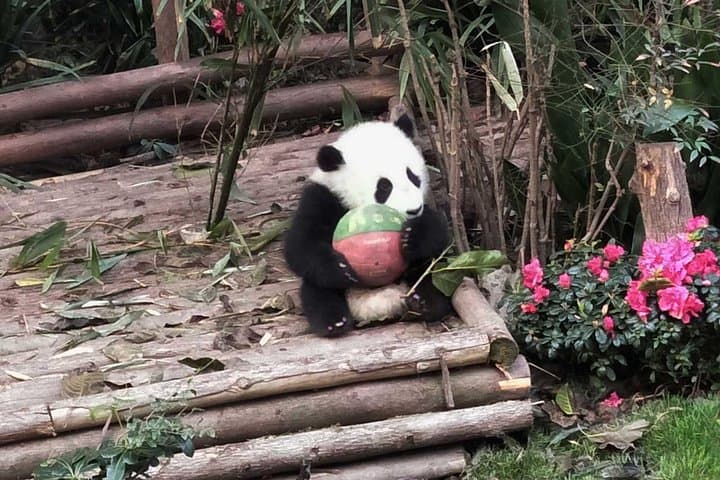

A predawn van collects you from a Chengdu hotel and the city slips away as the road unfurls westward. By mid-morning the panda enclosures at the Chengdu Research Base of Giant Panda push you into a quieter rhythm: bamboo stalks sway, juveniles tumble and adults chew with deliberate patience. The animals set the tempo; the base’s research buildings and interpretive film explain how captive breeding and rehabilitation work breathe life into local conservation.
A predawn van collects you from a Chengdu hotel and the city slips away as the road unfurls westward. By mid-morning the panda enclosures at the Chengdu Research Base of Giant Panda push you into a quieter rhythm: bamboo stalks sway, juveniles tumble and adults chew with deliberate patience. The animals set the tempo; the base’s research buildings and interpretive film explain how captive breeding and rehabilitation work breathe life into local conservation.
Later, a two‑hour drive through Sichuan’s river valleys brings you to Leshan, where the giant Buddha watches the confluence of rivers with a slow, geological patience. Carved into red sandstone during the Tang dynasty by monk Haitong to calm turbulent currents, the 71‑meter statue now reads as both engineering feat and cultural monument; UNESCO listed it in 1996. The cliff face and riverbanks reveal the region’s erosional history and the human labor that reshaped it.
Culturally, the day pairs modern conservation efforts with millennia‑old religious practice and Sichuanese culinary vivacity—expect a hearty local lunch and a guide who can translate both food and folklore.
Practically: the tour runs about nine hours, includes hotel pick‑up, entrance fees, bottled water and a local lunch. Wear grippy walking shoes for uneven steps at Leshan and expect crowds at prime viewing spots. Morning is best at the panda base for animal activity; late afternoon light softens the Buddha’s profile. Bring a lightweight rain layer, your passport (required for booking), and a charged phone for photos. Respect enclosures, follow your guide’s directions, and leave snacks for the pandas to the professionals.