THE ADVENTURE COLLECTIVE® · Independent discovery and booking for outdoor travel

A compact private day trip from Chengdu that pairs morning viewing at the Chengdu Research Base of Giant Panda with a visit to the 1,300‑year‑old Leshan Giant Buddha. Ideal for travelers wanting wildlife observation and cultural history in a single, guided day.
A compact private day trip from Chengdu that pairs morning viewing at the Chengdu Research Base of Giant Panda with a visit to the 1,300‑year‑old Leshan Giant Buddha. Ideal for travelers wanting wildlife observation and cultural history in a single, guided day.
You step out of Chengdu traffic into a cooler, bamboo-scented morning at the Chengdu Research Base of Giant Panda. Paddocks and brooks edge well-kept paths; ropy bamboo stalks sway and the pandas — sleepy, curious, occasionally riotous — choose whether to chew, nap, or loll about for your camera.
Verified experiences and guided adventures in the surrounding area.
Operated by IslamiChina Travel · Chengdu, Sichuan
You step out of Chengdu traffic into a cooler, bamboo-scented morning at the Chengdu Research Base of Giant Panda. Paddocks and brooks edge well-kept paths; ropy bamboo stalks sway and the pandas — sleepy, curious, occasionally riotous — choose whether to chew, nap, or loll about for your camera.
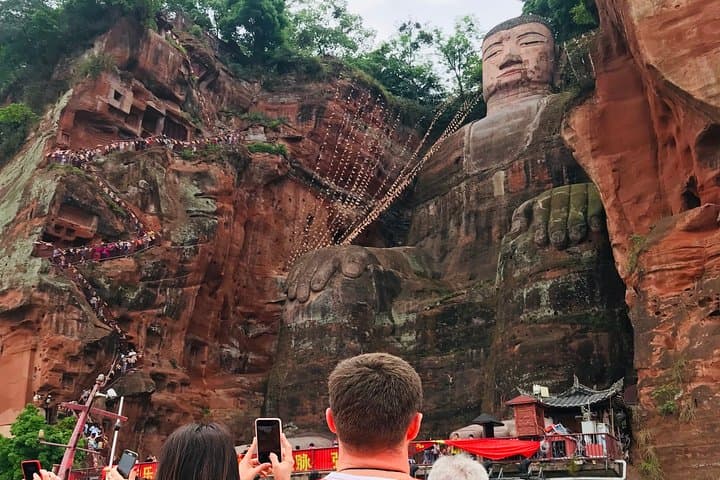
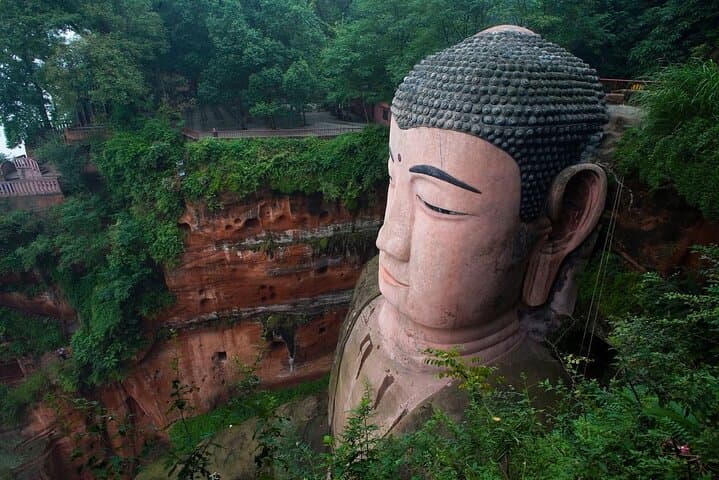
The day pivots south along Sichuan’s river valleys toward the 1,300‑year‑old Leshan Giant Buddha carved into Mt. Lingyun. The Buddha watches where three rivers meet, stone skin weathered by centuries of spray, human hands and the slow work of the elements. The carving began in the Tang dynasty under monk Hai Tong and was intended to calm turbulent currents; its engineering includes an ancient drainage system still visible today.
Geology here is rooted in red sandstone and riverine erosion — the same forces that exposed the Buddha’s platform and created the broad, slow rivers at its feet. Culturally, the day pairs modern conservation science at the panda base with Tang‑era devotional craftsmanship at Leshan, a compact lesson in Sichuan’s layered history.
Practical notes: the itinerary is an eight‑hour private loop with roughly two hours driving each way from central Chengdu. Expect 1–2 miles of walking at the panda base on mostly paved paths and several hundred stone steps and terraces at Leshan if you descend to the river viewpoint. Bring a charged phone for photos, a refillable water bottle, a light rain shell, and your passport for ticketing. Arrive early at the panda base (9–11am is their most active window) and budget time for stairs or optional riverboat views at Leshan.
easy.
8 hours.
Suitable for most travelers with basic mobility; ability to handle stairs at Leshan recommended.
This private tour description states that all admission tickets to sightseeing places are included in the price.
Expect about 1.5–2.5 hours each way depending on traffic; the whole trip is typically an 8‑hour private excursion.
Nurseries are sometimes visible but access varies; the base commonly offers viewing windows for cubs when available and staff schedules allow.
The main cliffside walk involves many steps; an alternative riverboat offers a good frontal view for those unable to descend the terraces.
The Leshan Giant Buddha was carved during the Tang dynasty starting in the 8th century by monk Hai Tong to calm river currents; the Chengdu Panda Base opened in 1987 to breed and research giant pandas.
The panda base focuses on breeding and reintroduction research; visitors should follow site rules, avoid flash photography near dens, and not attempt to feed or touch animals to reduce stress and disease risk.
IslamiChina Travel operates guided outdoor trips and adventures with an emphasis on safety, stewardship, and memorable experiences.


You step out of Chengdu traffic into a cooler, bamboo-scented morning at the Chengdu Research Base of Giant Panda. Paddocks and brooks edge well-kept paths; ropy bamboo stalks sway and the pandas — sleepy, curious, occasionally riotous — choose whether to chew, nap, or loll about for your camera.
You step out of Chengdu traffic into a cooler, bamboo-scented morning at the Chengdu Research Base of Giant Panda. Paddocks and brooks edge well-kept paths; ropy bamboo stalks sway and the pandas — sleepy, curious, occasionally riotous — choose whether to chew, nap, or loll about for your camera.
The day pivots south along Sichuan’s river valleys toward the 1,300‑year‑old Leshan Giant Buddha carved into Mt. Lingyun. The Buddha watches where three rivers meet, stone skin weathered by centuries of spray, human hands and the slow work of the elements. The carving began in the Tang dynasty under monk Hai Tong and was intended to calm turbulent currents; its engineering includes an ancient drainage system still visible today.
Geology here is rooted in red sandstone and riverine erosion — the same forces that exposed the Buddha’s platform and created the broad, slow rivers at its feet. Culturally, the day pairs modern conservation science at the panda base with Tang‑era devotional craftsmanship at Leshan, a compact lesson in Sichuan’s layered history.
Practical notes: the itinerary is an eight‑hour private loop with roughly two hours driving each way from central Chengdu. Expect 1–2 miles of walking at the panda base on mostly paved paths and several hundred stone steps and terraces at Leshan if you descend to the river viewpoint. Bring a charged phone for photos, a refillable water bottle, a light rain shell, and your passport for ticketing. Arrive early at the panda base (9–11am is their most active window) and budget time for stairs or optional riverboat views at Leshan.