THE ADVENTURE COLLECTIVE® · Independent discovery and booking for outdoor travel

See Chengdu’s beloved giant pandas in the morning and cruise past the Leshan Giant Buddha in the afternoon on a private full-day tour. This one-day loop pairs wildlife viewing with a UNESCO World Heritage site and door-to-door transport.
See Chengdu’s beloved giant pandas in the morning and cruise past the Leshan Giant Buddha in the afternoon on a private full-day tour. This one-day loop pairs wildlife viewing with a UNESCO World Heritage site and door-to-door transport.
Morning light slants through bamboo at the Chengdu Research Base of Giant Panda, and the air carries the low creak of bamboo stalks and the sharp crack of playful teeth. Your guide leads you along orderly paths where giant pandas amble and cubs tumble; later the road unfurls westward, taking you into river country where the Leshan Giant Buddha watches the confluence of three rivers with a slow, stone patience.
Verified experiences and guided adventures in the surrounding area.
Operated by TravofChina · Chengdu, Sichuan
Morning light slants through bamboo at the Chengdu Research Base of Giant Panda, and the air carries the low creak of bamboo stalks and the sharp crack of playful teeth. Your guide leads you along orderly paths where giant pandas amble and cubs tumble; later the road unfurls westward, taking you into river country where the Leshan Giant Buddha watches the confluence of three rivers with a slow, stone patience.
The panda base, founded in 1987, is a global center for breeding and conservation that pairs soft-eyed encounters with education about habitat restoration. Leshan’s 71-meter cliff carving dates to the Tang dynasty and sits carved directly into red sandstone where river currents have shaped both trade routes and local myth. Visiting both in a day links Chengdu’s modern conservation focus with Sichuan’s long cultural history: tea culture in Chengdu, Sichuan pepper on the table at lunch, and boatmen who once navigated these rivers.
Practically: tours start early—pandas are most active in the morning—then drive approximately 2–2.5 hours to Leshan where a local lunch precedes a short cruise past the Buddha’s face. Expect paved walkways, short stair sections at Leshan, and minimal technical difficulty, but bring cash, your passport for tickets, and time for slow photo stops.
Tips for pacing: prioritize the morning panda viewing, keep hydrated in summer, and wear grippy shoes for damp temple steps. With a private guide and car, the day moves efficiently while leaving space to notice small things—the river daring you toward wider horizons, and the stone Buddha’s calm that slows your pace.
easy.
8 hours.
Basic mobility is sufficient; involves walking on paved paths and climbing some stairs at Leshan.
Expect approximately 2–2.5 hours each way depending on traffic; the tour schedule accounts for travel and a lunch stop.
Yes — entrance tickets to both sites and a local lunch are included in the tour price, along with bottled water.
No — direct contact and feeding are prohibited for animal welfare and visitor safety; viewing is from designated areas.
Yes — the tour is rated easy physically; however, Leshan involves staircases and boat movement which may be challenging for some—check mobility needs with the operator.
The Leshan Giant Buddha was carved beginning in the early 8th century to calm river currents and stands as one of the largest stone Buddha statues created in China; the panda base is a modern conservation center established in the late 20th century.
The Chengdu Research Base focuses on captive breeding and habitat restoration; visitors are asked to follow rules that minimize disturbance to animals and reduce litter in sensitive areas.
TravofChina operates guided outdoor trips and adventures with an emphasis on safety, stewardship, and memorable experiences.



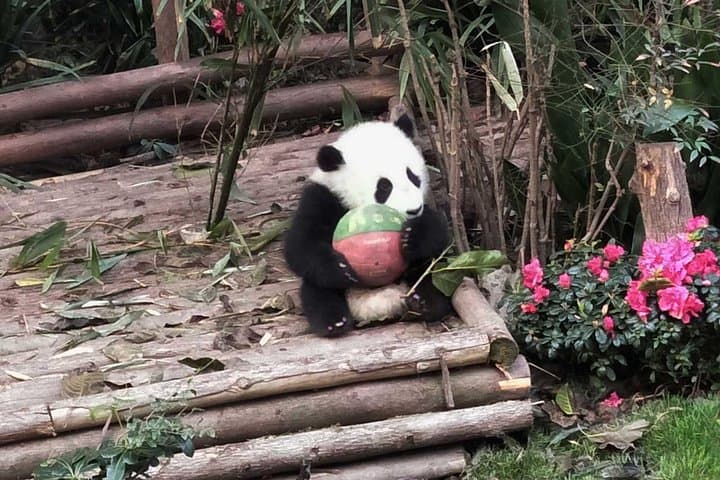
Morning light slants through bamboo at the Chengdu Research Base of Giant Panda, and the air carries the low creak of bamboo stalks and the sharp crack of playful teeth. Your guide leads you along orderly paths where giant pandas amble and cubs tumble; later the road unfurls westward, taking you into river country where the Leshan Giant Buddha watches the confluence of three rivers with a slow, stone patience.
Morning light slants through bamboo at the Chengdu Research Base of Giant Panda, and the air carries the low creak of bamboo stalks and the sharp crack of playful teeth. Your guide leads you along orderly paths where giant pandas amble and cubs tumble; later the road unfurls westward, taking you into river country where the Leshan Giant Buddha watches the confluence of three rivers with a slow, stone patience.
The panda base, founded in 1987, is a global center for breeding and conservation that pairs soft-eyed encounters with education about habitat restoration. Leshan’s 71-meter cliff carving dates to the Tang dynasty and sits carved directly into red sandstone where river currents have shaped both trade routes and local myth. Visiting both in a day links Chengdu’s modern conservation focus with Sichuan’s long cultural history: tea culture in Chengdu, Sichuan pepper on the table at lunch, and boatmen who once navigated these rivers.
Practically: tours start early—pandas are most active in the morning—then drive approximately 2–2.5 hours to Leshan where a local lunch precedes a short cruise past the Buddha’s face. Expect paved walkways, short stair sections at Leshan, and minimal technical difficulty, but bring cash, your passport for tickets, and time for slow photo stops.
Tips for pacing: prioritize the morning panda viewing, keep hydrated in summer, and wear grippy shoes for damp temple steps. With a private guide and car, the day moves efficiently while leaving space to notice small things—the river daring you toward wider horizons, and the stone Buddha’s calm that slows your pace.