THE ADVENTURE COLLECTIVE® · Independent discovery and booking for outdoor travel

Spend a private half-day at the Chengdu Giant Panda Base and watch pandas move through bamboo groves, play in nurseries, and join morning feedings. This concise guide explains what to expect, how to time your visit, and practical tips for making the most of a short conservation-focused outing.
Spend a private half-day at the Chengdu Giant Panda Base and watch pandas move through bamboo groves, play in nurseries, and join morning feedings. This concise guide explains what to expect, how to time your visit, and practical tips for making the most of a short conservation-focused outing.
Morning light filters through bamboo groves as visitors drift past enclosures where pandas rouse, stretch, and methodically chew on shoots—their slow, deliberate movements oddly magnetic. The Chengdu Research Base of Giant Panda Breeding unfolds as a tidy campus of greenhouses, observation platforms and interpretive halls where scientists and keepers work quietly behind the scenes.
Verified experiences and guided adventures in the surrounding area.
Morning light filters through bamboo groves as visitors drift past enclosures where pandas rouse, stretch, and methodically chew on shoots—their slow, deliberate movements oddly magnetic. The Chengdu Research Base of Giant Panda Breeding unfolds as a tidy campus of greenhouses, observation platforms and interpretive halls where scientists and keepers work quietly behind the scenes.
Founded in the late 1980s, the base grew out of urgent conservation work to save an endemic species from habitat loss and low birth rates. Geologically, the region sits on the eastern edge of the Tibetan Plateau’s foothills; the local bamboo that pandas rely on thrives because of Sichuan’s mild, wet climate. Culturally, Chengdu’s easygoing tea-house rhythm and Sichuan cuisine create a gentle contrast to the focused conservation here—locals view the panda as a provincial emblem and international ambassador.
Practically, a private half-day visit typically lasts about 3–4 hours, with early mornings offering the best chance to see active behavior: morning feedings, climbing, and cub play in spring. Expect paved paths, some steps, and short walks between enclosures. Cameras are welcome but avoid flash and do not touch or feed animals. Bring water, dress in layers for foggy mornings, and plan transport—traffic into Chengdu can add time.
Beyond pandas, the base’s education center and nursery windows reveal the science behind captive breeding. Visitors leave with a clearer sense of the species’ fragility, the local ecosystems that sustain them, and everyday practices that support conservation: keep to trails, minimize noise, and respect staff guidance.
easy.
3–4 hours.
Light walking ability; able to stand and move between exhibits for a few hours.
Hours vary seasonally but mornings are best—arrive at opening to catch feeding and active behavior; late afternoons are quieter.
Yes—the listed product is a private half-day tour providing dedicated guidance and easier access to interpretation than general admission.
Children are welcome; paved paths are stroller-friendly but some viewpoints have steps—check specific access at each exhibit.
No—feeding and touching are prohibited for animal safety and disease prevention; follow staff directions and observation windows instead.
The Chengdu Research Base was established in the late 1980s to recover declining panda populations through captive breeding and research.
The base is a working breeding and research center—support conservation by following rules, avoiding single-use plastics on-site, and choosing licensed tours that fund local programs.
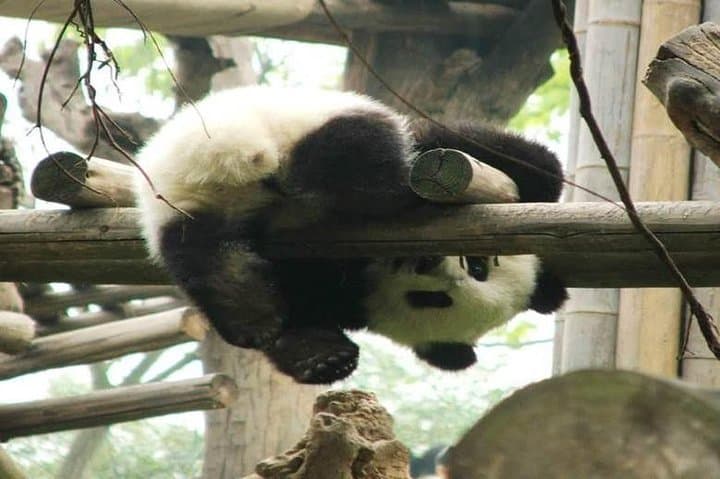
Morning light filters through bamboo groves as visitors drift past enclosures where pandas rouse, stretch, and methodically chew on shoots—their slow, deliberate movements oddly magnetic. The Chengdu Research Base of Giant Panda Breeding unfolds as a tidy campus of greenhouses, observation platforms and interpretive halls where scientists and keepers work quietly behind the scenes.
Morning light filters through bamboo groves as visitors drift past enclosures where pandas rouse, stretch, and methodically chew on shoots—their slow, deliberate movements oddly magnetic. The Chengdu Research Base of Giant Panda Breeding unfolds as a tidy campus of greenhouses, observation platforms and interpretive halls where scientists and keepers work quietly behind the scenes.
Founded in the late 1980s, the base grew out of urgent conservation work to save an endemic species from habitat loss and low birth rates. Geologically, the region sits on the eastern edge of the Tibetan Plateau’s foothills; the local bamboo that pandas rely on thrives because of Sichuan’s mild, wet climate. Culturally, Chengdu’s easygoing tea-house rhythm and Sichuan cuisine create a gentle contrast to the focused conservation here—locals view the panda as a provincial emblem and international ambassador.
Practically, a private half-day visit typically lasts about 3–4 hours, with early mornings offering the best chance to see active behavior: morning feedings, climbing, and cub play in spring. Expect paved paths, some steps, and short walks between enclosures. Cameras are welcome but avoid flash and do not touch or feed animals. Bring water, dress in layers for foggy mornings, and plan transport—traffic into Chengdu can add time.
Beyond pandas, the base’s education center and nursery windows reveal the science behind captive breeding. Visitors leave with a clearer sense of the species’ fragility, the local ecosystems that sustain them, and everyday practices that support conservation: keep to trails, minimize noise, and respect staff guidance.