THE ADVENTURE COLLECTIVE® · Independent discovery and booking for outdoor travel

Spend a day seeing Chengdu’s famous pandas in the morning and the 71‑metre Leshan Giant Buddha in the afternoon. This private tour blends wildlife viewing with Tang‑era stone carving and a short drive through Sichuan’s river valleys.
Spend a day seeing Chengdu’s famous pandas in the morning and the 71‑metre Leshan Giant Buddha in the afternoon. This private tour blends wildlife viewing with Tang‑era stone carving and a short drive through Sichuan’s river valleys.
You step out of Chengdu traffic into a morning that smells faintly of bamboo and steamed buns; the panda base hums with quiet activity as adults rouse and cubs tumble over one another. In the afternoon the road loosens under the wheels and the rivers that carved the valley seem to pull the car toward Lingyun Mountain, where a 71‑metre stone Buddha watches the confluence below — the rivers daring you to stay still.
Verified experiences and guided adventures in the surrounding area.
Operated by China Tour Company · Chengdu, Sichuan
You step out of Chengdu traffic into a morning that smells faintly of bamboo and steamed buns; the panda base hums with quiet activity as adults rouse and cubs tumble over one another. In the afternoon the road loosens under the wheels and the rivers that carved the valley seem to pull the car toward Lingyun Mountain, where a 71‑metre stone Buddha watches the confluence below — the rivers daring you to stay still.
The Chengdu Research Base of Giant Panda Breeding, founded in the late 1980s, concentrates on breeding, research and public education; mornings are prime for viewing when pandas feed and play. Leshan’s Giant Buddha was carved into the red sandstone cliff during the Tang dynasty (construction began in 713 AD) to calm river currents — geology and devotion combined into an engineering feat that still controls the flow of water at the confluence of three rivers.
Culturally, the day blends modern conservation with centuries of Buddhist pilgrimage: guides often point out inscriptions, drainage systems built into the statue, and local temple life. Expect roughly 10 hours on the road, short walks on paved paths, stairs at the Buddha and photo stops at river level.
Practical guidance: bring your passport (required for booking), wear sturdy walking shoes, and plan early starts to catch pandas at their liveliest. If rain threatens, a quick boat trip gives a dramatic low-angle view of the Buddha but keep cameras protected. Respect barriers and staff instructions at wildlife areas — close encounters with pandas aren’t permitted and feeding is prohibited.
easy.
10 hours.
Suitable for most fitness levels; involves moderate walking and stair ascent at the Buddha site.
Yes — the tour includes hotel pickup and drop‑off with a comfortable car or bus as specified in the inclusion details.
Entrance tickets for the private tour are included; verify whether group options list ticket inclusion at booking.
Typical driving time is about 1.5–2.5 hours each way depending on traffic; the itinerary allows ample transfer time.
Yes — short river boat rides operate near the base of the statue and provide a low‑angle view; they may be offered locally and can be weather dependent.
The Leshan Giant Buddha was carved from 713–803 AD during the Tang dynasty to calm dangerous river currents; the Chengdu Panda Base purpose‑built facility began operations in the late 1980s to rescue, breed and educate.
The panda base focuses on captive breeding, research and rewilding efforts; visitors are asked to follow strict rules to minimize disturbance and avoid feeding or close contact with animals.
China Tour Company operates guided outdoor trips and adventures with an emphasis on safety, stewardship, and memorable experiences.


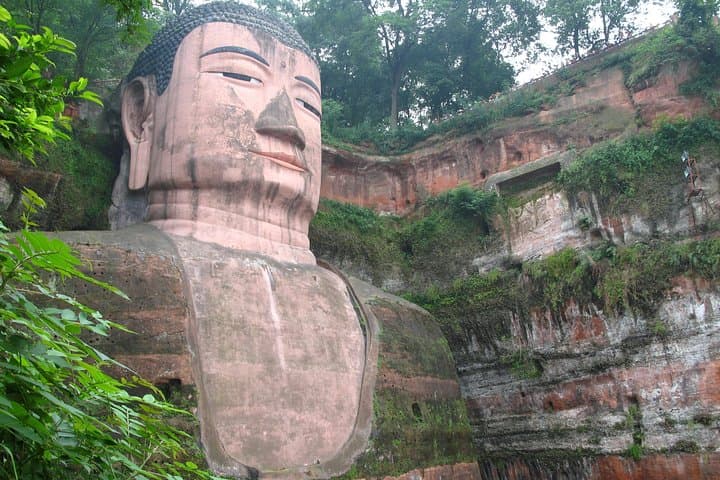
You step out of Chengdu traffic into a morning that smells faintly of bamboo and steamed buns; the panda base hums with quiet activity as adults rouse and cubs tumble over one another. In the afternoon the road loosens under the wheels and the rivers that carved the valley seem to pull the car toward Lingyun Mountain, where a 71‑metre stone Buddha watches the confluence below — the rivers daring you to stay still.
You step out of Chengdu traffic into a morning that smells faintly of bamboo and steamed buns; the panda base hums with quiet activity as adults rouse and cubs tumble over one another. In the afternoon the road loosens under the wheels and the rivers that carved the valley seem to pull the car toward Lingyun Mountain, where a 71‑metre stone Buddha watches the confluence below — the rivers daring you to stay still.
The Chengdu Research Base of Giant Panda Breeding, founded in the late 1980s, concentrates on breeding, research and public education; mornings are prime for viewing when pandas feed and play. Leshan’s Giant Buddha was carved into the red sandstone cliff during the Tang dynasty (construction began in 713 AD) to calm river currents — geology and devotion combined into an engineering feat that still controls the flow of water at the confluence of three rivers.
Culturally, the day blends modern conservation with centuries of Buddhist pilgrimage: guides often point out inscriptions, drainage systems built into the statue, and local temple life. Expect roughly 10 hours on the road, short walks on paved paths, stairs at the Buddha and photo stops at river level.
Practical guidance: bring your passport (required for booking), wear sturdy walking shoes, and plan early starts to catch pandas at their liveliest. If rain threatens, a quick boat trip gives a dramatic low-angle view of the Buddha but keep cameras protected. Respect barriers and staff instructions at wildlife areas — close encounters with pandas aren’t permitted and feeding is prohibited.