THE ADVENTURE COLLECTIVE® · Independent discovery and booking for outdoor travel

Explore Chelsea and the High Line on a focused two-hour walking tour that connects industrial history with contemporary architecture. Expect elevated views, gallery-rich streets, and clear context about how design reshaped this corner of Manhattan.
Explore Chelsea and the High Line on a focused two-hour walking tour that connects industrial history with contemporary architecture. Expect elevated views, gallery-rich streets, and clear context about how design reshaped this corner of Manhattan.
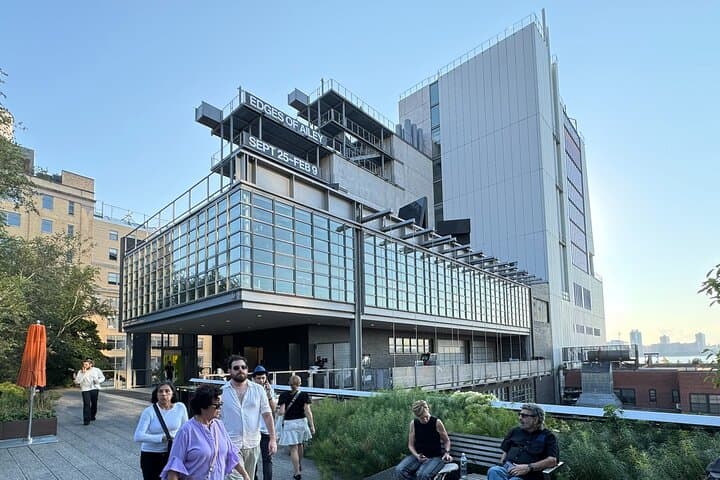
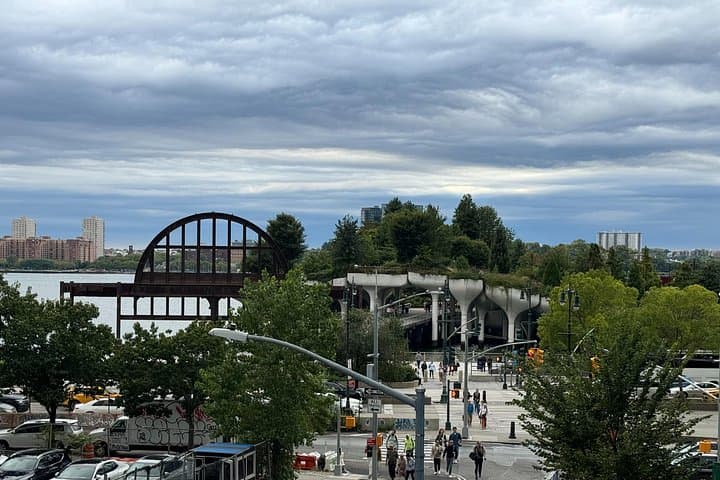
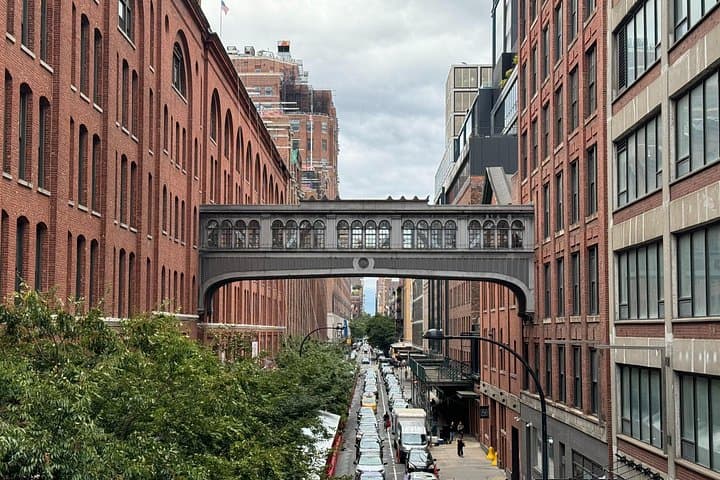
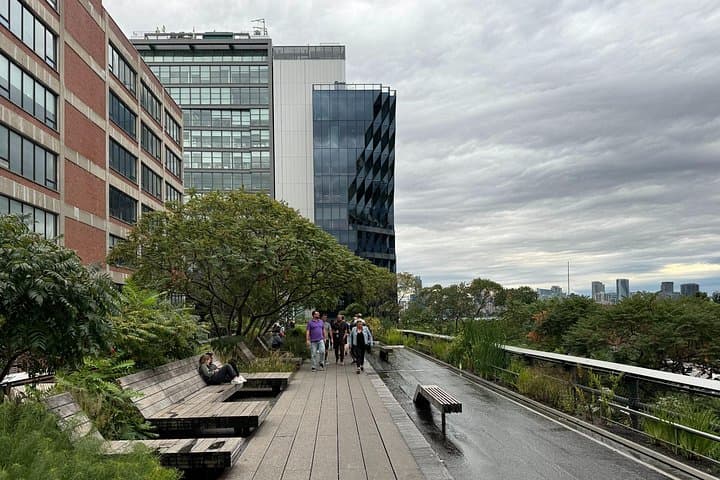
You step onto the Whitney’s plaza and the city rearranges itself: glass towers at Hudson Yards, brick warehouses to the west and, like a raised spine of green, the High Line running north through Chelsea. The tour moves with deliberate pace—two hours of elevated paths, gallery-lined streets and sudden vantage points where modern façades meet traces of the industrial city that made Manhattan.
Verified experiences and guided adventures in the surrounding area.
Operated by Build Tours · New York, NY
You step onto the Whitney’s plaza and the city rearranges itself: glass towers at Hudson Yards, brick warehouses to the west and, like a raised spine of green, the High Line running north through Chelsea. The tour moves with deliberate pace—two hours of elevated paths, gallery-lined streets and sudden vantage points where modern façades meet traces of the industrial city that made Manhattan.
This is not a casual stroll. It’s a story of adaptive reuse: 1930s freight rails that once ran goods through the meatpacking district, later abandoned, repurposed into an elevated park in stages beginning in 2009. Along the way, the guide points out the work of contemporary starchitects—Zaha Hadid’s fluid residential silhouette at 520 West 28th, Jean Nouvel’s 100 11th Avenue, and the Spiral by BIG—then pauses to frame the Whitney and the Shed as cultural anchors that changed how the neighborhood breathes.
Geology plays a quiet role — Manhattan’s bedrock of schist underpins the grid and the heft of old warehouses, while the Hudson’s tidal edge shaped where industry clustered. Culture here reads like layers: Dutch farmland, 19th-century rail, a 20th-century food-distribution hub, and now a global gallery circuit. Chelsea’s compact blocks hold one of the world’s densest concentrations of contemporary art spaces; the High Line’s planting design responds to that urban pulse with native grasses, sculptural benches and openings that dare you to look over the rail.
Practicalities matter on this tour. It covers roughly 1.5 miles of the High Line with frequent stops and short walks into surrounding blocks; elevation change is negligible but expect stairs—elevators are available at many access points. Tour groups are capped at 15; headsets are provided so you don’t miss architectural detail amid city noise. The route is wheelchair accessible in parts—check the meeting point in front of the Whitney for the exact access plan.
Timing shapes the experience: early morning coolness softens glass and lessens crowds, golden hour throws warm light on brick and metal, and weekday afternoons are best for gallery-hopping afterward. Bring comfortable shoes, a layered jacket, and a phone with a charged battery for photos—the viewpoints are architectural study sessions waiting to be captured.
For travelers who want context as well as views, this tour bridges history and design while giving practical cues—where to enter, when to go, and how to read the city through its buildings. It’s compact, rigorous and built for people who want to move through New York not just as tourists, but as observers of how a dense, working city reinvents itself.
easy.
2 hours.
Suitable for most fitness levels; involves walking 1–1.5 miles with brief standing stops
Meet in front of the Whitney Museum entrance on Gansevoort Street; guides check in guests there before departing.
Much of the High Line and multiple access points are wheelchair accessible; the tour notes wheelchair access in the booking and provides elevator options—confirm any specific needs at booking.
The tour lasts about 2 hours and covers roughly 1–1.5 miles on the High Line and adjacent streets with frequent stops.
Museum admissions are not included; the itinerary passes the Whitney and other cultural sites but does not include entry fees.
Tipping is customary for guided tours in NYC; 10–20% based on your experience is a common guideline.
The tour allows cancellation for bad weather; check the provider’s policy for full refund windows and rescheduling options.
The High Line was a 1930s elevated freight rail that fell into disuse before being transformed into a public park beginning in 2009; Chelsea evolved from industrial warehouses to a global art district in the late 20th century.
Visitor pressure is managed through dedicated paths and planting design; stay on walkways, avoid picking plants, and support local conservation through responsible tourism.
Build Tours operates guided outdoor trips and adventures with an emphasis on safety, stewardship, and memorable experiences.
You step onto the Whitney’s plaza and the city rearranges itself: glass towers at Hudson Yards, brick warehouses to the west and, like a raised spine of green, the High Line running north through Chelsea. The tour moves with deliberate pace—two hours of elevated paths, gallery-lined streets and sudden vantage points where modern façades meet traces of the industrial city that made Manhattan.
You step onto the Whitney’s plaza and the city rearranges itself: glass towers at Hudson Yards, brick warehouses to the west and, like a raised spine of green, the High Line running north through Chelsea. The tour moves with deliberate pace—two hours of elevated paths, gallery-lined streets and sudden vantage points where modern façades meet traces of the industrial city that made Manhattan.
This is not a casual stroll. It’s a story of adaptive reuse: 1930s freight rails that once ran goods through the meatpacking district, later abandoned, repurposed into an elevated park in stages beginning in 2009. Along the way, the guide points out the work of contemporary starchitects—Zaha Hadid’s fluid residential silhouette at 520 West 28th, Jean Nouvel’s 100 11th Avenue, and the Spiral by BIG—then pauses to frame the Whitney and the Shed as cultural anchors that changed how the neighborhood breathes.
Geology plays a quiet role — Manhattan’s bedrock of schist underpins the grid and the heft of old warehouses, while the Hudson’s tidal edge shaped where industry clustered. Culture here reads like layers: Dutch farmland, 19th-century rail, a 20th-century food-distribution hub, and now a global gallery circuit. Chelsea’s compact blocks hold one of the world’s densest concentrations of contemporary art spaces; the High Line’s planting design responds to that urban pulse with native grasses, sculptural benches and openings that dare you to look over the rail.
Practicalities matter on this tour. It covers roughly 1.5 miles of the High Line with frequent stops and short walks into surrounding blocks; elevation change is negligible but expect stairs—elevators are available at many access points. Tour groups are capped at 15; headsets are provided so you don’t miss architectural detail amid city noise. The route is wheelchair accessible in parts—check the meeting point in front of the Whitney for the exact access plan.
Timing shapes the experience: early morning coolness softens glass and lessens crowds, golden hour throws warm light on brick and metal, and weekday afternoons are best for gallery-hopping afterward. Bring comfortable shoes, a layered jacket, and a phone with a charged battery for photos—the viewpoints are architectural study sessions waiting to be captured.
For travelers who want context as well as views, this tour bridges history and design while giving practical cues—where to enter, when to go, and how to read the city through its buildings. It’s compact, rigorous and built for people who want to move through New York not just as tourists, but as observers of how a dense, working city reinvents itself.