THE ADVENTURE COLLECTIVE® · Independent discovery and booking for outdoor travel

A full-day private transfer from Rabat delivers a rare blend of mountain scenery and blue-washed medina streets. Expect long drives, steep cobbles, and unforgettable photo opportunities at vantage points above the town.
A full-day private transfer from Rabat delivers a rare blend of mountain scenery and blue-washed medina streets. Expect long drives, steep cobbles, and unforgettable photo opportunities at vantage points above the town.
You arrive before the town wakes: the road from Rabat slashes through olive groves and the Rif foothills, and then the medina appears — a cluster of blue-washed alleys climbing toward scrubby peaks. The light here changes the color of walls and moods; mornings feel crisp and direct, afternoons softer as the town’s stairways throw long shadows.
Verified experiences and guided adventures in the surrounding area.
You arrive before the town wakes: the road from Rabat slashes through olive groves and the Rif foothills, and then the medina appears — a cluster of blue-washed alleys climbing toward scrubby peaks. The light here changes the color of walls and moods; mornings feel crisp and direct, afternoons softer as the town’s stairways throw long shadows.
Chefchaouen was founded in the 15th century as a mountain stronghold and later absorbed Andalusian and Jewish influences that shaped its architecture and, reportedly, the tradition of blue paint. Geologically the town sits on the lower slopes of the Rif range; limestone outcrops and terraced fields frame the skyline and offer quick viewpoints above the medina where you can see the weave of rooftops and walnut trees.
Culturally this is small-town Morocco: artisan dye workshops, slow-paced cafés, and a market rhythm that favors haggling in dirhams. Local guides can point out the 15th-century kasbah, the Uta el-Hammam square, and quieter passages that photographers prize.
Practical guide: expect a long day — Rabat to Chefchaouen is roughly 250–300 km one-way, about 3.5–4 hours of driving depending on traffic. Plan sturdy shoes for uneven cobbles and steep alleys, carry water and cash, and set aside 3–4 hours to wander purposefully through the medina. Start early to beat the heat and build buffer time for mountain viewpoints or short hikes to Ras el-Ma. Respect local dress norms and pack layers: mountain mornings can be brisk while midday heats quickly.
moderate.
12 hours.
Moderate—comfortable walking on uneven ground and short uphill sections; no technical fitness required
Expect roughly 3.5–4 hours one-way (250–300 km) depending on traffic and route; a full-day tour totals about 12 hours including time in town.
Yes, but be mindful of uneven cobbles, stairs and long transfer time; bring breaks and minimize steep routes for those with limited mobility.
Carry Moroccan dirhams for small purchases and souks — many artisans and small cafés prefer cash, though some larger businesses accept cards.
Not required, but a local guide can shorten navigation time, explain cultural context, and point out lesser-known workshops and viewpoints.
Chefchaouen began as a 15th-century mountain kasbah founded by Moorish exiles; later Andalusian and Jewish communities influenced its architecture and the blue-painting tradition.
Tourism can strain water resources and local waste systems in the Rif; support sustainable practices by using refillable bottles, buying local crafts, and following Leave No Trace principles.
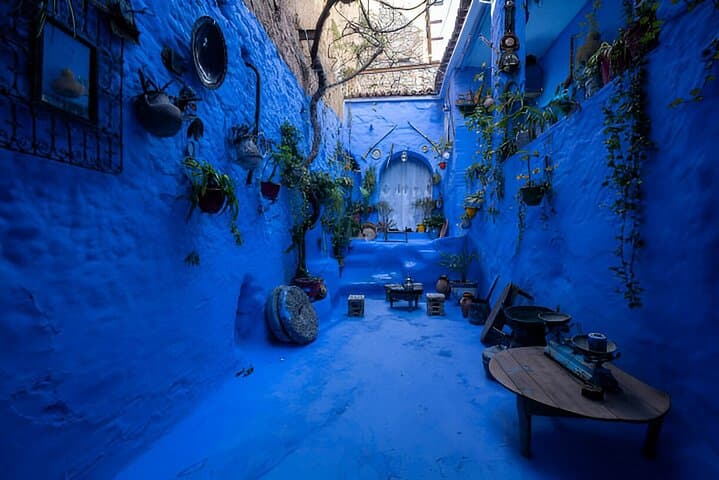
You arrive before the town wakes: the road from Rabat slashes through olive groves and the Rif foothills, and then the medina appears — a cluster of blue-washed alleys climbing toward scrubby peaks. The light here changes the color of walls and moods; mornings feel crisp and direct, afternoons softer as the town’s stairways throw long shadows.
You arrive before the town wakes: the road from Rabat slashes through olive groves and the Rif foothills, and then the medina appears — a cluster of blue-washed alleys climbing toward scrubby peaks. The light here changes the color of walls and moods; mornings feel crisp and direct, afternoons softer as the town’s stairways throw long shadows.
Chefchaouen was founded in the 15th century as a mountain stronghold and later absorbed Andalusian and Jewish influences that shaped its architecture and, reportedly, the tradition of blue paint. Geologically the town sits on the lower slopes of the Rif range; limestone outcrops and terraced fields frame the skyline and offer quick viewpoints above the medina where you can see the weave of rooftops and walnut trees.
Culturally this is small-town Morocco: artisan dye workshops, slow-paced cafés, and a market rhythm that favors haggling in dirhams. Local guides can point out the 15th-century kasbah, the Uta el-Hammam square, and quieter passages that photographers prize.
Practical guide: expect a long day — Rabat to Chefchaouen is roughly 250–300 km one-way, about 3.5–4 hours of driving depending on traffic. Plan sturdy shoes for uneven cobbles and steep alleys, carry water and cash, and set aside 3–4 hours to wander purposefully through the medina. Start early to beat the heat and build buffer time for mountain viewpoints or short hikes to Ras el-Ma. Respect local dress norms and pack layers: mountain mornings can be brisk while midday heats quickly.