THE ADVENTURE COLLECTIVE® · Independent discovery and booking for outdoor travel

Spend a full day driving through the Rif Mountains to Chefchaouen, the Blue City. Walk its blue-and-white medina, visit the Spanish Mosque and Ras el-Maa spring, and enjoy local cuisine from panoramic terraces.
Spend a full day driving through the Rif Mountains to Chefchaouen, the Blue City. Walk its blue-and-white medina, visit the Spanish Mosque and Ras el-Maa spring, and enjoy local cuisine from panoramic terraces.
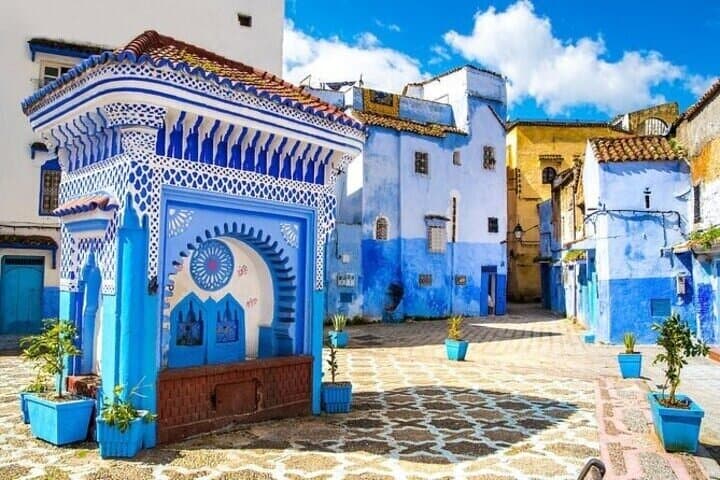
Morning light slides down the Rif slopes as the minivan threads mountain hairpins toward a town painted in blue. You arrive with the smell of mint tea and warm stone underfoot; narrow lanes funnel you into a compact medina where every doorway, niche, and tile seems chosen to slow your step.
Verified experiences and guided adventures in the surrounding area.
Operated by Radi Lemtiri · Chefchaouen, Tanger-Tétouan-Al Hoceima
Morning light slides down the Rif slopes as the minivan threads mountain hairpins toward a town painted in blue. You arrive with the smell of mint tea and warm stone underfoot; narrow lanes funnel you into a compact medina where every doorway, niche, and tile seems chosen to slow your step.
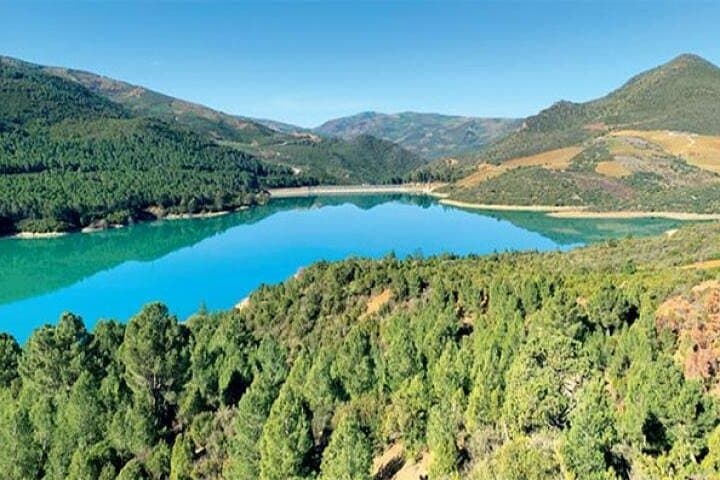
Chefchaouen’s story begins in the 15th century as a mountain fortress and later absorbed Andalusian influences that shaped its white-and-blue facades and zellige tile work. Geologically the town sits on folded limestone of the Rif, a range of steep valleys and terraced fields that give way to panoramic overlooks. Locals keep a relaxed rhythm—shopkeepers, tea servers, and artisans working wool and leather—so the town’s culture reads as lived-in craft rather than staged spectacle.
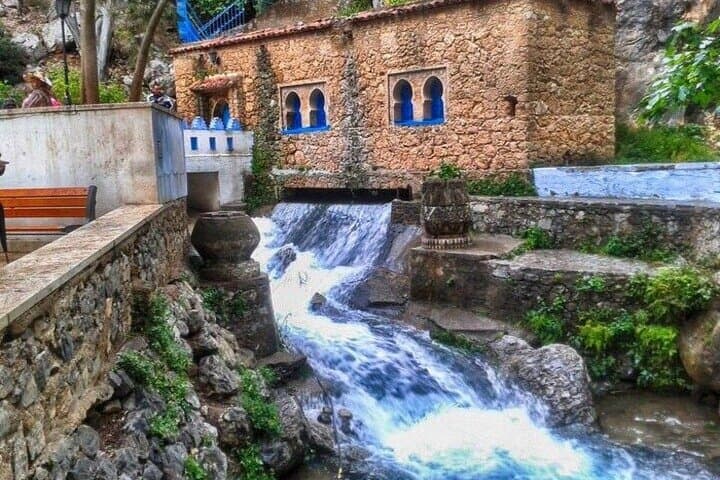
Expect to walk uneven cobbles, climb short stairways, and pause at viewpoints like the Spanish Mosque and Ras el-Maa spring where water still pushes from the rock. Photography and people-watching are the core activities: Souika and Ain Haouzi neighborhoods reward slow exploration and rooftop terraces offer clear views across blue alleys to surrounding hills.
Practical guidance: wear sturdy walking shoes with good traction, bring sun protection and water, and plan for a full 10–11 hour day including a 2-hour return drive to Tangier. Lunch is typically at a local café—try tagine and end with mint tea on a panoramic terrace. Respect residential areas, ask before photographing people, and leave souvenirs purchases to licensed stalls to support local artisans.
easy.
10–11 hours.
Suitable for most fitness levels; requires short walks on uneven cobbles and some stair climbs.
The drive is about 2 hours each way depending on traffic and stops; expect roughly 4 hours round-trip plus time in town.
Some main plazas and streets are flat and accessible, but much of the medina has narrow, stepped lanes that are difficult for wheelchairs—confirm accessibility needs when booking.
Lunch is usually not included; the itinerary lists tea and bottled water but you should budget for a mid-day meal at a local café or restaurant.
Many local guides speak Arabic and French, and most operators can provide English-speaking guides—confirm language availability at booking.
Founded in the late 15th century as a fortified settlement, Chefchaouen later absorbed Andalusian refugees whose architecture and craft traditions shaped the town’s distinctive look.
Tourism pressures strain narrow medina streets and water resources—support local artisans, avoid single-use plastics, and stick to marked paths to minimize impact.
Radi Lemtiri operates guided outdoor trips and adventures with an emphasis on safety, stewardship, and memorable experiences.
Morning light slides down the Rif slopes as the minivan threads mountain hairpins toward a town painted in blue. You arrive with the smell of mint tea and warm stone underfoot; narrow lanes funnel you into a compact medina where every doorway, niche, and tile seems chosen to slow your step.
Morning light slides down the Rif slopes as the minivan threads mountain hairpins toward a town painted in blue. You arrive with the smell of mint tea and warm stone underfoot; narrow lanes funnel you into a compact medina where every doorway, niche, and tile seems chosen to slow your step.
Chefchaouen’s story begins in the 15th century as a mountain fortress and later absorbed Andalusian influences that shaped its white-and-blue facades and zellige tile work. Geologically the town sits on folded limestone of the Rif, a range of steep valleys and terraced fields that give way to panoramic overlooks. Locals keep a relaxed rhythm—shopkeepers, tea servers, and artisans working wool and leather—so the town’s culture reads as lived-in craft rather than staged spectacle.
Expect to walk uneven cobbles, climb short stairways, and pause at viewpoints like the Spanish Mosque and Ras el-Maa spring where water still pushes from the rock. Photography and people-watching are the core activities: Souika and Ain Haouzi neighborhoods reward slow exploration and rooftop terraces offer clear views across blue alleys to surrounding hills.
Practical guidance: wear sturdy walking shoes with good traction, bring sun protection and water, and plan for a full 10–11 hour day including a 2-hour return drive to Tangier. Lunch is typically at a local café—try tagine and end with mint tea on a panoramic terrace. Respect residential areas, ask before photographing people, and leave souvenirs purchases to licensed stalls to support local artisans.