THE ADVENTURE COLLECTIVE® · Independent discovery and booking for outdoor travel

Drive the Rif Mountains to reach Chefchaouen’s famous blue streets on a comfortable day trip from Tangier. Spend up to five hours wandering alleys, visiting Outa El Hammam and Ras El Ma, and sampling local cuisine before a relaxed return.
Drive the Rif Mountains to reach Chefchaouen’s famous blue streets on a comfortable day trip from Tangier. Spend up to five hours wandering alleys, visiting Outa El Hammam and Ras El Ma, and sampling local cuisine before a relaxed return.
You round a switchback and the Rif folds open beneath you: a ribbon of asphalt, terraced olive groves, and a town that looks painted by a single, decisive brushstroke of blue. The drive from Tangier takes roughly 2½ hours, giving the Rif Mountains time to change personalities—rocky ridgelines, pine-scented slopes, and the occasional dam glinting like glass.
Verified experiences and guided adventures in the surrounding area.
Operated by Yalah.ma · Chefchaouen, Tanger-Tetouan-Al Hoceima
You round a switchback and the Rif folds open beneath you: a ribbon of asphalt, terraced olive groves, and a town that looks painted by a single, decisive brushstroke of blue. The drive from Tangier takes roughly 2½ hours, giving the Rif Mountains time to change personalities—rocky ridgelines, pine-scented slopes, and the occasional dam glinting like glass.
Chefchaouen grew from a 15th‑century kasbah established by Moorish and Andalusian refugees; the narrow lanes and tilework still carry Iberian echoes. The town sits at the western edge of the Rif, where folded limestone and marl form the small valleys and springs that feed Ras El Ma, a clear stream that has shaped daily life here. Local craft culture centers on hand‑woven textiles and goat‑cheese dairies; you’ll see stalls and family workshops concentrated around Outa El Hammam square.
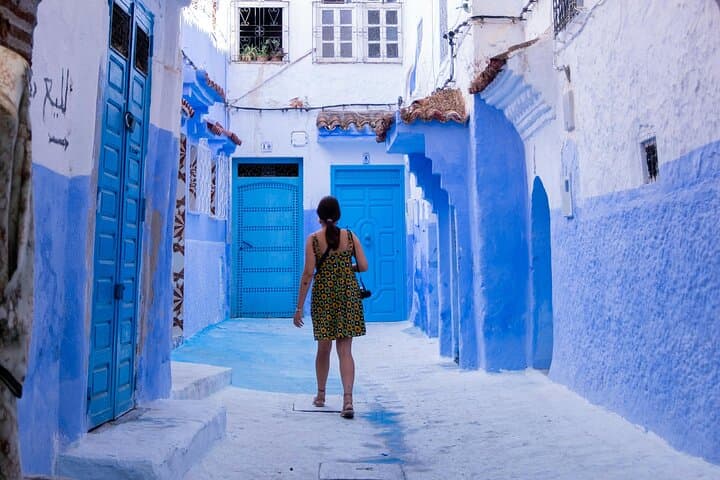
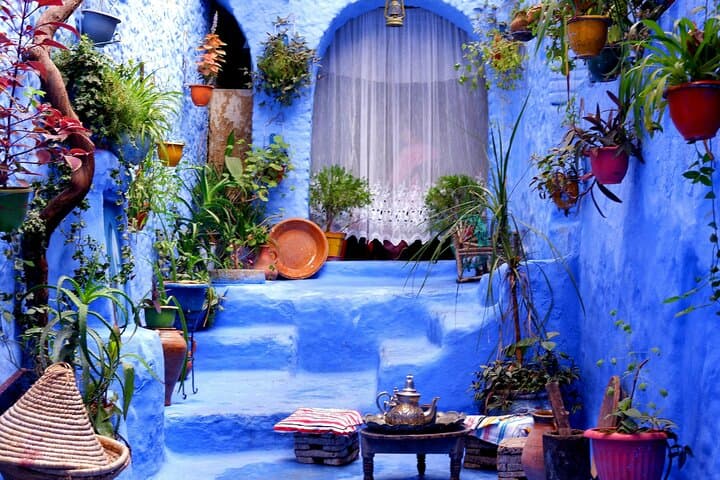
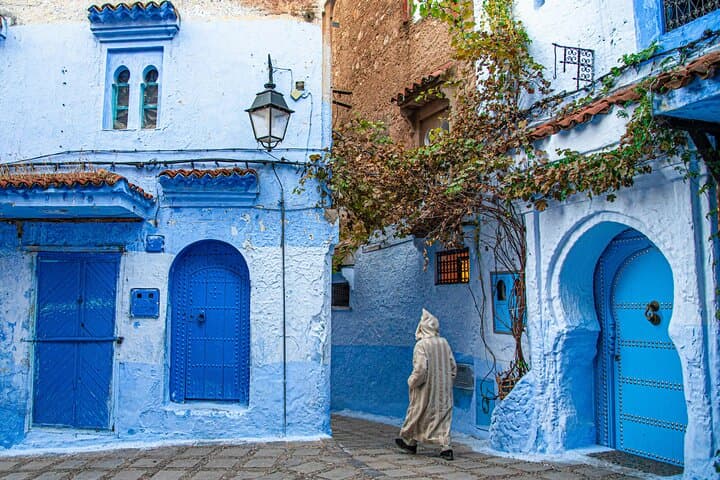
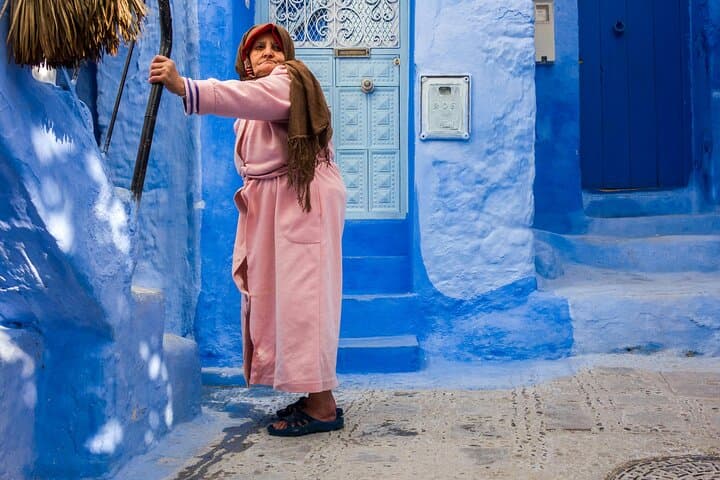
Expect to spend up to five hours on foot exploring blue‑washed alleyways, peeking into courtyard riads, and sampling tagine or zaalouk at a casual café. Terrain is uneven—cobbles, steps and narrow passages—so take steady footing and give space to pedestrians. Photography stops include the Spanish Mosque viewpoint above town and the cascading spring near Ras El Ma.
Practical tips: leave large backpacks at home, carry cash for small vendors, and plan your return to Tangier to avoid evening traffic. If you crave extra time in nature, mention Akchour waterfalls to your driver; it’s a separate half‑day hike. The trip balances easy logistics with sensory rewards—blue walls daring you to look closer, and a mountain road that keeps pulling you forward.
easy.
6 hours.
Suitable for most travelers; involves up to five hours of light to moderate walking on uneven cobbles and steps.
The shared transfer typically takes about 2 to 2.5 hours each way depending on traffic and stops in the Rif.
A local guide is optional for this shared tour; the itinerary provides free time to explore independently once in Chefchaouen.
Lunch is not included; you’ll have time to choose a café or restaurant in Outa El Hammam for traditional Moroccan dishes.
The day trip is suitable for most ages, but the town’s streets are uneven and include steps, which may be challenging for mobility‑restricted travelers.
Chefchaouen was founded in the 15th century by Moorish exiles from Spain and later attracted Jewish residents who influenced the blue painting tradition.
Tourism strains local water resources and waste systems; support small artisans, use refillable bottles, and stay on established paths to reduce impact.
Yalah.ma operates guided outdoor trips and adventures with an emphasis on safety, stewardship, and memorable experiences.
You round a switchback and the Rif folds open beneath you: a ribbon of asphalt, terraced olive groves, and a town that looks painted by a single, decisive brushstroke of blue. The drive from Tangier takes roughly 2½ hours, giving the Rif Mountains time to change personalities—rocky ridgelines, pine-scented slopes, and the occasional dam glinting like glass.
You round a switchback and the Rif folds open beneath you: a ribbon of asphalt, terraced olive groves, and a town that looks painted by a single, decisive brushstroke of blue. The drive from Tangier takes roughly 2½ hours, giving the Rif Mountains time to change personalities—rocky ridgelines, pine-scented slopes, and the occasional dam glinting like glass.
Chefchaouen grew from a 15th‑century kasbah established by Moorish and Andalusian refugees; the narrow lanes and tilework still carry Iberian echoes. The town sits at the western edge of the Rif, where folded limestone and marl form the small valleys and springs that feed Ras El Ma, a clear stream that has shaped daily life here. Local craft culture centers on hand‑woven textiles and goat‑cheese dairies; you’ll see stalls and family workshops concentrated around Outa El Hammam square.
Expect to spend up to five hours on foot exploring blue‑washed alleyways, peeking into courtyard riads, and sampling tagine or zaalouk at a casual café. Terrain is uneven—cobbles, steps and narrow passages—so take steady footing and give space to pedestrians. Photography stops include the Spanish Mosque viewpoint above town and the cascading spring near Ras El Ma.
Practical tips: leave large backpacks at home, carry cash for small vendors, and plan your return to Tangier to avoid evening traffic. If you crave extra time in nature, mention Akchour waterfalls to your driver; it’s a separate half‑day hike. The trip balances easy logistics with sensory rewards—blue walls daring you to look closer, and a mountain road that keeps pulling you forward.