THE ADVENTURE COLLECTIVE® · Independent discovery and booking for outdoor travel

Escape Fez for a day to wander Chefchaouen’s famous blue medina and Rif Mountain outlooks. This practical guide covers history, terrain, and what to pack for a full-day mountain-and-medina outing.
Escape Fez for a day to wander Chefchaouen’s famous blue medina and Rif Mountain outlooks. This practical guide covers history, terrain, and what to pack for a full-day mountain-and-medina outing.
A bus eases out of Fez before dawn and the Rif Mountains gather at the horizon like a rising wall. By midmorning the town appears — a cluster of blue-washed houses clinging to a slope, alleys dropping and rising in short, steep flights. The air smells faintly of wood smoke and orange blossom; the town’s lanes push you toward the kasbah and the lookout above where panoramic views stretch over terraced fields and the serrated ridges of the Rif.
Verified experiences and guided adventures in the surrounding area.
Operated by Marvels Tours · Chefchaouen, Tanger-Tetouan-Al Hoceima
A bus eases out of Fez before dawn and the Rif Mountains gather at the horizon like a rising wall. By midmorning the town appears — a cluster of blue-washed houses clinging to a slope, alleys dropping and rising in short, steep flights. The air smells faintly of wood smoke and orange blossom; the town’s lanes push you toward the kasbah and the lookout above where panoramic views stretch over terraced fields and the serrated ridges of the Rif.
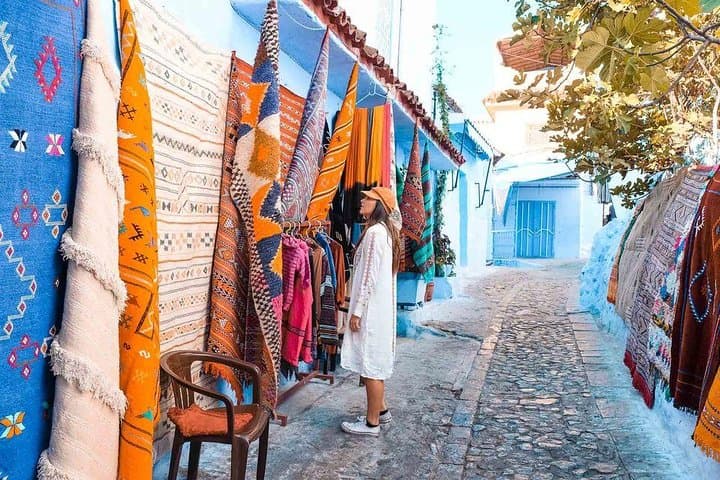
Chefchaouen’s roots trace to the late 15th century when it was established as a mountain stronghold for fleeing Muslims and Jews; Spanish and Andalusian influences left in tile, arch, and a calm pace of life. Geologically the town sits on folded limestone foothills—you’ll notice quick elevation changes and stone steps everywhere. Culturally the medina functions like a living neighborhood rather than a staged attraction: vendors sell hand-dyed wool, local goat cheeses, and woven blankets alongside everyday groceries.
Practical guidance: expect roughly 3.5–4 hours of drive each way from Fez on winding mountain roads, and plan for 3–4 hours of walking in town. Wear sturdy shoes for uneven cobbles, carry water and sunscreen, and keep small bills for souk bargaining. Time your visit for early morning or late afternoon light—midday sees the largest coach groups. Respect local customs in dress and ask before photographing people. The town’s compact scale rewards slow exploration: sit at a café, climb to the Spanish mosque overlook, and let the Rif’s slopes draw you into a quieter Morocco.
moderate.
10–12 hours.
Reasonable mobility for several hours of walking on uneven, stepped streets; not suitable for those with severe mobility issues without assistance.
Expect about 3.5–4 hours one way on winding mountain roads; travel time varies with traffic and stops.
The medina is compact but hilly with many steps; families and seniors can navigate most areas slowly, but those with limited mobility should plan accordingly or stay near lower squares.
Many small vendors accept only Moroccan dirham (MAD); carry small cash for markets, taxis, and tips—cards are accepted at some cafes and shops.
Not required—Chefchaouen is easily explored independently—but a guide can provide historical context, point out local artisans, and navigate lesser-known streets.
Founded in the late 15th century as a mountain refuge and kasbah for Andalusian and Moorish refugees, Chefchaouen preserves a mix of Berber, Spanish and Moroccan cultural layers.
Visitor impact is concentrated in the compact medina—respect local waste rules, avoid single-use plastics when possible, and support local artisans to sustain traditional crafts.
Marvels Tours operates guided outdoor trips and adventures with an emphasis on safety, stewardship, and memorable experiences.
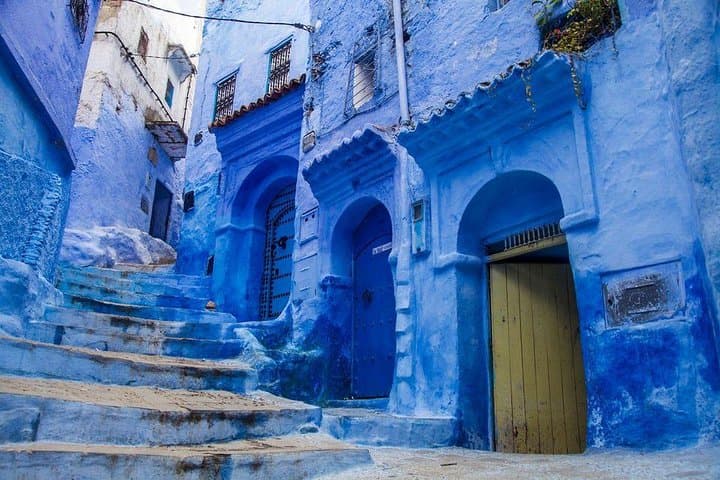
A bus eases out of Fez before dawn and the Rif Mountains gather at the horizon like a rising wall. By midmorning the town appears — a cluster of blue-washed houses clinging to a slope, alleys dropping and rising in short, steep flights. The air smells faintly of wood smoke and orange blossom; the town’s lanes push you toward the kasbah and the lookout above where panoramic views stretch over terraced fields and the serrated ridges of the Rif.
A bus eases out of Fez before dawn and the Rif Mountains gather at the horizon like a rising wall. By midmorning the town appears — a cluster of blue-washed houses clinging to a slope, alleys dropping and rising in short, steep flights. The air smells faintly of wood smoke and orange blossom; the town’s lanes push you toward the kasbah and the lookout above where panoramic views stretch over terraced fields and the serrated ridges of the Rif.
Chefchaouen’s roots trace to the late 15th century when it was established as a mountain stronghold for fleeing Muslims and Jews; Spanish and Andalusian influences left in tile, arch, and a calm pace of life. Geologically the town sits on folded limestone foothills—you’ll notice quick elevation changes and stone steps everywhere. Culturally the medina functions like a living neighborhood rather than a staged attraction: vendors sell hand-dyed wool, local goat cheeses, and woven blankets alongside everyday groceries.
Practical guidance: expect roughly 3.5–4 hours of drive each way from Fez on winding mountain roads, and plan for 3–4 hours of walking in town. Wear sturdy shoes for uneven cobbles, carry water and sunscreen, and keep small bills for souk bargaining. Time your visit for early morning or late afternoon light—midday sees the largest coach groups. Respect local customs in dress and ask before photographing people. The town’s compact scale rewards slow exploration: sit at a café, climb to the Spanish mosque overlook, and let the Rif’s slopes draw you into a quieter Morocco.