THE ADVENTURE COLLECTIVE® · Independent discovery and booking for outdoor travel

Follow winding mountain roads from Fes to Chefchaouen’s famous blue medina, explore the Spanish Mosque viewpoint and Ras el-Maa waterfall, and sample tagine in a quiet square. This full-day small-group tour blends scenic driving with unguided walking through compact, photogenic streets.
Follow winding mountain roads from Fes to Chefchaouen’s famous blue medina, explore the Spanish Mosque viewpoint and Ras el-Maa waterfall, and sample tagine in a quiet square. This full-day small-group tour blends scenic driving with unguided walking through compact, photogenic streets.
You crest a low ridge in the Rif Mountains and the town appears — a patchwork of indigo streets radiating down toward a small river. The air smells of citrus trees and frying oil; the city’s blue walls throw cool shadows over narrow alleys where vendors angle rugs and spices toward the light.
Verified experiences and guided adventures in the surrounding area.
You crest a low ridge in the Rif Mountains and the town appears — a patchwork of indigo streets radiating down toward a small river. The air smells of citrus trees and frying oil; the city’s blue walls throw cool shadows over narrow alleys where vendors angle rugs and spices toward the light.
Founded in the 15th century as a mountain refuge, Chefchaouen reflects Andalusian building traditions and Rif geology: folded limestone ridges that channel sudden, bright storms and frame views across terraced olive farms. Local culture centers on slow-market rhythms — tagines cooked over charcoal, woven wool goods in alley stalls, and the daily pause at Ras el-Maa where locals and goats share the springs.
On a guided day trip from Fes you’ll travel about 3–4 hours each way through curving mountain roads, with a mid-route stop in Ouazzane for coffee. In town expect 2–4 hours of unguided exploration: climb to the Spanish Mosque for a broad vista, move through Place Outa el Hammam, and follow the water to the Ras el-Maa cascades. The medina is compact but uneven — cobbles, steps, and tight stairways are the norm.
Practical notes: bring comfortable walking shoes, a refillable water bottle, and modest clothing for mosque visits. Best visits start early to avoid midday heat and the crowds that gather around lunch. Cash is handy for small purchases; many shops don’t take cards. The trip suits travelers who want photo-rich wandering with low technical demand but expect a full, long day and a late return to Fes.
easy.
11–12 hours.
Light fitness: comfortable walking for 2–4 miles on uneven cobbles and climbing several short stair sections.
Expect about 3 to 4 hours of driving each way depending on traffic and stops, with a short coffee break in Ouazzane en route.
Yes — the tour typically includes several hours of unguided time in the medina to visit the Kasbah, Spanish Mosque viewpoint and Ras el-Maa waterfall at your own pace.
No; narrow alleys, cobblestones and stairs make much of the medina difficult for wheelchairs and strollers. Some streets are passable but access is limited.
Meals vary by operator; many tours include a restaurant stop where tagine is common, and vegetarian options (lentil or vegetable tagines) are widely available—notify in advance if required.
Chefchaouen was founded in 1471 as a mountain stronghold with strong Andalusian influences; its blue-painted streets reflect layers of cultural history including Jewish and Spanish presences.
Tourism concentrates foot traffic in a compact medina—support local artisans, avoid single-use plastics, and stay on marked routes to limit erosion and strain on local water resources.
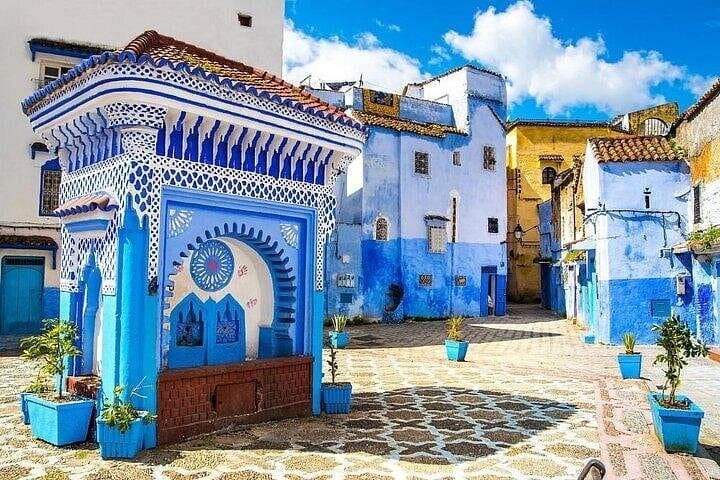
You crest a low ridge in the Rif Mountains and the town appears — a patchwork of indigo streets radiating down toward a small river. The air smells of citrus trees and frying oil; the city’s blue walls throw cool shadows over narrow alleys where vendors angle rugs and spices toward the light.
You crest a low ridge in the Rif Mountains and the town appears — a patchwork of indigo streets radiating down toward a small river. The air smells of citrus trees and frying oil; the city’s blue walls throw cool shadows over narrow alleys where vendors angle rugs and spices toward the light.
Founded in the 15th century as a mountain refuge, Chefchaouen reflects Andalusian building traditions and Rif geology: folded limestone ridges that channel sudden, bright storms and frame views across terraced olive farms. Local culture centers on slow-market rhythms — tagines cooked over charcoal, woven wool goods in alley stalls, and the daily pause at Ras el-Maa where locals and goats share the springs.
On a guided day trip from Fes you’ll travel about 3–4 hours each way through curving mountain roads, with a mid-route stop in Ouazzane for coffee. In town expect 2–4 hours of unguided exploration: climb to the Spanish Mosque for a broad vista, move through Place Outa el Hammam, and follow the water to the Ras el-Maa cascades. The medina is compact but uneven — cobbles, steps, and tight stairways are the norm.
Practical notes: bring comfortable walking shoes, a refillable water bottle, and modest clothing for mosque visits. Best visits start early to avoid midday heat and the crowds that gather around lunch. Cash is handy for small purchases; many shops don’t take cards. The trip suits travelers who want photo-rich wandering with low technical demand but expect a full, long day and a late return to Fes.