THE ADVENTURE COLLECTIVE® · Independent discovery and booking for outdoor travel

A private full-day journey from Casablanca to Chefchaouen that pairs scenic Rif Mountain driving with free-time in the famed blue medina. Walk, shop, and take a short hike with a local guide—then return comfortably the same evening.
A private full-day journey from Casablanca to Chefchaouen that pairs scenic Rif Mountain driving with free-time in the famed blue medina. Walk, shop, and take a short hike with a local guide—then return comfortably the same evening.
Dawn light hits the highway as your driver eases out of Casablanca toward the Rif Mountains—olive groves and terraced fields sliding past the window until the town of Chefchaouen appears, its lane-work of blue walls drawing you in like a compass. You step into cool, narrow alleys where painted doorways and sun-splashed stairways create a pleasing maze; the air carries the scent of frying olive oil, fresh goat cheese, and cedar smoke from the hills.
Verified experiences and guided adventures in the surrounding area.
Operated by TRIP SAFE · Chefchaouen, Tanger-Tetouan-Al Hoceima
Dawn light hits the highway as your driver eases out of Casablanca toward the Rif Mountains—olive groves and terraced fields sliding past the window until the town of Chefchaouen appears, its lane-work of blue walls drawing you in like a compass. You step into cool, narrow alleys where painted doorways and sun-splashed stairways create a pleasing maze; the air carries the scent of frying olive oil, fresh goat cheese, and cedar smoke from the hills.
Chefchaouen was founded in the 15th century and shaped by Andalusian refugees; its blue-washed facades reflect both cultural ties to southern Spain and a local tradition once linked to religious symbolism. Geologically the town perches on the southern slopes of the Rif, a folded, green range of sedimentary and metamorphic rock that frames short hikes and panoramic viewpoints.
Culturally the medina hums at Outa El Hammam Square: sellers offering woven blankets, delicate embroidery and locally made cheeses, while the Kasbah grounds and the Spanish Mosque lookout provide quiet contrasts. Local farms and shaded spring runs like Ras El Maa sit a short walk from the center.
Practical guidance: shoes should handle cobblestones and short, uneven ascents; pack water and small change in Moroccan dirhams, and bring a light layer for mountain breezes. Aim for morning arrival or late afternoon to avoid the hottest light and busiest crowds. Respect residential shutters and always ask before photographing people. If you want a gentler stretch, ask your guide about a short trail above the town—easy footing and rewarding vistas cap a busy day before the smooth ride back to Casablanca.
easy.
13–14 hours.
Suitable for most fitness levels; expect several hours of walking on uneven surfaces and optional short hikes.
Expect roughly 4–4.5 hours each way depending on traffic and stops—this tour is a full-day outing (about 13–14 hours total).
Most walking is on narrow, cobbled alleys with short flights of steps; it’s easy to moderate and suitable for travelers who can manage uneven surfaces. Strollers are possible in places but not ideal throughout the medina.
Yes—a licensed local guide meets you in Chefchaouen and can tailor the visit to your interests, from a medina walk to a gentle hike or farm visit.
Moroccan dirham (MAD) is standard; many small shops and eateries prefer cash, though larger establishments may accept cards. ATMs are available in town.
Chefchaouen was founded in the 15th century and grew with waves of Andalusian refugees, shaping its architecture and crafts. The blue palette has roots in both religious tradition and practical cooling.
Tourism strains local water and waste systems—use water sparingly, avoid single-use plastics, and support local artisans to help the community economy.
TRIP SAFE operates guided outdoor trips and adventures with an emphasis on safety, stewardship, and memorable experiences.


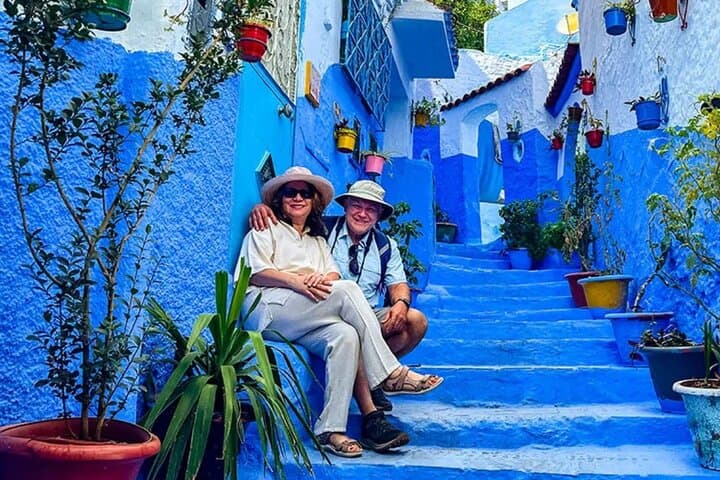
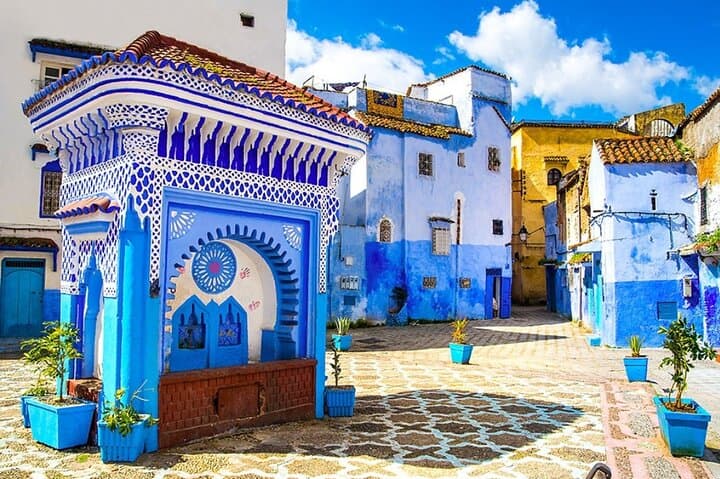
Dawn light hits the highway as your driver eases out of Casablanca toward the Rif Mountains—olive groves and terraced fields sliding past the window until the town of Chefchaouen appears, its lane-work of blue walls drawing you in like a compass. You step into cool, narrow alleys where painted doorways and sun-splashed stairways create a pleasing maze; the air carries the scent of frying olive oil, fresh goat cheese, and cedar smoke from the hills.
Dawn light hits the highway as your driver eases out of Casablanca toward the Rif Mountains—olive groves and terraced fields sliding past the window until the town of Chefchaouen appears, its lane-work of blue walls drawing you in like a compass. You step into cool, narrow alleys where painted doorways and sun-splashed stairways create a pleasing maze; the air carries the scent of frying olive oil, fresh goat cheese, and cedar smoke from the hills.
Chefchaouen was founded in the 15th century and shaped by Andalusian refugees; its blue-washed facades reflect both cultural ties to southern Spain and a local tradition once linked to religious symbolism. Geologically the town perches on the southern slopes of the Rif, a folded, green range of sedimentary and metamorphic rock that frames short hikes and panoramic viewpoints.
Culturally the medina hums at Outa El Hammam Square: sellers offering woven blankets, delicate embroidery and locally made cheeses, while the Kasbah grounds and the Spanish Mosque lookout provide quiet contrasts. Local farms and shaded spring runs like Ras El Maa sit a short walk from the center.
Practical guidance: shoes should handle cobblestones and short, uneven ascents; pack water and small change in Moroccan dirhams, and bring a light layer for mountain breezes. Aim for morning arrival or late afternoon to avoid the hottest light and busiest crowds. Respect residential shutters and always ask before photographing people. If you want a gentler stretch, ask your guide about a short trail above the town—easy footing and rewarding vistas cap a busy day before the smooth ride back to Casablanca.