THE ADVENTURE COLLECTIVE® · Independent discovery and booking for outdoor travel

Cross the Strait of Gibraltar and spend a day wandering Chefchaouen’s iconic blue medina. This full-day excursion from Tarifa offers mountain views, local crafts, and a guided walkthrough of the town’s history and hidden corners.
Cross the Strait of Gibraltar and spend a day wandering Chefchaouen’s iconic blue medina. This full-day excursion from Tarifa offers mountain views, local crafts, and a guided walkthrough of the town’s history and hidden corners.
The minivan eases onto the ferry at Tarifa, the Atlantic wind pressing at the windows, and within an hour Spain slips away. You step off the catamaran into Tangier’s harbor, then ride a ribbon of road beneath the Rif Mountains until blue walls begin to appear like a sudden horizon of painted sky.
Verified experiences and guided adventures in the surrounding area.
Operated by JTT Morocco · Chefchaouen, Tanger-Tetouan-Al Hoceima
The minivan eases onto the ferry at Tarifa, the Atlantic wind pressing at the windows, and within an hour Spain slips away. You step off the catamaran into Tangier’s harbor, then ride a ribbon of road beneath the Rif Mountains until blue walls begin to appear like a sudden horizon of painted sky.
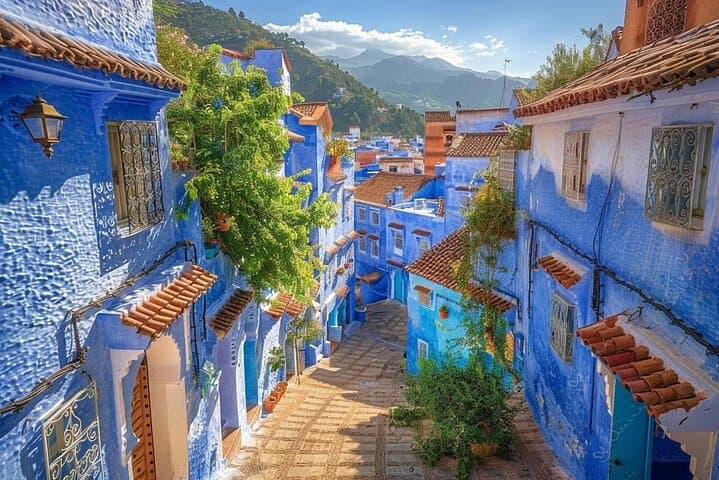
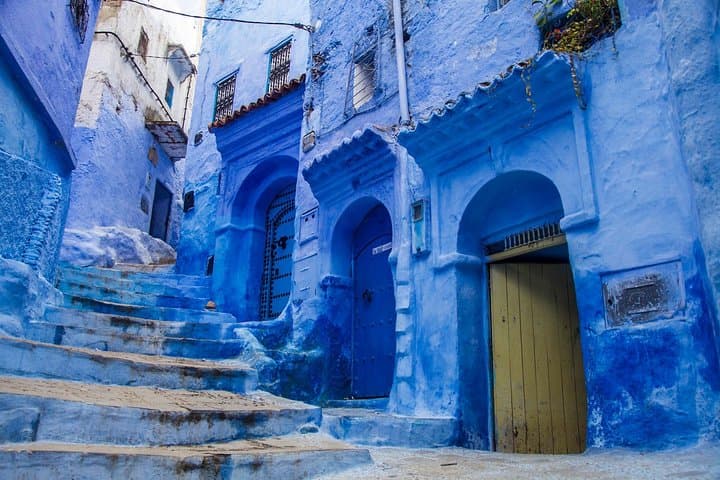
Chefchaouen’s medina is less a maze than a compact stage: narrow lanes open into Uta el-Hammam square, whitewashed houses give way to cobalt alleys, and fountains offer cooling notes under olive trees. Founded in 1471 as a mountain stronghold, the town absorbed Andalusian craftsmen and later Spanish influences under the protectorate period — the layered history shows in carved wood, local woolen looms and the mosque’s domes.
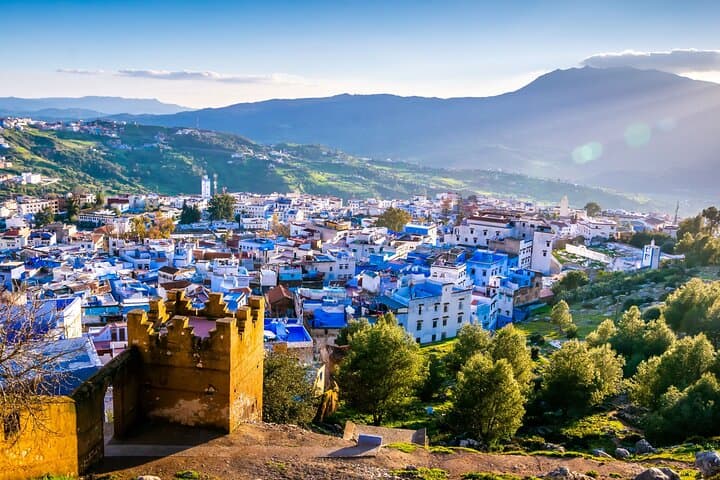
Geologically, the Rif is limestone and red soil folded into ridges; springs such as Ras El Ma push cool mountain water through the town and into valley terraces below. The culture is quietly artisanal: goat cheeses, woven Rifi blankets and hand-thrown pottery are local staples. Photography is everywhere, but pace your visit — the best light hits alleys mid-morning and late afternoon.
Practical guidance: bring cash (small shops often prefer dirhams), wear sturdy walking shoes for cobbles and steps, and carry a light layer against mountain breezes. Expect a full 10–12 hour day including ferry time; moderate fitness suits the walking and brief climbs to viewpoints. Respect local customs around prayer times and modest dress in religious sites; buy directly from makers when possible to support the local economy.
moderate.
10–12 hours.
Moderate fitness for walking on uneven cobbles and short climbs; comfortable with several hours on your feet.
Visa requirements depend on your nationality—many EU, US, and Commonwealth passports do not require a short-stay visa, but check current Moroccan entry rules before travel.
Fast ferries typically take about 1 hour, though schedules and durations vary by operator and sea conditions.
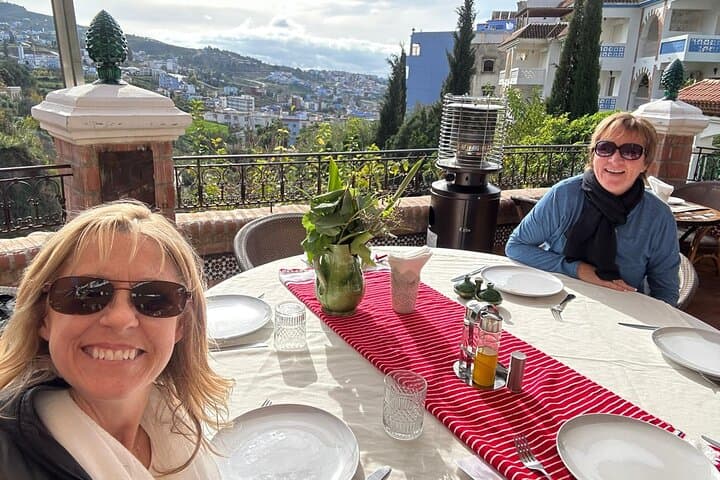
Yes — the listed itinerary includes a traditional Moroccan lunch at a local restaurant with water or lemonade provided.
The medina’s narrow, uneven alleys and steps limit accessibility; some flat areas exist but full wheelchair access is limited.
Founded in 1471 by Moulay Ali ibn Rashid as a fortress, Chefchaouen later sheltered Andalusian refugees and lived under Spanish protectorate until Moroccan independence in 1956.
Tourism strains local water and paint resources—minimize impact by following marked paths, avoiding overphotography of private homes, and buying from local artisans.
JTT Morocco operates guided outdoor trips and adventures with an emphasis on safety, stewardship, and memorable experiences.
The minivan eases onto the ferry at Tarifa, the Atlantic wind pressing at the windows, and within an hour Spain slips away. You step off the catamaran into Tangier’s harbor, then ride a ribbon of road beneath the Rif Mountains until blue walls begin to appear like a sudden horizon of painted sky.
The minivan eases onto the ferry at Tarifa, the Atlantic wind pressing at the windows, and within an hour Spain slips away. You step off the catamaran into Tangier’s harbor, then ride a ribbon of road beneath the Rif Mountains until blue walls begin to appear like a sudden horizon of painted sky.
Chefchaouen’s medina is less a maze than a compact stage: narrow lanes open into Uta el-Hammam square, whitewashed houses give way to cobalt alleys, and fountains offer cooling notes under olive trees. Founded in 1471 as a mountain stronghold, the town absorbed Andalusian craftsmen and later Spanish influences under the protectorate period — the layered history shows in carved wood, local woolen looms and the mosque’s domes.
Geologically, the Rif is limestone and red soil folded into ridges; springs such as Ras El Ma push cool mountain water through the town and into valley terraces below. The culture is quietly artisanal: goat cheeses, woven Rifi blankets and hand-thrown pottery are local staples. Photography is everywhere, but pace your visit — the best light hits alleys mid-morning and late afternoon.
Practical guidance: bring cash (small shops often prefer dirhams), wear sturdy walking shoes for cobbles and steps, and carry a light layer against mountain breezes. Expect a full 10–12 hour day including ferry time; moderate fitness suits the walking and brief climbs to viewpoints. Respect local customs around prayer times and modest dress in religious sites; buy directly from makers when possible to support the local economy.