THE ADVENTURE COLLECTIVE® · Independent discovery and booking for outdoor travel

Leave the city lights behind and let experienced guides hunt the aurora for you. This small-group evening tour from Reykjavík focuses on maximizing viewing and photo opportunities with local weather-savvy routing and warm blankets on hand.
Leave the city lights behind and let experienced guides hunt the aurora for you. This small-group evening tour from Reykjavík focuses on maximizing viewing and photo opportunities with local weather-savvy routing and warm blankets on hand.
A cold wind cuts across the black sand and the sky opens — curtains of green and violet sweep and fold above the low hills outside Reykjavík. On a clear night a small-group tour takes you away from the city glow, the guide scanning forecasts and cloud cover as the van pushes into open country. You watch, camera ready, while guides suggest framing and settings and hand over wool blankets when the temperature drops.
Verified experiences and guided adventures in the surrounding area.
Operated by Simply Iceland · Reykjavik, Capital Region
A cold wind cuts across the black sand and the sky opens — curtains of green and violet sweep and fold above the low hills outside Reykjavík. On a clear night a small-group tour takes you away from the city glow, the guide scanning forecasts and cloud cover as the van pushes into open country. You watch, camera ready, while guides suggest framing and settings and hand over wool blankets when the temperature drops.
Iceland’s aurora displays are a product of solar particles meeting the planet’s magnetic field, most visible through long, dark winter nights but possible any time geomagnetic activity spikes. Locally, folklore tied the lights to ancestral spirits and omens; today photographers and scientists read the same sky with different tools. Geologically, the terrain you’ll cross — lava fields, coastal headlands, low valleys — influences where clouds break to reveal the show.
Expect spoken guidance on safe viewing, composition tips for long exposures, and short roadside stops rather than long hikes. The tour’s small-group format prioritizes positioning: guides move you to darker horizons and away from passing headlights. Practicalities matter: dress in insulated layers, bring spare camera batteries (they die fast in cold), and plan for late returns to Reykjavík.
Photographers will appreciate help with exposure and composition; casual viewers can simply stand and watch. The experience is equal parts patient waiting and sudden reward — when the lights surge, time feels elastic and the landscape itself seems to lean in.
easy.
3–4 hours.
Suitable for all fitness levels; requires standing, short walks on uneven ground, and getting in/out of a van at night.
Peak season is late fall through early spring (September–April) when nights are longest and skies darkest, though strong solar activity can produce displays outside this window.
No — guides provide basic photography tips and help with camera settings; beginners can still enjoy the spectacle without special gear.
Many tours offer central pickup or meeting points in Reykjavík; confirm pickup details at booking and expect a late-night return.
Tours commonly cancel for cloud cover or safety and offer full refunds if cancelled at least 24 hours ahead or rescheduled due to poor conditions.
Icelandic sagas and folklore historically interpreted aurora as signs from the spirit world; modern visitors now read them as geomagnetic interaction with solar wind.
Tours minimize impact by using existing roads and avoiding sensitive ground; reducing light pollution and sticking to marked roads helps preserve viewing quality.
Simply Iceland operates guided outdoor trips and adventures with an emphasis on safety, stewardship, and memorable experiences.
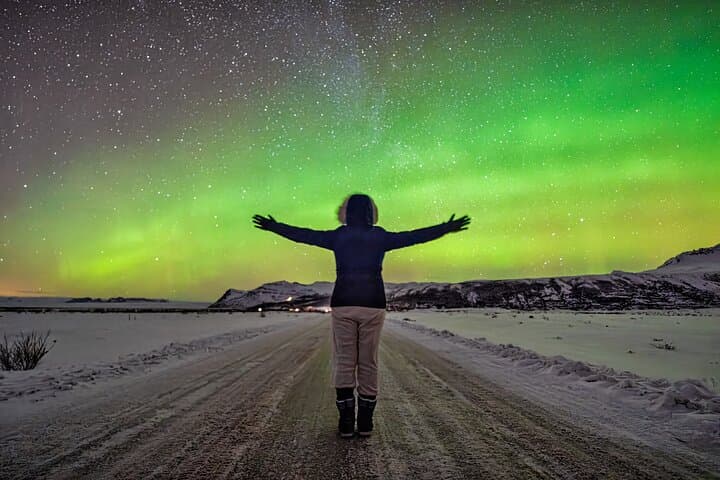
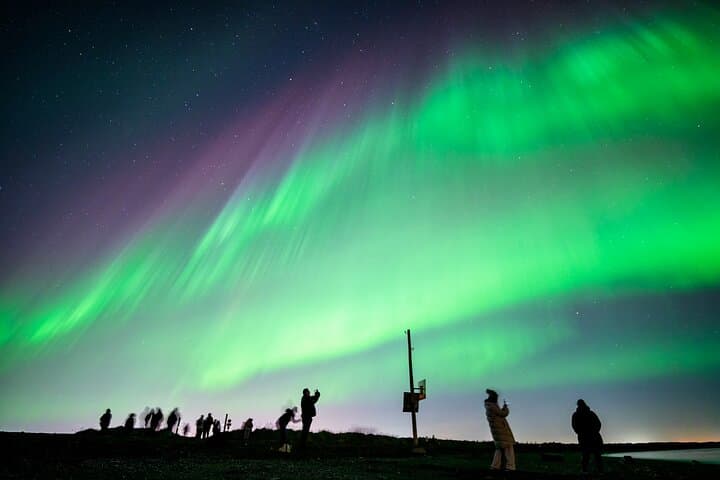
A cold wind cuts across the black sand and the sky opens — curtains of green and violet sweep and fold above the low hills outside Reykjavík. On a clear night a small-group tour takes you away from the city glow, the guide scanning forecasts and cloud cover as the van pushes into open country. You watch, camera ready, while guides suggest framing and settings and hand over wool blankets when the temperature drops.
A cold wind cuts across the black sand and the sky opens — curtains of green and violet sweep and fold above the low hills outside Reykjavík. On a clear night a small-group tour takes you away from the city glow, the guide scanning forecasts and cloud cover as the van pushes into open country. You watch, camera ready, while guides suggest framing and settings and hand over wool blankets when the temperature drops.
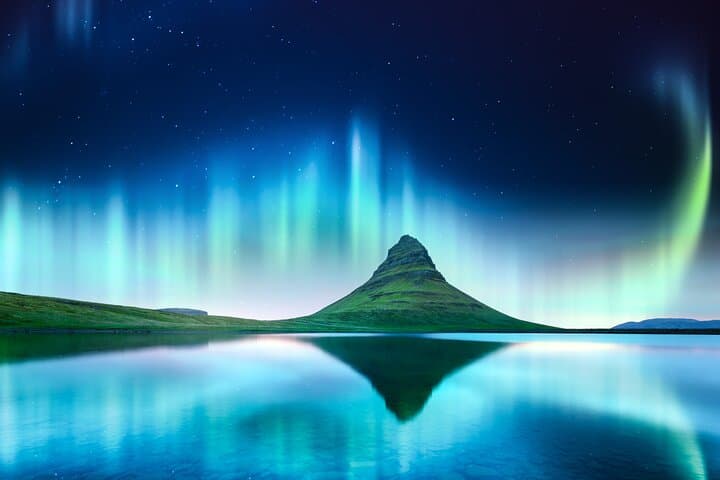
Iceland’s aurora displays are a product of solar particles meeting the planet’s magnetic field, most visible through long, dark winter nights but possible any time geomagnetic activity spikes. Locally, folklore tied the lights to ancestral spirits and omens; today photographers and scientists read the same sky with different tools. Geologically, the terrain you’ll cross — lava fields, coastal headlands, low valleys — influences where clouds break to reveal the show.
Expect spoken guidance on safe viewing, composition tips for long exposures, and short roadside stops rather than long hikes. The tour’s small-group format prioritizes positioning: guides move you to darker horizons and away from passing headlights. Practicalities matter: dress in insulated layers, bring spare camera batteries (they die fast in cold), and plan for late returns to Reykjavík.
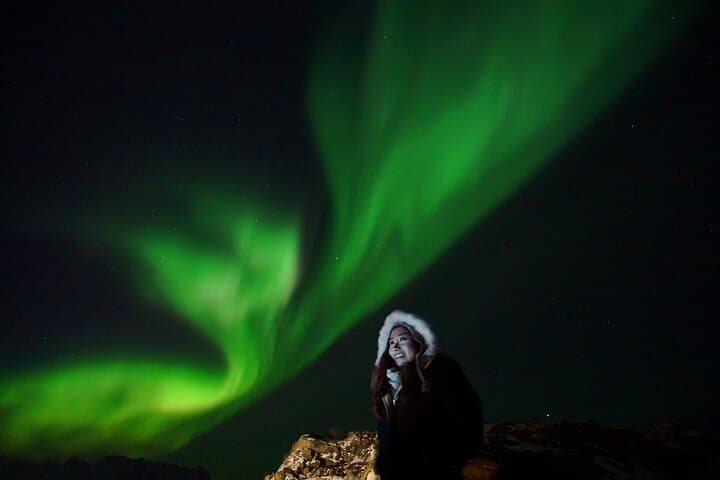
Photographers will appreciate help with exposure and composition; casual viewers can simply stand and watch. The experience is equal parts patient waiting and sudden reward — when the lights surge, time feels elastic and the landscape itself seems to lean in.