THE ADVENTURE COLLECTIVE® · Independent discovery and booking for outdoor travel

Head out from Reykjavik after dark to chase the aurora with a local guide who follows weather and KP forecasts. Small groups, bus transport, and practical tips make this a straightforward way to hunt the Northern Lights.
Head out from Reykjavik after dark to chase the aurora with a local guide who follows weather and KP forecasts. Small groups, bus transport, and practical tips make this a straightforward way to hunt the Northern Lights.
You step off the coach into a black that feels almost tactile; the air bites and the sky opens. Guides scan the horizon, headlamps dipping like compass needles, and the driver eases the bus away from Reykjavik’s glow toward wide, dark plains where aurora can unfurl.
Verified experiences and guided adventures in the surrounding area.
Operated by Reykjavik Excursions · Reykjavik, Capital Region
You step off the coach into a black that feels almost tactile; the air bites and the sky opens. Guides scan the horizon, headlamps dipping like compass needles, and the driver eases the bus away from Reykjavik’s glow toward wide, dark plains where aurora can unfurl.
The aurora borealis is a collision of solar particles and Earth’s upper atmosphere — a scientific light show that has shaped Icelandic stories for centuries. In this part of the country, volcanic fields and glacial rivers frame the night; the flat lava plains and low human settlement reduce light pollution and give the sky room to breathe.
Culturally, the chase is communal: small groups, local guides who read weather models and KP-index forecasts, and a quiet ritual of waiting outdoors for the sky to decide. The operator runs carbon-offset programs and provides on-board Wi‑Fi for the ride back, blending modern logistics with old‑world wonder.
Practically, expect a 3‑hour window that can stretch depending on conditions. Sightings aren’t guaranteed; guides move to the clearest horizon possible, sometimes driving an hour from Reykjavik. Dress in insulated layers, bring a tripod and spare batteries, and plan for late returns. The tour accommodates up to 19 people and offers infant seats and a physically easy itinerary.
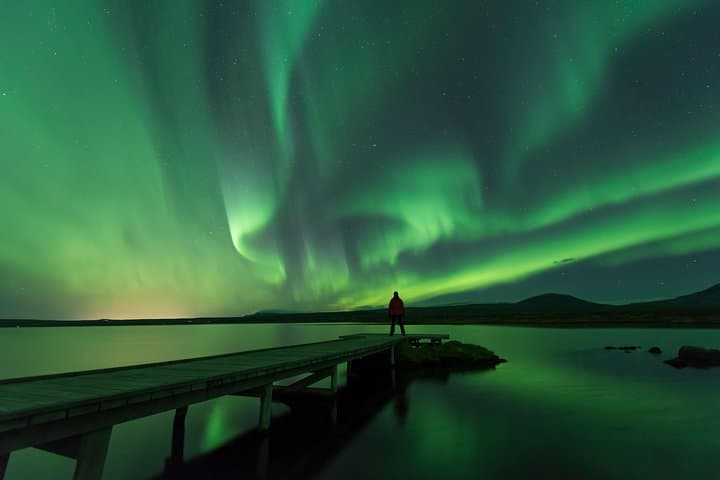
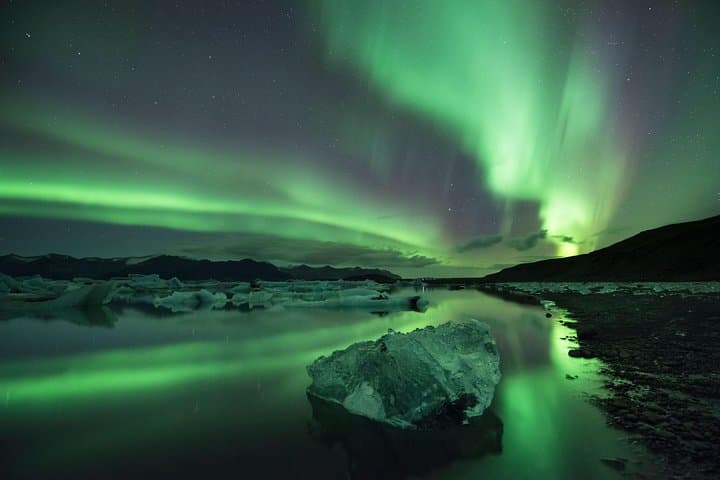
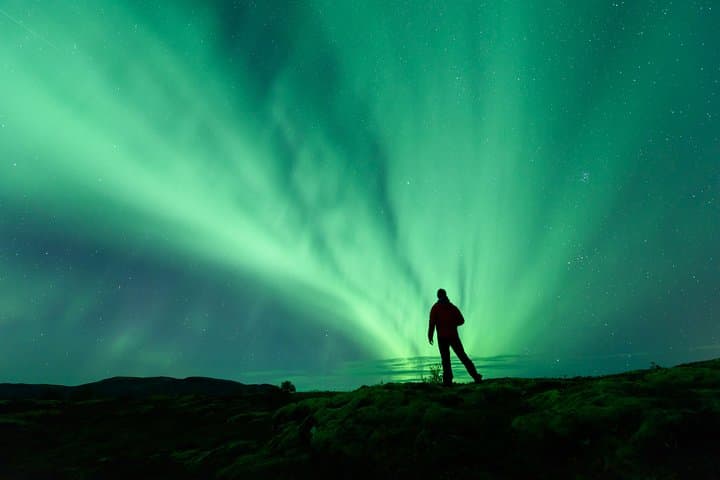
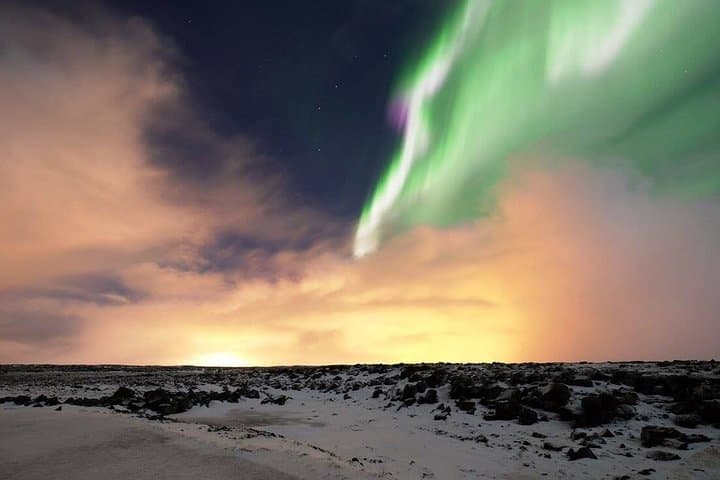
If the sky lights up, colors will play across low clouds and above distant peaks; if it doesn’t, the night still delivers starfields and the clean, cold clarity that makes Icelandic skies unforgettable. Flexibility and preparation are the keys — and patience, because the aurora often appears when you’ve learned to watch quietly.
easy.
3 hours.
Minimal fitness required—mostly sitting on coach with short outdoor standing periods; suitable for most travelers.
No — the aurora is a natural phenomenon; guides use forecasts and travel to clear skies but cannot guarantee visibility.
Late August through April are typical viewing months, with peak chances in the darkest winter months (October–March).
The tour departs from BSI Bus Terminal in Reykjavik; pickup or transfer options may be available depending on booking.
Yes—infant seats are available and the physical demands are low, but be prepared for cold nights and possible late returns.
Aurora have featured in Norse and Icelandic folklore for centuries; locals historically interpreted the lights as omens or signs tied to the sea and sky.
Tours often minimize impact by using existing roads and offsetting carbon; stay on designated pullouts and pack out all waste to protect fragile moss and volcanic soil.
Reykjavik Excursions operates guided outdoor trips and adventures with an emphasis on safety, stewardship, and memorable experiences.
You step off the coach into a black that feels almost tactile; the air bites and the sky opens. Guides scan the horizon, headlamps dipping like compass needles, and the driver eases the bus away from Reykjavik’s glow toward wide, dark plains where aurora can unfurl.
You step off the coach into a black that feels almost tactile; the air bites and the sky opens. Guides scan the horizon, headlamps dipping like compass needles, and the driver eases the bus away from Reykjavik’s glow toward wide, dark plains where aurora can unfurl.
The aurora borealis is a collision of solar particles and Earth’s upper atmosphere — a scientific light show that has shaped Icelandic stories for centuries. In this part of the country, volcanic fields and glacial rivers frame the night; the flat lava plains and low human settlement reduce light pollution and give the sky room to breathe.
Culturally, the chase is communal: small groups, local guides who read weather models and KP-index forecasts, and a quiet ritual of waiting outdoors for the sky to decide. The operator runs carbon-offset programs and provides on-board Wi‑Fi for the ride back, blending modern logistics with old‑world wonder.
Practically, expect a 3‑hour window that can stretch depending on conditions. Sightings aren’t guaranteed; guides move to the clearest horizon possible, sometimes driving an hour from Reykjavik. Dress in insulated layers, bring a tripod and spare batteries, and plan for late returns. The tour accommodates up to 19 people and offers infant seats and a physically easy itinerary.
If the sky lights up, colors will play across low clouds and above distant peaks; if it doesn’t, the night still delivers starfields and the clean, cold clarity that makes Icelandic skies unforgettable. Flexibility and preparation are the keys — and patience, because the aurora often appears when you’ve learned to watch quietly.