THE ADVENTURE COLLECTIVE® · Independent discovery and booking for outdoor travel

Leave Reykjavík’s glow behind and follow a guided small-group hunt for the Northern Lights. This 4‑hour coach tour drives into darker countryside, includes hot chocolate and one free retry if clouds intervene.
Leave Reykjavík’s glow behind and follow a guided small-group hunt for the Northern Lights. This 4‑hour coach tour drives into darker countryside, includes hot chocolate and one free retry if clouds intervene.
You step onto a coach in downtown Reykjavík at dusk, the city lights shrinking behind you as the bus heads into a darkening countryside. The guide scans cloud cover and geomagnetic forecasts, fingers tapping live data while a thermos of hot chocolate waits on the seat—small comforts against the Icelandic night.
Verified experiences and guided adventures in the surrounding area.
Operated by BusTravel Iceland · Reykjavik, Capital Region
You step onto a coach in downtown Reykjavík at dusk, the city lights shrinking behind you as the bus heads into a darkening countryside. The guide scans cloud cover and geomagnetic forecasts, fingers tapping live data while a thermos of hot chocolate waits on the seat—small comforts against the Icelandic night.
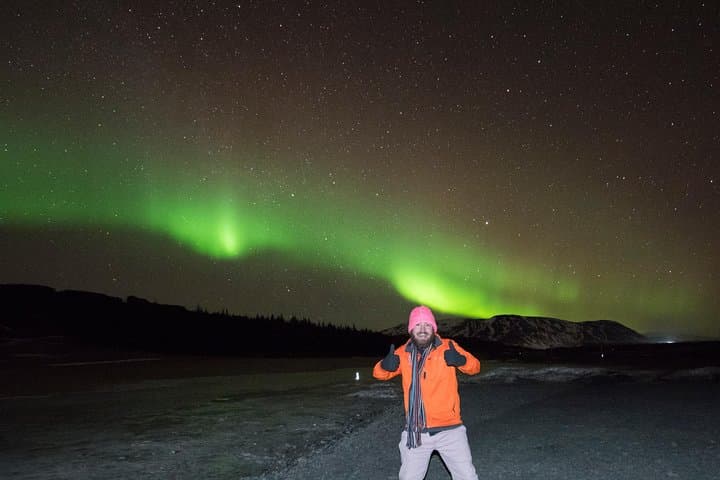
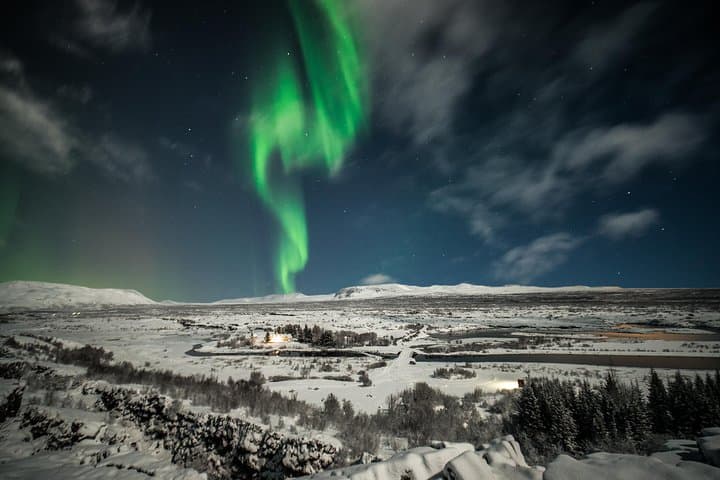
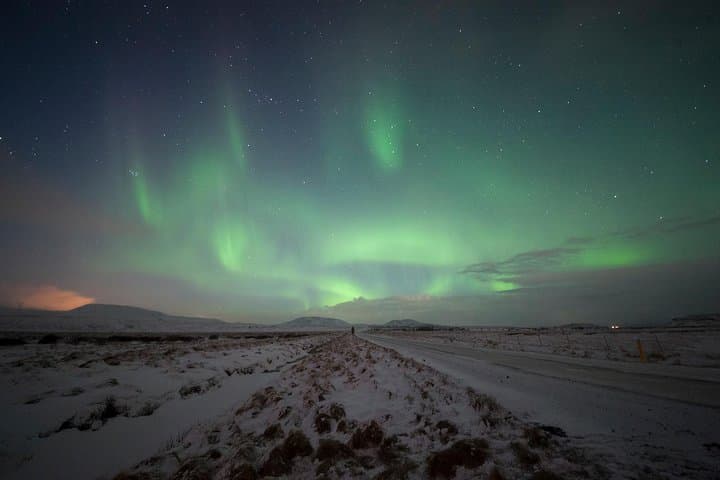
The aurora itself is driven by solar wind colliding with Earth’s magnetic field; here, away from urban glare, the sky becomes a stage for luminous curtains and dancing bands. Iceland’s volcanic plains and open fjords give wide, unobstructed horizons and dramatic silhouettes—the same geology that shaped this coastline also creates clear viewing corridors when weather cooperates. Local folklore and sagas mention strange lights, and modern Reykjavíkians treat aurora season as a communal spectacle.
Practically, expect a 4-hour round trip: pickup from central points, a guided hunt for the clearest skies, a stop to step out and photograph, and a complimentary hot drink. Sightings are weather-dependent and not guaranteed, but providers commonly offer a free retry on a larger coach if you miss them the first night.
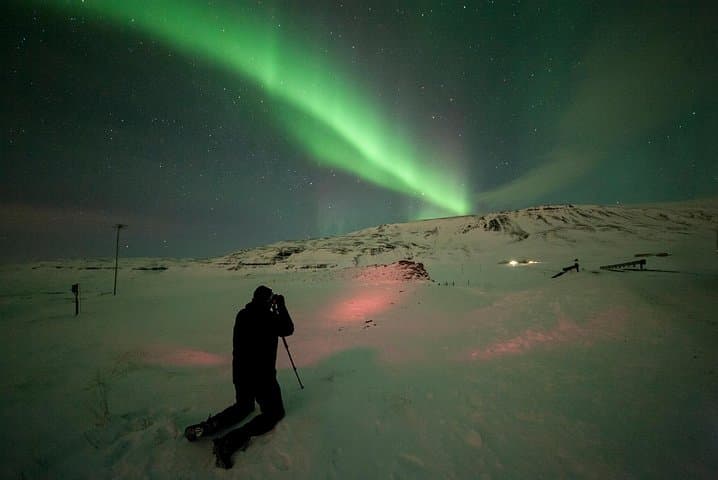
Bring warm, windproof layers and a tripod for long-exposure photos; cameras are best set to manual with wide aperture and exposures from 5–30 seconds. Phones can capture bright displays but struggle with faint curtains. Nights are cold and sometimes icy—wear insulated boots and keep batteries warm. Timing matters: peak visibility runs from late September through April, with long winter nights offering the best odds. Finally, be patient and flexible: the aurora doesn’t follow schedules, but when it rises it rewards endurance with one of the planet’s most elemental light shows.
easy.
4 hours.
Suitable for most fitness levels; activity involves short periods of standing and minimal walking
No—aurora sightings depend on solar activity and cloud cover; most operators offer a free retry on a later date if you don’t see them the first night.
Yes—the coach is low-impact with minimal walking, making it suitable for most ages; bring warm clothing and consider motion sickness needs.
Yes for bright displays, but a camera on a tripod with manual settings will capture finer detail; enable long exposure modes if available on your phone.
Pickup and drop-off are from approved central Reykjavík locations; check your booking confirmation for the exact meeting point and arrival window.
Norse settlers recorded unusual sky lights; contemporary culture embraces aurora season with community watch and photography traditions.
Guides steer clear of private land and sensitive habitats; minimize light use, pack out all trash, and avoid driving off-road to protect fragile moss and soils.
BusTravel Iceland operates guided outdoor trips and adventures with an emphasis on safety, stewardship, and memorable experiences.
You step onto a coach in downtown Reykjavík at dusk, the city lights shrinking behind you as the bus heads into a darkening countryside. The guide scans cloud cover and geomagnetic forecasts, fingers tapping live data while a thermos of hot chocolate waits on the seat—small comforts against the Icelandic night.
You step onto a coach in downtown Reykjavík at dusk, the city lights shrinking behind you as the bus heads into a darkening countryside. The guide scans cloud cover and geomagnetic forecasts, fingers tapping live data while a thermos of hot chocolate waits on the seat—small comforts against the Icelandic night.
The aurora itself is driven by solar wind colliding with Earth’s magnetic field; here, away from urban glare, the sky becomes a stage for luminous curtains and dancing bands. Iceland’s volcanic plains and open fjords give wide, unobstructed horizons and dramatic silhouettes—the same geology that shaped this coastline also creates clear viewing corridors when weather cooperates. Local folklore and sagas mention strange lights, and modern Reykjavíkians treat aurora season as a communal spectacle.
Practically, expect a 4-hour round trip: pickup from central points, a guided hunt for the clearest skies, a stop to step out and photograph, and a complimentary hot drink. Sightings are weather-dependent and not guaranteed, but providers commonly offer a free retry on a larger coach if you miss them the first night.
Bring warm, windproof layers and a tripod for long-exposure photos; cameras are best set to manual with wide aperture and exposures from 5–30 seconds. Phones can capture bright displays but struggle with faint curtains. Nights are cold and sometimes icy—wear insulated boots and keep batteries warm. Timing matters: peak visibility runs from late September through April, with long winter nights offering the best odds. Finally, be patient and flexible: the aurora doesn’t follow schedules, but when it rises it rewards endurance with one of the planet’s most elemental light shows.