THE ADVENTURE COLLECTIVE® · Independent discovery and booking for outdoor travel

Fairbanks sits under the Aurora Oval, and this roving SkyChase tour uses live weather and solar data to find the clearest skies. Expect heated van transfers, a mobile lodge, pro photos, and a campfire as the night sky stirs and the aurora dares you to keep up.
Fairbanks sits under the Aurora Oval, and this roving SkyChase tour uses live weather and solar data to find the clearest skies. Expect heated van transfers, a mobile lodge, pro photos, and a campfire as the night sky stirs and the aurora dares you to keep up.
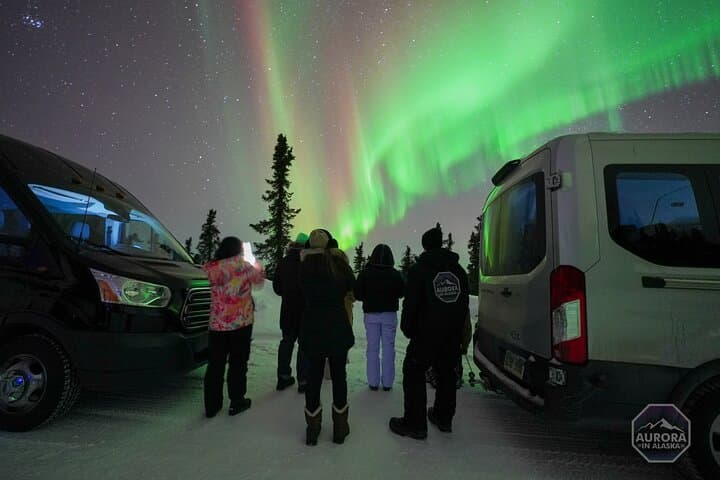
By 10 p.m., Fairbanks exhales frost and the stars sharpen like pins. A heated Mercedes Sprinter hums at the curb while a guide checks cloud maps and solar data—their “Lights‑for‑Life” formula choosing a direction where the sky looks most promising. West toward Murphy Dome, east to the Chena Valley, or along backroads that slip past black spruce—tonight the aurora is on the move, and this tour intends to keep pace.
Verified experiences and guided adventures in the surrounding area.
Operated by Aurora In Alaska · Fairbanks, Alaska
By 10 p.m., Fairbanks exhales frost and the stars sharpen like pins. A heated Mercedes Sprinter hums at the curb while a guide checks cloud maps and solar data—their “Lights‑for‑Life” formula choosing a direction where the sky looks most promising. West toward Murphy Dome, east to the Chena Valley, or along backroads that slip past black spruce—tonight the aurora is on the move, and this tour intends to keep pace.
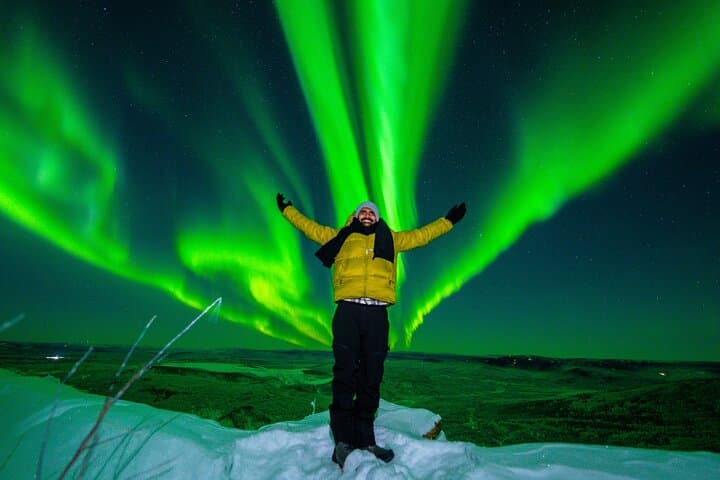
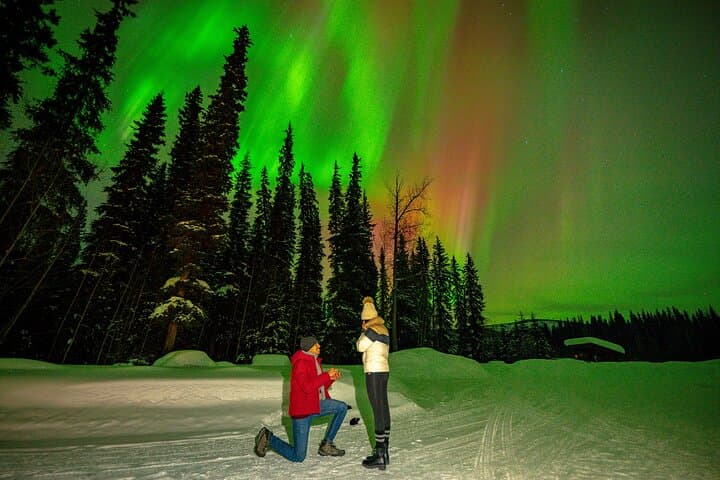
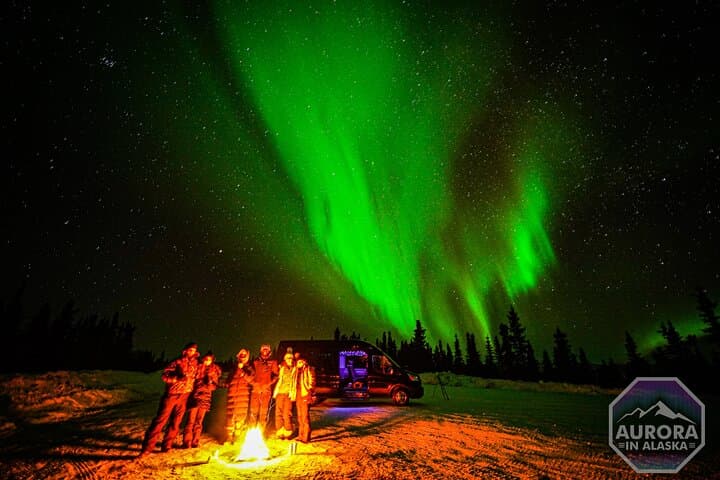
Fairbanks sits under the Aurora Oval, a bullseye for charged particles streaming from the sun. When they collide with Earth’s upper atmosphere, oxygen glows green, nitrogen blushes red, and the sky stirs to life. Athabascan stories read the lights as playful, unpredictable; Cold War radar once watched from Murphy Dome, now an elevated perch with wide, dark horizons around 2,800 feet. The chase ranges 20–100 miles round-trip depending on conditions, with quick walks from the van—often just a few snowy steps—to set up at roadside pullouts or a mobile lodge. A campfire hisses in the cold, reindeer sausage sizzles, and the Brew Bar warms hands between exposures. The aurora teases, hides, then sweeps a curtain across the north; cameras click while pro photographers dial in settings and capture portraits, your breath ghosting the frame.
SkyChase operates like a roving field lab: real-time weather models, satellite loops, and magnetometer readings guide decisions, sometimes pivoting mid-drive to outrun incoming cloud. Typical viewing peaks between 10 p.m. and 2 a.m., but the team will hold if KP levels spike or gaps in the ceiling open late. Clear skies matter more than moon phase; wind can bite at −10°F to −30°F in midwinter, so warm boots and layered insulation are essential. Expect minimal elevation gain—just the step from van to snowpack—and short periods of standing on icy surfaces.
When the sky opens, it doesn’t whisper—it dares. Bands stretch and buckle, arcs ripple east to west, and the whole night seems to lean forward, urging the group to stay sharp. If the lights don’t show to the eye or camera on a guaranteed night, the company offers a refund or rebook, but most nights patience pays. Some evenings reveal Denali’s far silhouette from high points; others reflect green ribbons in the Chena River’s dark ice. Either way, the chase itself becomes the story: frost-laced roads, coffee steaming in the glow of headlamps, and the sky finally stepping out from behind the clouds, unhurried and electric.
Plan October–March for the longest nights; late August and April can produce with milder temps. Schedule a slow morning after—the aurora keeps late hours, and you’ll want time to rewatch your night-lapse and thaw out your grin.
easy.
5 hours.
Comfortable standing outside in subzero temperatures with short walks on snow/ice and stepping in/out of a van.
Prime viewing runs from late August through mid-April, with peak darkness and frequent activity from October to March.
Expect −10°F to −30°F in midwinter. Wear wicking baselayers, warm midlayers, a windproof insulated parka, insulated boots, mitts over liners, and a hat/balaclava.
Routes vary 20–100 miles round-trip to find clear skies. Walking is minimal—usually a few steps from the van to a viewing area on packed snow or ice.
Yes—professional aurora portraits are included, with optional tripod rentals and hands-on camera support for your own shots.
On a guaranteed night with no visible aurora to eye or camera, you’ll receive a 50% refund or a free rebooking, subject to tour policy and conditions.
Moonlight doesn’t stop the aurora; clear skies are more important. Brighter phases can illuminate foregrounds and make photos more scenic.
Murphy Dome once hosted a Cold War radar site; today it’s a favored high point for sky watchers. Athabascan communities have long told stories of the lights’ playful energy across the winter sky.
Pack out all waste, keep to hardened pullouts, and avoid trampling young spruce. Vehicle idling is minimized at stops to reduce noise and emissions in the quiet winter woods.
Aurora In Alaska operates guided outdoor trips and adventures with an emphasis on safety, stewardship, and memorable experiences.
By 10 p.m., Fairbanks exhales frost and the stars sharpen like pins. A heated Mercedes Sprinter hums at the curb while a guide checks cloud maps and solar data—their “Lights‑for‑Life” formula choosing a direction where the sky looks most promising. West toward Murphy Dome, east to the Chena Valley, or along backroads that slip past black spruce—tonight the aurora is on the move, and this tour intends to keep pace.
By 10 p.m., Fairbanks exhales frost and the stars sharpen like pins. A heated Mercedes Sprinter hums at the curb while a guide checks cloud maps and solar data—their “Lights‑for‑Life” formula choosing a direction where the sky looks most promising. West toward Murphy Dome, east to the Chena Valley, or along backroads that slip past black spruce—tonight the aurora is on the move, and this tour intends to keep pace.
Fairbanks sits under the Aurora Oval, a bullseye for charged particles streaming from the sun. When they collide with Earth’s upper atmosphere, oxygen glows green, nitrogen blushes red, and the sky stirs to life. Athabascan stories read the lights as playful, unpredictable; Cold War radar once watched from Murphy Dome, now an elevated perch with wide, dark horizons around 2,800 feet. The chase ranges 20–100 miles round-trip depending on conditions, with quick walks from the van—often just a few snowy steps—to set up at roadside pullouts or a mobile lodge. A campfire hisses in the cold, reindeer sausage sizzles, and the Brew Bar warms hands between exposures. The aurora teases, hides, then sweeps a curtain across the north; cameras click while pro photographers dial in settings and capture portraits, your breath ghosting the frame.
SkyChase operates like a roving field lab: real-time weather models, satellite loops, and magnetometer readings guide decisions, sometimes pivoting mid-drive to outrun incoming cloud. Typical viewing peaks between 10 p.m. and 2 a.m., but the team will hold if KP levels spike or gaps in the ceiling open late. Clear skies matter more than moon phase; wind can bite at −10°F to −30°F in midwinter, so warm boots and layered insulation are essential. Expect minimal elevation gain—just the step from van to snowpack—and short periods of standing on icy surfaces.
When the sky opens, it doesn’t whisper—it dares. Bands stretch and buckle, arcs ripple east to west, and the whole night seems to lean forward, urging the group to stay sharp. If the lights don’t show to the eye or camera on a guaranteed night, the company offers a refund or rebook, but most nights patience pays. Some evenings reveal Denali’s far silhouette from high points; others reflect green ribbons in the Chena River’s dark ice. Either way, the chase itself becomes the story: frost-laced roads, coffee steaming in the glow of headlamps, and the sky finally stepping out from behind the clouds, unhurried and electric.
Plan October–March for the longest nights; late August and April can produce with milder temps. Schedule a slow morning after—the aurora keeps late hours, and you’ll want time to rewatch your night-lapse and thaw out your grin.