THE ADVENTURE COLLECTIVE® · Independent discovery and booking for outdoor travel

Travel from Kiruna to Abisko on a guided night tour that maximizes your chances of seeing the Northern Lights. Learn aurora science and local folklore while guides handle transport, winter gear, and photography.
Travel from Kiruna to Abisko on a guided night tour that maximizes your chances of seeing the Northern Lights. Learn aurora science and local folklore while guides handle transport, winter gear, and photography.
Night in the far north arrives like a slow curtain. You leave Kiruna behind, headlights carving a path through black spruce and frozen lakes, and arrive in Abisko where the sky seems to hold its breath. Here the aurora doesn’t just appear — it moves with intent, green ribbons and pale purples unfurling above ridgelines while the wind sharpens the silhouettes of craggy peaks.
Verified experiences and guided adventures in the surrounding area.
Operated by 90degreesnorth · Abisko, Norrbotten County
Night in the far north arrives like a slow curtain. You leave Kiruna behind, headlights carving a path through black spruce and frozen lakes, and arrive in Abisko where the sky seems to hold its breath. Here the aurora doesn’t just appear — it moves with intent, green ribbons and pale purples unfurling above ridgelines while the wind sharpens the silhouettes of craggy peaks.
Abisko National Park sits on the edge of the Scandinavian Mountains and the deep Torneträsk basin; its clear, dry air and limited light pollution have long drawn scientists and sky-watchers. The area’s Sami heritage threads through local stories about the lights; traditional knowledge and modern research coexist around the park’s simple wooden lodges and the nearby research station.
On this guided outing you’ll travel by shuttle from Camp Alta or Kiruna to curated viewing spots, step into prepared winter kit, and be led to vantage points chosen for sky clarity and horizon views. Guides share aurora science, regional lore, and camera tips while high-quality photos are taken for you.
Practicalities matter: expect up to six hours outdoors at night, walking on snow and ice, with breaks for soup and hot drinks. Dress in insulated layers and sturdy boots; bring a tripod or borrow one if offered. Weather governs success — guides monitor forecasts and adjust routes to chase clear skies. Whether the aurora flares or whispers, the experience is a blend of patient watching and sudden spectacle — a night that trains your eyes to read light and sky in new ways.
moderate.
5–6 hours.
Moderate; participants should be able to walk short distances on snowy, uneven ground and tolerate prolonged cold exposure.
Abisko's location and clear skies improve chances, especially between September and March, but sightings can’t be guaranteed due to cloud cover and solar activity.
You can bring a camera and tripod for long exposures; guides often take high-quality photos and may provide copies after the tour.
The tour requires walking on snowy, slippery terrain at night; it’s best for those with moderate mobility—discuss specific needs with the operator before booking.
Operators monitor conditions and may reschedule or cancel for safety; most have a 24-hour cancellation policy for refunds if the tour is called off due to weather.
Abisko has been a hub for auroral research and Arctic studies for over a century and sits within territory traditionally used by the Sami people.
Abisko National Park limits light pollution and encourages Leave No Trace practices; stay on marked trails and pack out all waste to protect fragile tundra.
90degreesnorth operates guided outdoor trips and adventures with an emphasis on safety, stewardship, and memorable experiences.
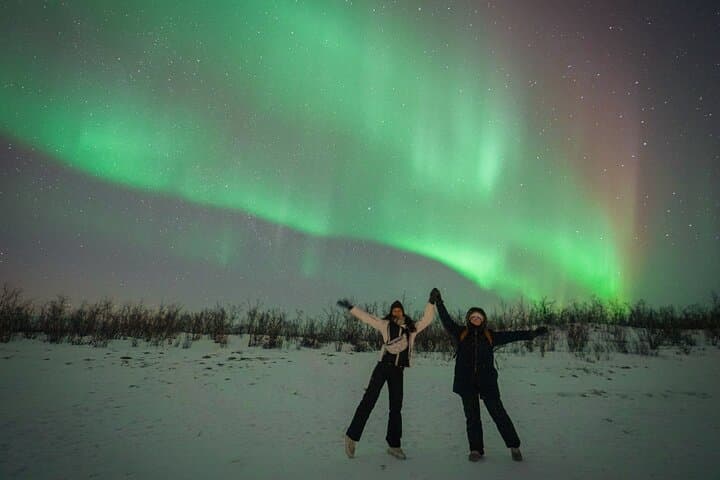


Night in the far north arrives like a slow curtain. You leave Kiruna behind, headlights carving a path through black spruce and frozen lakes, and arrive in Abisko where the sky seems to hold its breath. Here the aurora doesn’t just appear — it moves with intent, green ribbons and pale purples unfurling above ridgelines while the wind sharpens the silhouettes of craggy peaks.
Night in the far north arrives like a slow curtain. You leave Kiruna behind, headlights carving a path through black spruce and frozen lakes, and arrive in Abisko where the sky seems to hold its breath. Here the aurora doesn’t just appear — it moves with intent, green ribbons and pale purples unfurling above ridgelines while the wind sharpens the silhouettes of craggy peaks.
Abisko National Park sits on the edge of the Scandinavian Mountains and the deep Torneträsk basin; its clear, dry air and limited light pollution have long drawn scientists and sky-watchers. The area’s Sami heritage threads through local stories about the lights; traditional knowledge and modern research coexist around the park’s simple wooden lodges and the nearby research station.
On this guided outing you’ll travel by shuttle from Camp Alta or Kiruna to curated viewing spots, step into prepared winter kit, and be led to vantage points chosen for sky clarity and horizon views. Guides share aurora science, regional lore, and camera tips while high-quality photos are taken for you.
Practicalities matter: expect up to six hours outdoors at night, walking on snow and ice, with breaks for soup and hot drinks. Dress in insulated layers and sturdy boots; bring a tripod or borrow one if offered. Weather governs success — guides monitor forecasts and adjust routes to chase clear skies. Whether the aurora flares or whispers, the experience is a blend of patient watching and sudden spectacle — a night that trains your eyes to read light and sky in new ways.