THE ADVENTURE COLLECTIVE® · Independent discovery and booking for outdoor travel

Head out from Kiruna in a small vehicle with a photographer-guide who reads weather and sky to find clear nights. The tour combines long-distance chasing, on-site camera help, and hot drinks while you photograph the Aurora Borealis.
Head out from Kiruna in a small vehicle with a photographer-guide who reads weather and sky to find clear nights. The tour combines long-distance chasing, on-site camera help, and hot drinks while you photograph the Aurora Borealis.
A raw, clear night opens above Kiruna and you step out where the town's sodium lamps fade, leaving a sky that feels close enough to touch. The guide straps on headlights, the van hums, and the hunt begins — sometimes toward Abisko’s darker skies, sometimes deeper into boreal forest, always following pockets of clear air where the aurora dares to dance.
Verified experiences and guided adventures in the surrounding area.
Operated by Lights of Vikings · Kiruna, Norrbotten County
A raw, clear night opens above Kiruna and you step out where the town's sodium lamps fade, leaving a sky that feels close enough to touch. The guide straps on headlights, the van hums, and the hunt begins — sometimes toward Abisko’s darker skies, sometimes deeper into boreal forest, always following pockets of clear air where the aurora dares to dance.
This region sits on the edge of the Scandinavian ice sheet’s ancient influence; glacial scouring left low ridges and lakes that shape local weather and drive clear-sky microclimates. Sami and Viking-era stories thread through the landscape — guides commonly share northern folklore as the lights arc overhead. Abisko is world-renowned among aurora chasers for its rain shadow effect, which helps produce more clear nights than surrounding areas.
Expect a mobile, weather-driven experience: long drives if needed, short stops to read sky conditions, and patient waits while the geomagnetic display unfolds. The photographer-guide sets up tripods, helps guests with exposure and focus, and sends edited images after the tour. Hot drinks and a small campfire are typical comforts while you shoot.
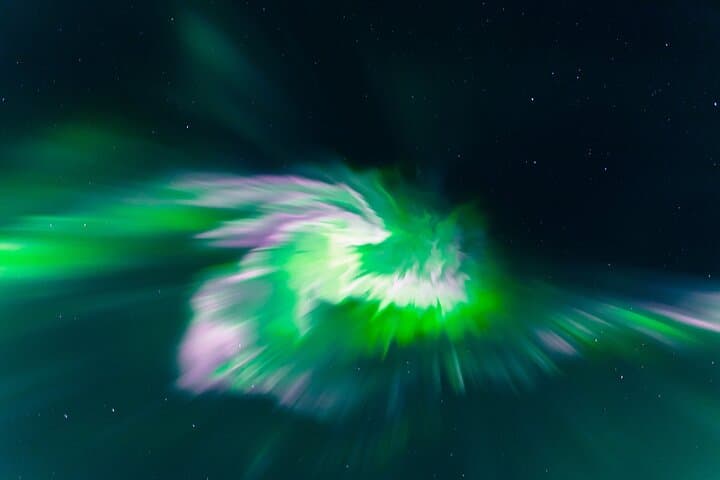
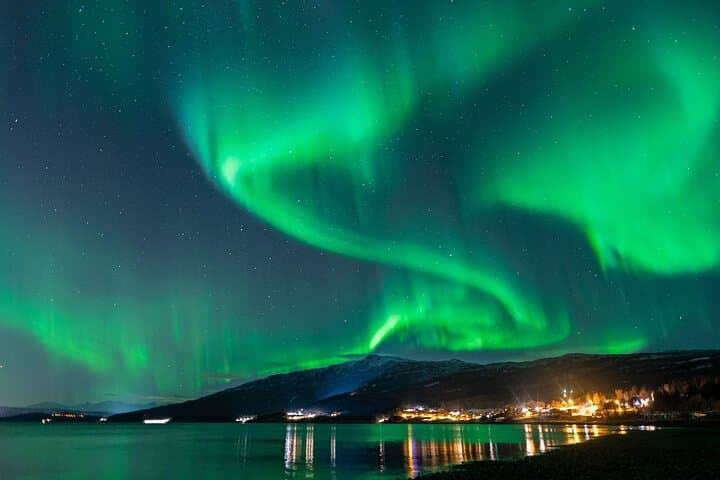
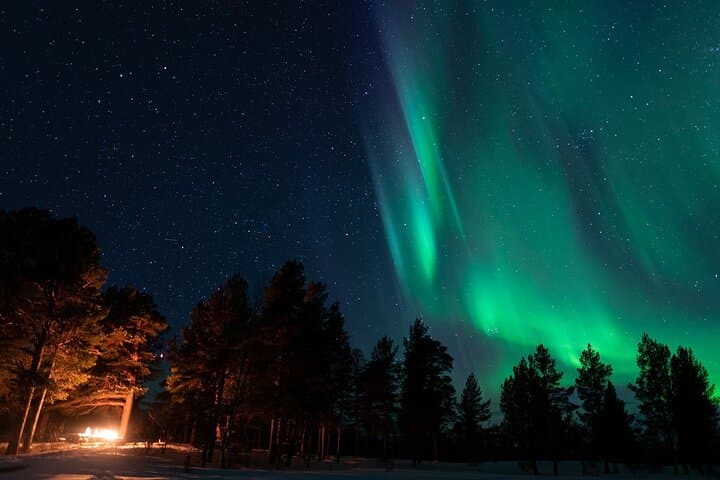
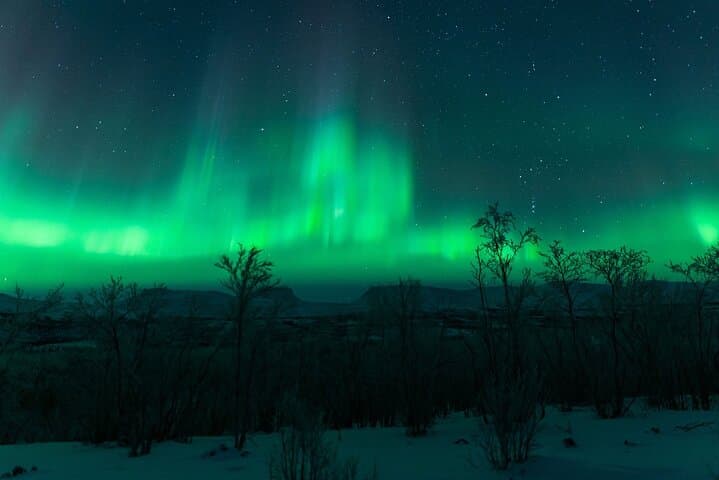
Practical details: dress in insulated layers, bring a tripod and a camera with manual exposure. Tours last roughly 4–6 hours, start after dark, and require decent mobility for short walks on uneven, sometimes snowy ground. If you’re sensitive to cold or have cardiovascular restrictions, plan accordingly. With clear skies and solar activity, the payoff is vivid green ribbons and curtains that move like living light — a night where the sky itself pulls you forward.
moderate.
4–6 hours.
Moderate fitness for short walks in snow and standing in cold conditions; not strenuous but requires stamina for extended outdoor exposure.
Operators report a high success rate because they chase clear skies, but sightings depend on solar activity and local weather; no tour can guarantee auroras.
Yes — the photographer-guide helps set up guests' cameras and provides edited images within a few days after the tour.
This operator recommends guests be 15 or older due to late-night conditions and safety considerations.
Yes — hotel pickup in Kiruna is typically included; you’ll confirm a pickup point when booking.
The area has long been used by the Sámi people; Viking-era travel routes and northern folklore shape many local stories about the lights.
Stay on designated roads and avoid disturbing the tundra; use existing campfire spots and pack out all waste to limit impact on fragile Arctic ecosystems.
Lights of Vikings operates guided outdoor trips and adventures with an emphasis on safety, stewardship, and memorable experiences.
A raw, clear night opens above Kiruna and you step out where the town's sodium lamps fade, leaving a sky that feels close enough to touch. The guide straps on headlights, the van hums, and the hunt begins — sometimes toward Abisko’s darker skies, sometimes deeper into boreal forest, always following pockets of clear air where the aurora dares to dance.
A raw, clear night opens above Kiruna and you step out where the town's sodium lamps fade, leaving a sky that feels close enough to touch. The guide straps on headlights, the van hums, and the hunt begins — sometimes toward Abisko’s darker skies, sometimes deeper into boreal forest, always following pockets of clear air where the aurora dares to dance.
This region sits on the edge of the Scandinavian ice sheet’s ancient influence; glacial scouring left low ridges and lakes that shape local weather and drive clear-sky microclimates. Sami and Viking-era stories thread through the landscape — guides commonly share northern folklore as the lights arc overhead. Abisko is world-renowned among aurora chasers for its rain shadow effect, which helps produce more clear nights than surrounding areas.
Expect a mobile, weather-driven experience: long drives if needed, short stops to read sky conditions, and patient waits while the geomagnetic display unfolds. The photographer-guide sets up tripods, helps guests with exposure and focus, and sends edited images after the tour. Hot drinks and a small campfire are typical comforts while you shoot.
Practical details: dress in insulated layers, bring a tripod and a camera with manual exposure. Tours last roughly 4–6 hours, start after dark, and require decent mobility for short walks on uneven, sometimes snowy ground. If you’re sensitive to cold or have cardiovascular restrictions, plan accordingly. With clear skies and solar activity, the payoff is vivid green ribbons and curtains that move like living light — a night where the sky itself pulls you forward.