THE ADVENTURE COLLECTIVE® · Independent discovery and booking for outdoor travel

A private day trip from Marrakech takes you three hours into the Middle Atlas to Ouzoud Falls — North Africa’s highest cascade. Expect forested paths, close encounters with Barbary macaques and a lunch with a view, all packed into a practical eight‑hour outing.
A private day trip from Marrakech takes you three hours into the Middle Atlas to Ouzoud Falls — North Africa’s highest cascade. Expect forested paths, close encounters with Barbary macaques and a lunch with a view, all packed into a practical eight‑hour outing.
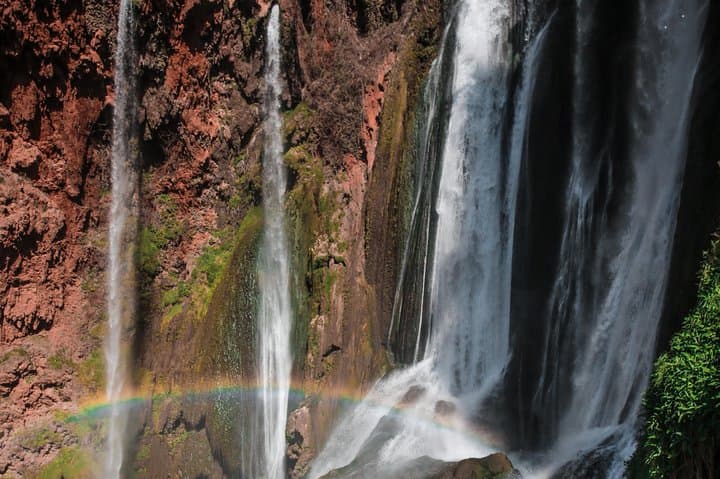
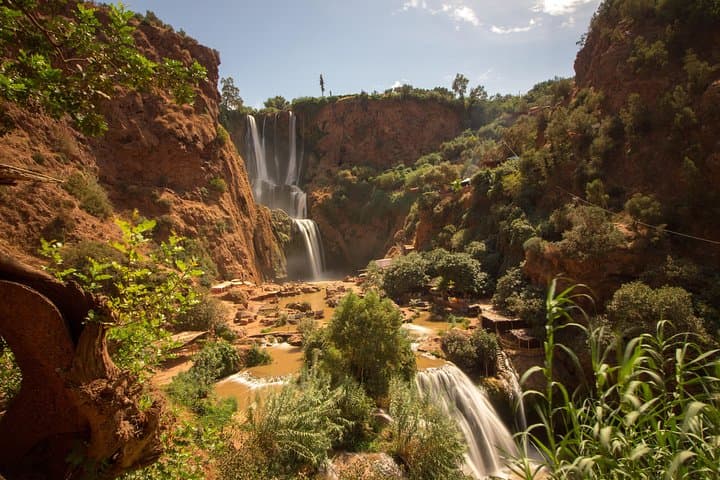
A spray of mist hits your face before the trail comes fully into view — the falls announce themselves in a rush and a low, persistent roar. You walk under a rim of red cliffs threaded with water, olive trees lining the path like patient witnesses to each season. On a clear day the 110‑meter drop of Ouzoud casts a silver curtain into a green pool below; clouds scatter light so the water seems to move through color.
Verified experiences and guided adventures in the surrounding area.
Operated by The Alternative Morocco · Ouzoud, Azilal Province
A spray of mist hits your face before the trail comes fully into view — the falls announce themselves in a rush and a low, persistent roar. You walk under a rim of red cliffs threaded with water, olive trees lining the path like patient witnesses to each season. On a clear day the 110‑meter drop of Ouzoud casts a silver curtain into a green pool below; clouds scatter light so the water seems to move through color.
The route from Marrakech is part of the story: a three‑hour drive north across the Tadla plains and into the lower slopes of the Middle Atlas. The landscape shifts from ochre fields and olive farms to terraced villages and stone tracks. Ouzoud sits where limestone cliffs fracture and the El‑Abid river finds a weakness — repeated freeze, thaw and river action over millennia cut the vertical face you see today.
Local culture is visible in small details. Berber villages cluster above the gorge; families tend olive groves whose harvests support local mills and tiny cafés. For centuries, the falls have been a seasonal anchor for nearby communities — a place for summer swims, spring picnics and, increasingly, guided visits that offer employment and a route to keep traditional skills alive.
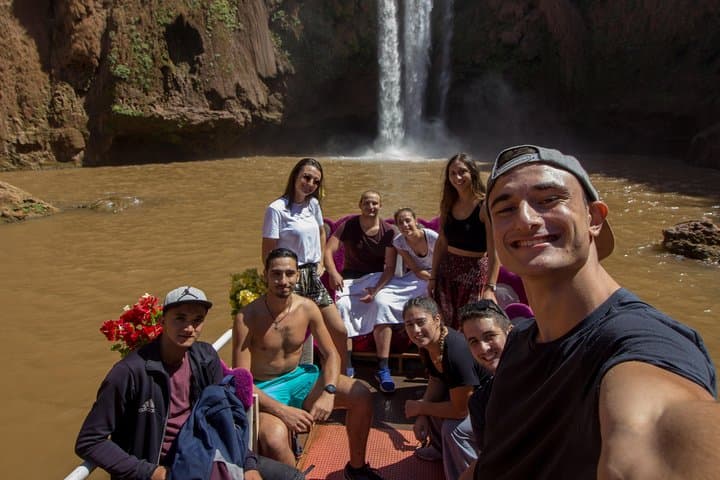
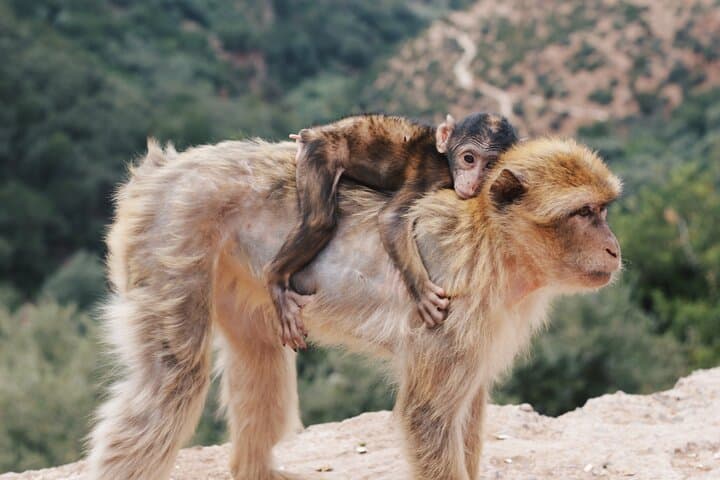
Barbary macaques claim the cliffs with casual entitlement. Guides will point them out and explain why feeding them is a bad idea: it changes their behavior and increases human‑wildlife conflict. The site’s accessibility — shaded walking paths, a short boat ride to feel the mist — is part of Ouzoud’s appeal, but so is the gentle rhythm of the place: cafes serving tagine and local flatbreads, shepherds moving along the ridgeline, and the steady sound of water.
Practical side: expect an eight‑hour day with about an hour of walking on uneven, often steep trails — mostly a downhill approach and a sustained climb back to the parking area. Wear sturdy shoes with grip, bring layers (mornings and evenings can be cool), and pack a dry bag for cameras if you plan the short boat swim under the falls. Midday visits are busiest; early departures from Marrakech get cooler light for photos and a quieter experience.
This private tour includes pickup and drop‑off in Marrakech, an English‑speaking local guide, lunch at a restaurant overlooking the falls and time for a short boat trip. For those after an intimate, contemplative day in the Moroccan highlands, Ouzoud delivers a memorable mix of geology, wildlife and village life — all within reach of the city.
moderate.
8 hours.
Suitable for someone who can handle a downhill walk and a sustained uphill return; basic stamina for several short climbs is required.
Approximately three hours each way depending on traffic and your pickup location; the full tour is about eight hours.
Yes — spray is constant when you’re close and on the boat; waterproof protection for gear and a light jacket are recommended.
No — they are wild animals. Observe from a distance and do not feed them; guides enforce this for safety and conservation.
Yes — this tour includes a local lunch at a restaurant overlooking the falls.
Main viewpoint areas are reachable by short paved paths, but the route to the base and some viewpoints involves steps and steep paths not suitable for wheelchairs.
Yes — the trip is family‑friendly; infants may be required to sit on an adult’s lap during transport and supervise children on slippery trails.
Ouzoud’s name may derive from the Berber word for ‘olive’; the falls have long been part of local agro‑pastoral life and trade in the Middle Atlas.
Tourism supports local economies but brings pressure on wildlife and trails; avoid feeding animals, stick to paths and support local services that use sustainable practices.
The Alternative Morocco operates guided outdoor trips and adventures with an emphasis on safety, stewardship, and memorable experiences.
A spray of mist hits your face before the trail comes fully into view — the falls announce themselves in a rush and a low, persistent roar. You walk under a rim of red cliffs threaded with water, olive trees lining the path like patient witnesses to each season. On a clear day the 110‑meter drop of Ouzoud casts a silver curtain into a green pool below; clouds scatter light so the water seems to move through color.
A spray of mist hits your face before the trail comes fully into view — the falls announce themselves in a rush and a low, persistent roar. You walk under a rim of red cliffs threaded with water, olive trees lining the path like patient witnesses to each season. On a clear day the 110‑meter drop of Ouzoud casts a silver curtain into a green pool below; clouds scatter light so the water seems to move through color.
The route from Marrakech is part of the story: a three‑hour drive north across the Tadla plains and into the lower slopes of the Middle Atlas. The landscape shifts from ochre fields and olive farms to terraced villages and stone tracks. Ouzoud sits where limestone cliffs fracture and the El‑Abid river finds a weakness — repeated freeze, thaw and river action over millennia cut the vertical face you see today.
Local culture is visible in small details. Berber villages cluster above the gorge; families tend olive groves whose harvests support local mills and tiny cafés. For centuries, the falls have been a seasonal anchor for nearby communities — a place for summer swims, spring picnics and, increasingly, guided visits that offer employment and a route to keep traditional skills alive.
Barbary macaques claim the cliffs with casual entitlement. Guides will point them out and explain why feeding them is a bad idea: it changes their behavior and increases human‑wildlife conflict. The site’s accessibility — shaded walking paths, a short boat ride to feel the mist — is part of Ouzoud’s appeal, but so is the gentle rhythm of the place: cafes serving tagine and local flatbreads, shepherds moving along the ridgeline, and the steady sound of water.
Practical side: expect an eight‑hour day with about an hour of walking on uneven, often steep trails — mostly a downhill approach and a sustained climb back to the parking area. Wear sturdy shoes with grip, bring layers (mornings and evenings can be cool), and pack a dry bag for cameras if you plan the short boat swim under the falls. Midday visits are busiest; early departures from Marrakech get cooler light for photos and a quieter experience.
This private tour includes pickup and drop‑off in Marrakech, an English‑speaking local guide, lunch at a restaurant overlooking the falls and time for a short boat trip. For those after an intimate, contemplative day in the Moroccan highlands, Ouzoud delivers a memorable mix of geology, wildlife and village life — all within reach of the city.