THE ADVENTURE COLLECTIVE® · Independent discovery and booking for outdoor travel

A day trip from Marrakech to Ouzoud delivers one of Morocco’s most dramatic natural shows — a 330-foot waterfall, resident Barbary macaques, and riverside restaurants with verandas over the gorge. This practical guide helps you plan the drive, the walk, and the best light for photos.
A day trip from Marrakech to Ouzoud delivers one of Morocco’s most dramatic natural shows — a 330-foot waterfall, resident Barbary macaques, and riverside restaurants with verandas over the gorge. This practical guide helps you plan the drive, the walk, and the best light for photos.
The first time you hear Ouzoud it sounds like water naming itself: a low roar that grows as the minibus drops from the ochre plains into the green cut of the Atlas foothills. By the time the driver widens the road and olive groves appear, the falls are already announcing themselves — a distant hiss that turns into a curtain of spray and a permanent rainbow swinging over the gorge.
Verified experiences and guided adventures in the surrounding area.
Operated by Morocco Tours Services · Marrakech, Marrakesh-Safi
The first time you hear Ouzoud it sounds like water naming itself: a low roar that grows as the minibus drops from the ochre plains into the green cut of the Atlas foothills. By the time the driver widens the road and olive groves appear, the falls are already announcing themselves — a distant hiss that turns into a curtain of spray and a permanent rainbow swinging over the gorge.
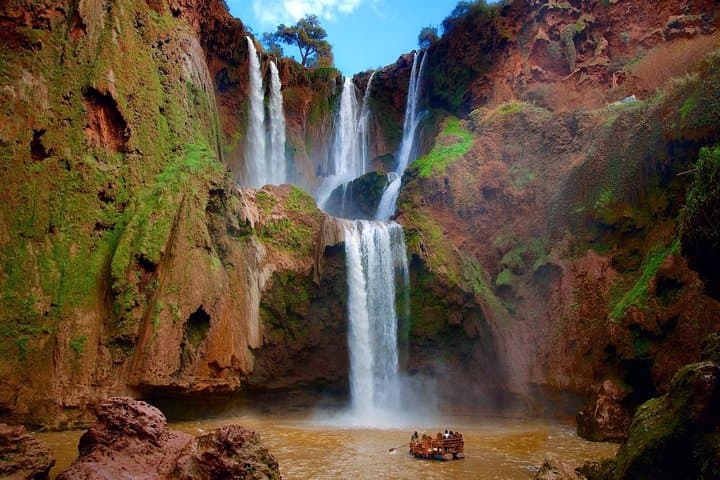
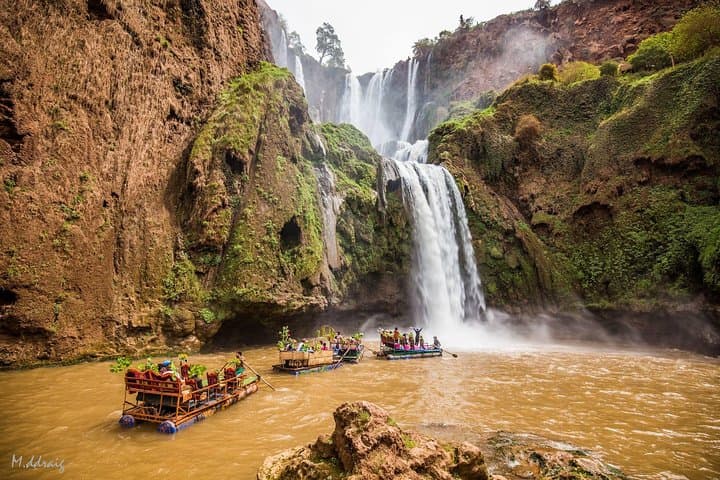
Ouzoud sits roughly three hours northeast of Marrakech along twisting mountain roads. The cascade plunges about 330 feet (the commonly cited 100-meter mark), breaking into several ribbons that fan across red cliffs and oleander bushes. Geologically the falls are carved into Miocene-era sedimentary rock; downstream, the El Abid River has gnawed terraces and channels that local farmers have used for centuries. The name “Ouzoud” links to olives — the valley’s terraces and groves are as much a feature of the landscape as the water.
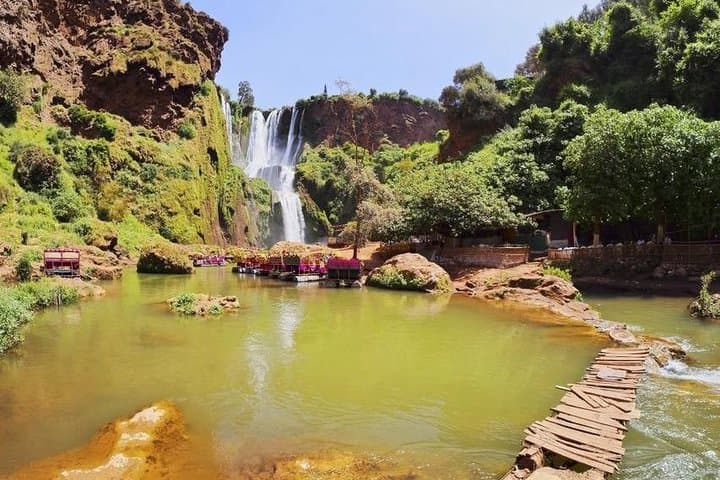
The area is layered with culture: Berber villages perched above the gorge, family-run restaurants with verandas overlooking the drop, and old water mills tucked along the river. Barbary macaques patrol the shrubs and stone walls, skilled at appearing at the edge of a picnic. Tourism here is lively and communal — shared day trips from Marrakech keep costs low and create a roving group energy that matches the landscape.
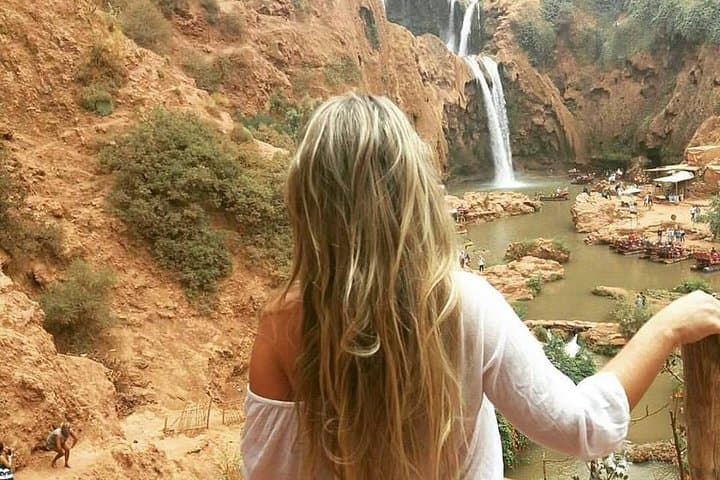
On arrival you’ll find a network of stepped paths and viewing platforms. Typical routes form a loop of roughly 2–3 kilometers with an aggregate elevation change near 150 meters — mostly steps down to the river and back up. The trails are well-worn but uneven; expect loose scree, wooden steps, and packed earth. Lunch is often at a riverside restaurant where tagines and mint tea are served as spray cools the terrace.
Practical note: start early to beat the heat and crowds. Bring sturdy shoes with good grip — the steps and riverbanks get slick. Carry at least 1–2 liters of water, cash for small purchases, and a lightweight rain layer in spring or after storms when spray and mist make the path damp. Respect wildlife: don’t feed the macaques and keep a safe distance — they’re agile and opportunistic.
For photographers the rainbow that hangs over the main cascade is the prize; mid-morning with a low sun angle often produces the most vivid arcs. If you want a quieter perspective, walk the south trail beyond the main decks where light and angles change and local olive terraces come into view.
By late afternoon, the minibus returns to Marrakech, dusty and quieter than the morning crowd. Ouzoud is compact enough for a day and generous enough that the falls, the monkeys, and the olive-scented air leave a lasting impression — a reminder that some of Morocco’s most memorable landscapes live just beyond the city’s gates.
moderate.
7–11 hours.
Easy to moderate fitness required for short hikes, stairs, and occasional steep sections; comfortable walking for several hours.
Expect about three hours each way by minibus, depending on traffic and stops — total tour time is typically 7–11 hours.
Lunch is usually not included; most groups stop at a riverside restaurant where you can order tagines and salads à la carte.
Swimming is possible in some pools below the cascade but conditions change; obey local signage and avoid fast currents.
Paths are manageable for most but include many steps; those with limited mobility may prefer lookout points near parking areas.
There’s no formal entrance fee to view the falls, though small local charges or parking fees can apply; guides are optional but available.
Barbary macaques are common around the falls; sightings are likely but not guaranteed — avoid feeding them.
Ouzoud sits in a landscape shaped by Berber agriculture and Ottoman-era mills; the name ties to the olive groves that have fed local communities for generations.
Tourism pressures and feeding of macaques have altered behaviors; stick to marked paths, pack out waste, and avoid feeding wildlife to minimize impact.
Morocco Tours Services operates guided outdoor trips and adventures with an emphasis on safety, stewardship, and memorable experiences.
The first time you hear Ouzoud it sounds like water naming itself: a low roar that grows as the minibus drops from the ochre plains into the green cut of the Atlas foothills. By the time the driver widens the road and olive groves appear, the falls are already announcing themselves — a distant hiss that turns into a curtain of spray and a permanent rainbow swinging over the gorge.
The first time you hear Ouzoud it sounds like water naming itself: a low roar that grows as the minibus drops from the ochre plains into the green cut of the Atlas foothills. By the time the driver widens the road and olive groves appear, the falls are already announcing themselves — a distant hiss that turns into a curtain of spray and a permanent rainbow swinging over the gorge.
Ouzoud sits roughly three hours northeast of Marrakech along twisting mountain roads. The cascade plunges about 330 feet (the commonly cited 100-meter mark), breaking into several ribbons that fan across red cliffs and oleander bushes. Geologically the falls are carved into Miocene-era sedimentary rock; downstream, the El Abid River has gnawed terraces and channels that local farmers have used for centuries. The name “Ouzoud” links to olives — the valley’s terraces and groves are as much a feature of the landscape as the water.
The area is layered with culture: Berber villages perched above the gorge, family-run restaurants with verandas overlooking the drop, and old water mills tucked along the river. Barbary macaques patrol the shrubs and stone walls, skilled at appearing at the edge of a picnic. Tourism here is lively and communal — shared day trips from Marrakech keep costs low and create a roving group energy that matches the landscape.
On arrival you’ll find a network of stepped paths and viewing platforms. Typical routes form a loop of roughly 2–3 kilometers with an aggregate elevation change near 150 meters — mostly steps down to the river and back up. The trails are well-worn but uneven; expect loose scree, wooden steps, and packed earth. Lunch is often at a riverside restaurant where tagines and mint tea are served as spray cools the terrace.
Practical note: start early to beat the heat and crowds. Bring sturdy shoes with good grip — the steps and riverbanks get slick. Carry at least 1–2 liters of water, cash for small purchases, and a lightweight rain layer in spring or after storms when spray and mist make the path damp. Respect wildlife: don’t feed the macaques and keep a safe distance — they’re agile and opportunistic.
For photographers the rainbow that hangs over the main cascade is the prize; mid-morning with a low sun angle often produces the most vivid arcs. If you want a quieter perspective, walk the south trail beyond the main decks where light and angles change and local olive terraces come into view.
By late afternoon, the minibus returns to Marrakech, dusty and quieter than the morning crowd. Ouzoud is compact enough for a day and generous enough that the falls, the monkeys, and the olive-scented air leave a lasting impression — a reminder that some of Morocco’s most memorable landscapes live just beyond the city’s gates.