THE ADVENTURE COLLECTIVE® · Independent discovery and booking for outdoor travel

Leave the city lights behind and chase the aurora across lava fields on a guided bus from Reykjavík. This practical guide explains what to expect—timing, terrain, photography tips—and how the tour’s hot-chocolate comfort and free retry policy make sightings less of a gamble.
Leave the city lights behind and chase the aurora across lava fields on a guided bus from Reykjavík. This practical guide explains what to expect—timing, terrain, photography tips—and how the tour’s hot-chocolate comfort and free retry policy make sightings less of a gamble.
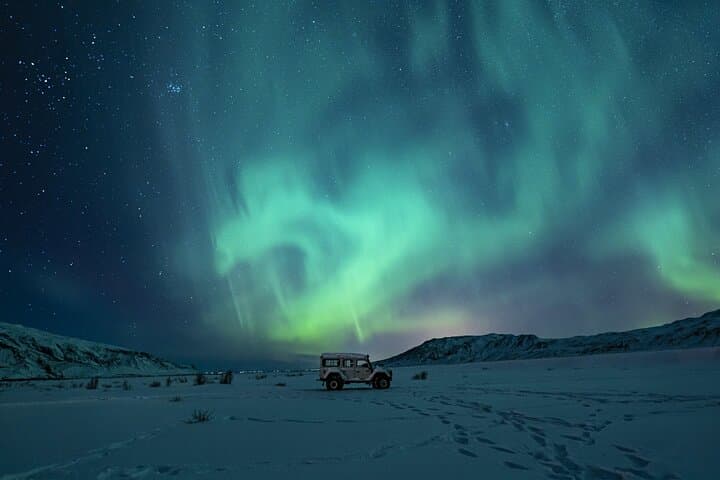
A cold bus eases out of Reykjavík under a navy sky and the city’s sodium lamps shrink behind you. The guide points to the horizon, checks aurora and cloud models on a tablet, and the group settles into quiet anticipation—hot chocolate in hand—while the road cuts across lava fields toward a chosen dark spot within roughly 90 minutes of the capital.
Verified experiences and guided adventures in the surrounding area.
Operated by EuroQuest Travel · Reykjavík, Capital Region
A cold bus eases out of Reykjavík under a navy sky and the city’s sodium lamps shrink behind you. The guide points to the horizon, checks aurora and cloud models on a tablet, and the group settles into quiet anticipation—hot chocolate in hand—while the road cuts across lava fields toward a chosen dark spot within roughly 90 minutes of the capital.
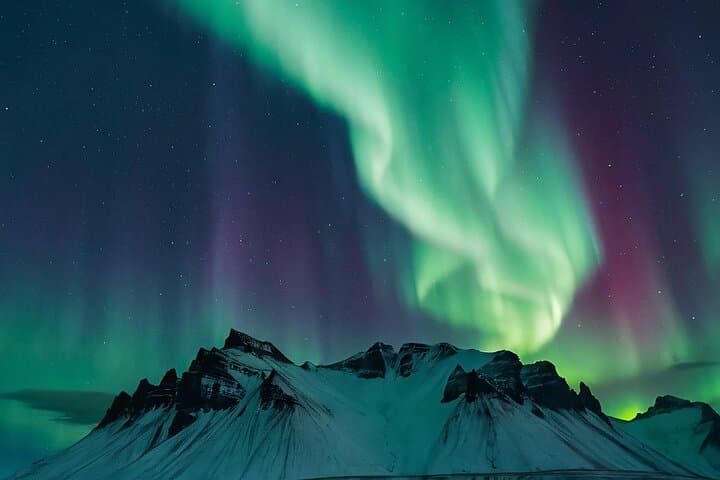
Iceland’s aurora spectacle is the product of solar particles colliding with the upper atmosphere; locally, the phenomenon has been woven into folklore for centuries, sometimes read as omens or the footsteps of old sagas. Geology shapes the viewing: black lava flows and low-lying coasts offer unbroken horizons, while coastal cliffs and promontories create dramatic foregrounds for photographs.
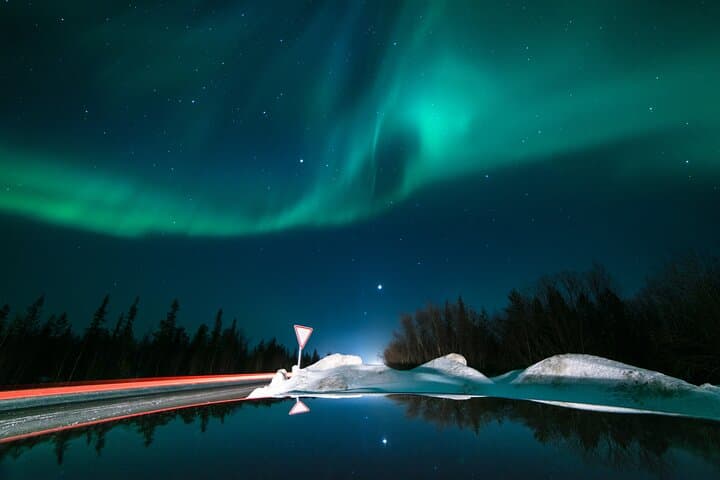
The experience is straightforward but dependent on weather: guides chase clear skies, scanning forecasts and moving when clouds close in. Patience is standard—expect stretches of waiting, punctuated by sudden eruptions of color that seem to dare you to aim your lens. Respect for the landscape matters: many prime spots are fragile peat or private land with nesting birds in season.
Practically, layers and a tripod make the night comfortable and productive; buses provide Wi‑Fi and a friendly commentary on aurora science and Icelandic lore. If conditions thwart your first attempt, the tour’s complimentary retry within three years gives realistic second-chance planning. For travelers based in Reykjavík, this is an accessible, low-commitment way to sleep under the auroral show without needing a rental car or advanced winter driving skills.
easy.
4 hours.
Suitable for almost any fitness level; mostly sitting on the bus with short standing periods outdoors
Chances depend on solar activity and local cloud cover; guides use forecasts to maximize odds and the tour offers a free retry within three years if you don’t see them.
Pickups are at central Reykjavík bus stops including Harpa and Höfðatorg; confirm the exact meeting point when booking.
The tour is family-friendly, but it’s not recommended for pregnant travelers due to cold waits; infants must sit on an adult’s lap.
Yes—guides typically advise on camera settings and composition; bringing a tripod and knowing basic manual exposure speeds yields the best results.
Aurora lore is woven into Icelandic sagas and folk belief; modern guides combine that cultural context with scientific explanation of solar-atmospheric interactions.
Minimize footprint on fragile volcanic soils and bird nesting sites by staying on established surfaces and following guide instructions; light pollution reduction in Reykjavík helps preserve viewing options.
EuroQuest Travel operates guided outdoor trips and adventures with an emphasis on safety, stewardship, and memorable experiences.

A cold bus eases out of Reykjavík under a navy sky and the city’s sodium lamps shrink behind you. The guide points to the horizon, checks aurora and cloud models on a tablet, and the group settles into quiet anticipation—hot chocolate in hand—while the road cuts across lava fields toward a chosen dark spot within roughly 90 minutes of the capital.
A cold bus eases out of Reykjavík under a navy sky and the city’s sodium lamps shrink behind you. The guide points to the horizon, checks aurora and cloud models on a tablet, and the group settles into quiet anticipation—hot chocolate in hand—while the road cuts across lava fields toward a chosen dark spot within roughly 90 minutes of the capital.
Iceland’s aurora spectacle is the product of solar particles colliding with the upper atmosphere; locally, the phenomenon has been woven into folklore for centuries, sometimes read as omens or the footsteps of old sagas. Geology shapes the viewing: black lava flows and low-lying coasts offer unbroken horizons, while coastal cliffs and promontories create dramatic foregrounds for photographs.
The experience is straightforward but dependent on weather: guides chase clear skies, scanning forecasts and moving when clouds close in. Patience is standard—expect stretches of waiting, punctuated by sudden eruptions of color that seem to dare you to aim your lens. Respect for the landscape matters: many prime spots are fragile peat or private land with nesting birds in season.
Practically, layers and a tripod make the night comfortable and productive; buses provide Wi‑Fi and a friendly commentary on aurora science and Icelandic lore. If conditions thwart your first attempt, the tour’s complimentary retry within three years gives realistic second-chance planning. For travelers based in Reykjavík, this is an accessible, low-commitment way to sleep under the auroral show without needing a rental car or advanced winter driving skills.