THE ADVENTURE COLLECTIVE® · Independent discovery and booking for outdoor travel

Experience Jinhae’s spring spectacle with a private, full‑day tour from Busan. Walk riverside blossom tunnels, climb to coastal viewpoints, and explore naval heritage with a local guide while avoiding the worst of the crowds.
Experience Jinhae’s spring spectacle with a private, full‑day tour from Busan. Walk riverside blossom tunnels, climb to coastal viewpoints, and explore naval heritage with a local guide while avoiding the worst of the crowds.
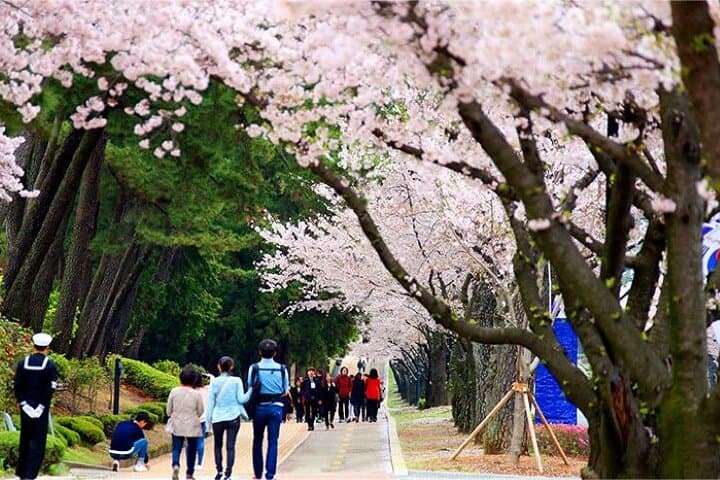
Morning light cuts across the tracks at Gyeonghwa Station, petals drifting like pale snow as a private minivan eases into Jinhae. For a full day the city rearranges itself around blossom corridors: narrow riverside paths, a nine‑kilometer Anmingogae ridge lined with trees, and the stepped ascent to Jehwangsan Tower that rewards the climb with a sea of pink and the curve of Jinhae Harbor.
Verified experiences and guided adventures in the surrounding area.
Operated by Frank Yi · Jinhae (Changwon), Gyeongsangnam-do
Morning light cuts across the tracks at Gyeonghwa Station, petals drifting like pale snow as a private minivan eases into Jinhae. For a full day the city rearranges itself around blossom corridors: narrow riverside paths, a nine‑kilometer Anmingogae ridge lined with trees, and the stepped ascent to Jehwangsan Tower that rewards the climb with a sea of pink and the curve of Jinhae Harbor.
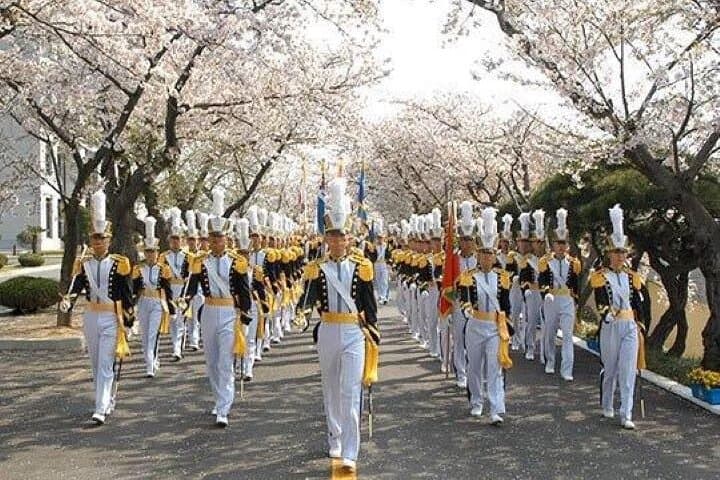
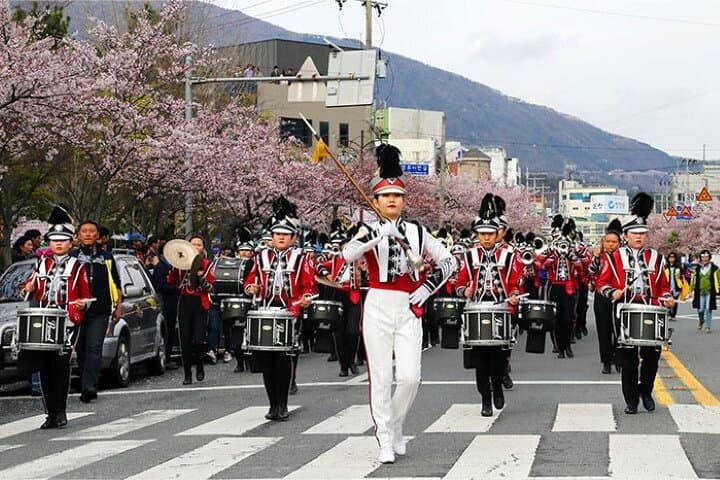
The festival traces its roots to naval memorial rites for Admiral Yi Sun‑sin; today Gunhangje blends military history with street food stalls and staged cultural performances. Geologically the land is low coastal plain and ridgeline—gentle climbs rather than alpine exertions—so expect paved roads, boardwalks, and short staircases rather than technical trails. Culturally, Jinhae blooms into a photo stage: Yeojwacheon Stream and Gyeonghwa Station became icons after Korean films and TV series used them as backdrops.
Practical guidance: this private tour runs 8–9 hours with multiple short walks (plan on 3–5 km of easy walking, intermittent stairs up to ~365 steps at Jehwangsan). Bring layers for coastal spring breezes, a light rain shell, and a power bank—phone cameras will be busy. Timing matters: early morning or late afternoon light reduces crowds and improves photos; weekends during the festival are dense.
Local insight pairs history and logistics—visit the Naval Academy displays when open, and favor quieter side streets near Jangboksan Sculpture Park for a breather. Respect crowd control ropes and local signage: the whole event relies on careful visitor flow to protect root systems and preserve tree health.
easy.
8–9 hours.
Suitable for most fitness levels; expect repeated short walks and some stair climbs, so be comfortable with intermittent exertion.
The festival typically peaks in early April; exact bloom timing varies by year and weather—book flexible tickets and watch forecasts for peak bloom windows.
The operator lists wheelchair and stroller‑accessible transportation; however, some riverside paths and station tracks can be crowded and have steps—check specific stop accessibility in advance.
Expect 3–5 km of mostly flat, paved walking and up to 365 steps at Jehwangsan Tower; the tour is described as physically easy but involves intermittent stair sections.
Lunch is typically not included—most itineraries allow a stop at food stalls or local restaurants; advise any dietary requirements when booking so the guide can plan stops accordingly.
The Gunhangje festival began as a naval memorial commemorating Admiral Yi Sun‑sin and evolved into a spring cultural event celebrating the region’s maritime heritage.
Heavy festival crowds stress root zones and public spaces; follow designated paths, avoid stepping on tree roots, and carry out trash to help protect the cherry trees for future seasons.
Frank Yi operates guided outdoor trips and adventures with an emphasis on safety, stewardship, and memorable experiences.
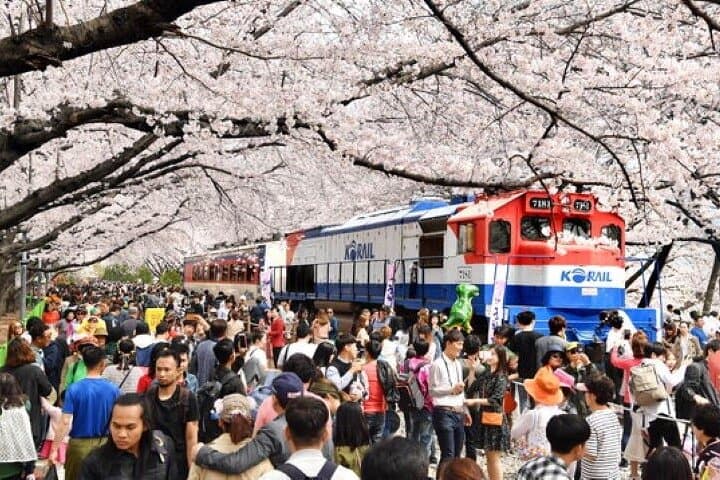
Morning light cuts across the tracks at Gyeonghwa Station, petals drifting like pale snow as a private minivan eases into Jinhae. For a full day the city rearranges itself around blossom corridors: narrow riverside paths, a nine‑kilometer Anmingogae ridge lined with trees, and the stepped ascent to Jehwangsan Tower that rewards the climb with a sea of pink and the curve of Jinhae Harbor.
Morning light cuts across the tracks at Gyeonghwa Station, petals drifting like pale snow as a private minivan eases into Jinhae. For a full day the city rearranges itself around blossom corridors: narrow riverside paths, a nine‑kilometer Anmingogae ridge lined with trees, and the stepped ascent to Jehwangsan Tower that rewards the climb with a sea of pink and the curve of Jinhae Harbor.
The festival traces its roots to naval memorial rites for Admiral Yi Sun‑sin; today Gunhangje blends military history with street food stalls and staged cultural performances. Geologically the land is low coastal plain and ridgeline—gentle climbs rather than alpine exertions—so expect paved roads, boardwalks, and short staircases rather than technical trails. Culturally, Jinhae blooms into a photo stage: Yeojwacheon Stream and Gyeonghwa Station became icons after Korean films and TV series used them as backdrops.
Practical guidance: this private tour runs 8–9 hours with multiple short walks (plan on 3–5 km of easy walking, intermittent stairs up to ~365 steps at Jehwangsan). Bring layers for coastal spring breezes, a light rain shell, and a power bank—phone cameras will be busy. Timing matters: early morning or late afternoon light reduces crowds and improves photos; weekends during the festival are dense.
Local insight pairs history and logistics—visit the Naval Academy displays when open, and favor quieter side streets near Jangboksan Sculpture Park for a breather. Respect crowd control ropes and local signage: the whole event relies on careful visitor flow to protect root systems and preserve tree health.