THE ADVENTURE COLLECTIVE® · Independent discovery and booking for outdoor travel

Head south before dawn for an eight‑hour marine day trip from Colombo or Negombo to Mirissa, where deep offshore waters bring blue whales within viewing range. This practical guide explains what to expect, how to prepare and when sightings are most reliable.
Head south before dawn for an eight‑hour marine day trip from Colombo or Negombo to Mirissa, where deep offshore waters bring blue whales within viewing range. This practical guide explains what to expect, how to prepare and when sightings are most reliable.
Before sunrise the coastline slides past as the van winds south; by the time the boat casts off in Mirissa the horizon is a pale band and the open ocean begins to breathe. Out here the water has a voice — a low, rolling presence that announces something far larger beneath the surface.
Verified experiences and guided adventures in the surrounding area.
Operated by vishwa colombo tours · Mirissa, Southern Province
Before sunrise the coastline slides past as the van winds south; by the time the boat casts off in Mirissa the horizon is a pale band and the open ocean begins to breathe. Out here the water has a voice — a low, rolling presence that announces something far larger beneath the surface.
The southern tip of Sri Lanka sits where deep oceanic trenches come unusually close to shore, and that geology funnels food-rich currents past Mirissa. Local fishing culture has long read the patterns of these seas — today small fleets and tourism operators use similar knowledge to find blue, sperm and fin whales. Mirissa itself grew from a working bay into a small visitor hub, but the town still carries the cadence of early-morning nets and coconut trade.
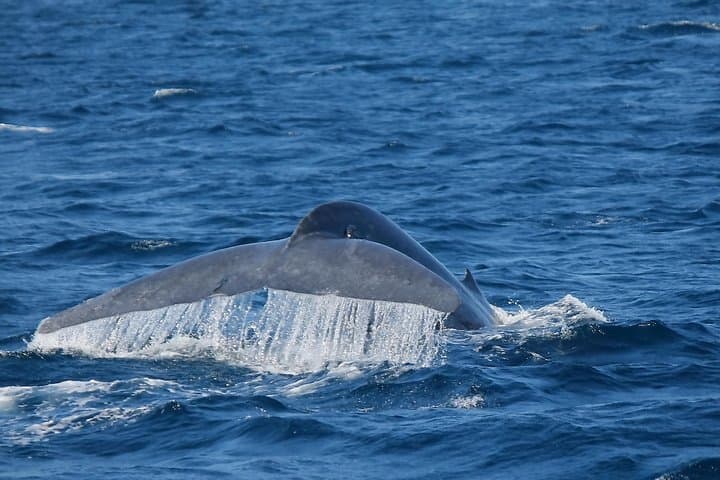
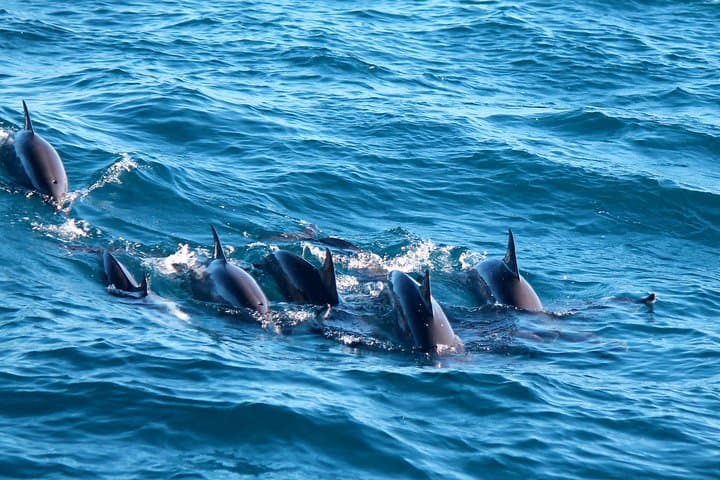
Expect an early pickup from Colombo or Negombo (operators often collect around 2–3am) and a long day on the water — the tour runs roughly eight hours round-trip. Sightings commonly include blue whales and sperm whales; dolphins and sea turtles appear frequently. Operators should follow Sri Lanka’s whale-watching guidelines: keep distance, limit approach time and minimize engine noise.
Practical tips: dress in layers for the chilly morning boat run, bring reef-safe sunscreen, a telephoto lens or binoculars, and seasickness medication if you’re sensitive. Carry cash for small local purchases and a tip for the crew. Weather and sea state determine success — the calm months from November to April are the most reliable for sightings. With the right planning, a Mirissa day trip is straightforward, dramatic and deeply marine in character.
easy.
8 hours.
Suitable for most fitness levels; requires ability to board a small boat and stand for observation periods.
No—sightings are common in the season (November–April) but not guaranteed; weather and sea state affect success.
Expect about an eight‑hour excursion including early-morning transfer, several hours on the water, and return to pickup point.
Yes—most operators accept children and non-swimmers, though minors must be accompanied by an adult and life jackets are provided.
Blue whales and sperm whales are commonly observed; fin whales, dolphins and sea turtles are also possible.
Mirissa developed as a fishing harbor; increased whale tourism began in the late 20th century as operators learned seasonal whale movements off the southern continental shelf.
Operators should follow Sri Lanka’s whale‑watching codes—maintain distance, limit approach and prioritize animal welfare to reduce disturbance.
vishwa colombo tours operates guided outdoor trips and adventures with an emphasis on safety, stewardship, and memorable experiences.
Before sunrise the coastline slides past as the van winds south; by the time the boat casts off in Mirissa the horizon is a pale band and the open ocean begins to breathe. Out here the water has a voice — a low, rolling presence that announces something far larger beneath the surface.
Before sunrise the coastline slides past as the van winds south; by the time the boat casts off in Mirissa the horizon is a pale band and the open ocean begins to breathe. Out here the water has a voice — a low, rolling presence that announces something far larger beneath the surface.
The southern tip of Sri Lanka sits where deep oceanic trenches come unusually close to shore, and that geology funnels food-rich currents past Mirissa. Local fishing culture has long read the patterns of these seas — today small fleets and tourism operators use similar knowledge to find blue, sperm and fin whales. Mirissa itself grew from a working bay into a small visitor hub, but the town still carries the cadence of early-morning nets and coconut trade.
Expect an early pickup from Colombo or Negombo (operators often collect around 2–3am) and a long day on the water — the tour runs roughly eight hours round-trip. Sightings commonly include blue whales and sperm whales; dolphins and sea turtles appear frequently. Operators should follow Sri Lanka’s whale-watching guidelines: keep distance, limit approach time and minimize engine noise.
Practical tips: dress in layers for the chilly morning boat run, bring reef-safe sunscreen, a telephoto lens or binoculars, and seasickness medication if you’re sensitive. Carry cash for small local purchases and a tip for the crew. Weather and sea state determine success — the calm months from November to April are the most reliable for sightings. With the right planning, a Mirissa day trip is straightforward, dramatic and deeply marine in character.