THE ADVENTURE COLLECTIVE® · Independent discovery and booking for outdoor travel

Hit the road from Reykjavik on a private, photographer-led chase for the Aurora Borealis. Sip hot chocolate, get hands-on camera help, and stake out dark skies where the lights can show their best moves.
Hit the road from Reykjavik on a private, photographer-led chase for the Aurora Borealis. Sip hot chocolate, get hands-on camera help, and stake out dark skies where the lights can show their best moves.
The bus slips out of Reykjavik and the city lights shrink behind you; the air sharpens and the night widens. Wrapped in a fleece blanket with a cup of homemade hot chocolate, you step onto black sand or a frosted field while guides sweep the sky for ribbons of green. The aurora doesn’t perform on command, but when it moves it pushes the night forward like an impatient tide—and your photographer-guide times exposures and frames faces against streaks of light.
Verified experiences and guided adventures in the surrounding area.
Operated by Unreal Iceland · Reykjavik, Capital Region
The bus slips out of Reykjavik and the city lights shrink behind you; the air sharpens and the night widens. Wrapped in a fleece blanket with a cup of homemade hot chocolate, you step onto black sand or a frosted field while guides sweep the sky for ribbons of green. The aurora doesn’t perform on command, but when it moves it pushes the night forward like an impatient tide—and your photographer-guide times exposures and frames faces against streaks of light.
Iceland sits on the Mid-Atlantic Ridge, where geology keeps the sky dramatic and the horizon low—ideal for aurora viewing. Norse tales once read the lights as Valkyries’ armor or village omens; today locals treat the spectacle with quieter reverence. The tour favors remote spots to minimize light pollution and maximize sky coverage; camera-savvy guides help with long exposures and composition while sharing local stories and meteorological basics.
Practically, this is a four-hour private outing: roughly two hours of dedicated viewing and photography plus transit. Expect a short walk over beach, pasture, or roadside pullouts—flat terrain but cold, windy nights. Dress in insulated layers, bring a tripod and spare batteries, and be prepared for sudden weather shifts; the guides will adjust the route to chase clear pockets.
Best windows are clear, dark nights from late autumn through early spring; summer’s midnight sun rules auroras out. Because sightings depend on solar activity, no operator can guarantee displays; the experience, however, delivers expert framing, warm refreshments, and high-resolution photos if the skies cooperate.
easy.
4 hours.
Suitable for people of most fitness levels; involves short, easy walks and standing outdoors in cold conditions.
The tour is approximately 4 hours total, with about 2 hours allocated at the chosen dark-sky locations for viewing and photography.
Yes—if the aurora appears, the photographer-guide will take high-resolution photos of you and the lights and provide digital copies.
Yes—this tour is suitable for all ages; infant seats are available, but consider short children’s tolerance for cold night conditions.
Tours may be canceled for bad weather with full refunds if canceled at least 24 hours prior; operators often attempt alternate locations during the outing but cannot guarantee aurora visibility.
Icelanders long told stories about the northern lights in folklore—earlier generations linked the phenomenon with Norse myth and local omens.
Tour operators prioritize low-light locations to reduce light pollution and ask visitors to follow leave-no-trace principles to protect fragile tundra and coastal habitats.
Unreal Iceland operates guided outdoor trips and adventures with an emphasis on safety, stewardship, and memorable experiences.
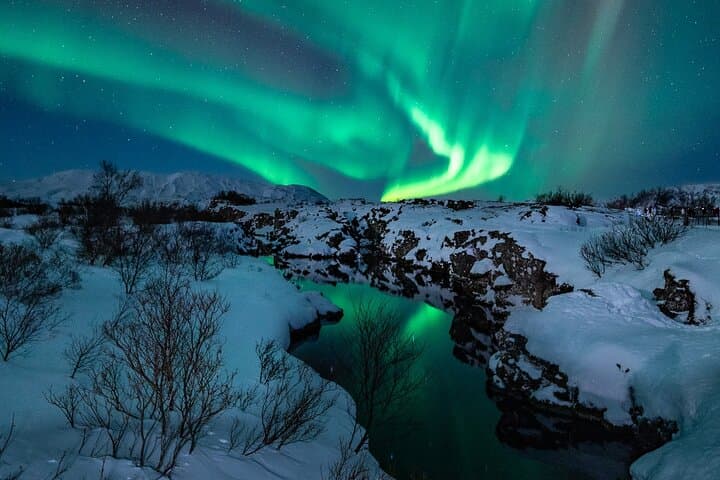
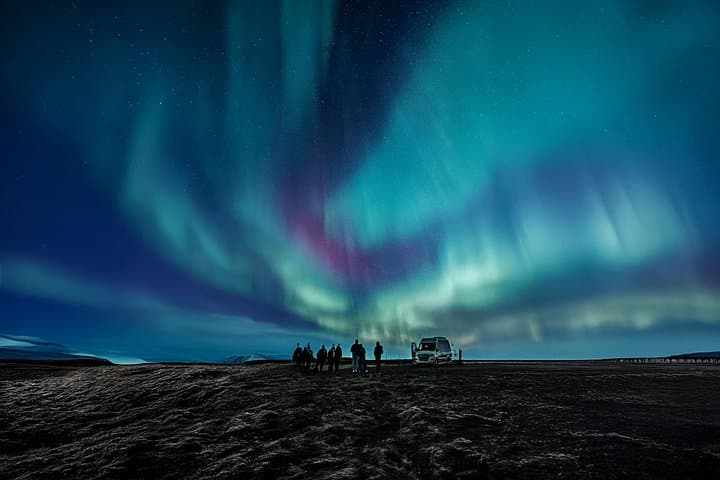
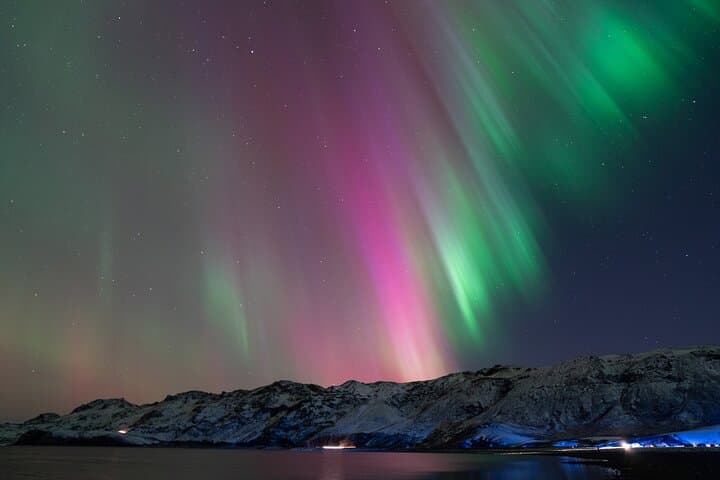
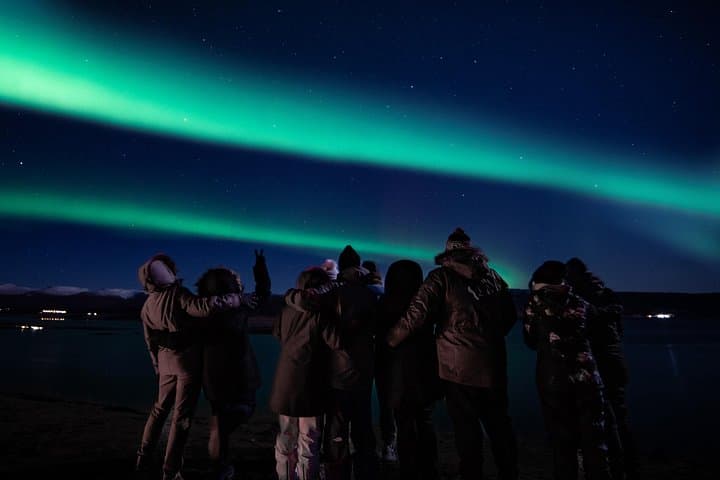
The bus slips out of Reykjavik and the city lights shrink behind you; the air sharpens and the night widens. Wrapped in a fleece blanket with a cup of homemade hot chocolate, you step onto black sand or a frosted field while guides sweep the sky for ribbons of green. The aurora doesn’t perform on command, but when it moves it pushes the night forward like an impatient tide—and your photographer-guide times exposures and frames faces against streaks of light.
The bus slips out of Reykjavik and the city lights shrink behind you; the air sharpens and the night widens. Wrapped in a fleece blanket with a cup of homemade hot chocolate, you step onto black sand or a frosted field while guides sweep the sky for ribbons of green. The aurora doesn’t perform on command, but when it moves it pushes the night forward like an impatient tide—and your photographer-guide times exposures and frames faces against streaks of light.
Iceland sits on the Mid-Atlantic Ridge, where geology keeps the sky dramatic and the horizon low—ideal for aurora viewing. Norse tales once read the lights as Valkyries’ armor or village omens; today locals treat the spectacle with quieter reverence. The tour favors remote spots to minimize light pollution and maximize sky coverage; camera-savvy guides help with long exposures and composition while sharing local stories and meteorological basics.
Practically, this is a four-hour private outing: roughly two hours of dedicated viewing and photography plus transit. Expect a short walk over beach, pasture, or roadside pullouts—flat terrain but cold, windy nights. Dress in insulated layers, bring a tripod and spare batteries, and be prepared for sudden weather shifts; the guides will adjust the route to chase clear pockets.
Best windows are clear, dark nights from late autumn through early spring; summer’s midnight sun rules auroras out. Because sightings depend on solar activity, no operator can guarantee displays; the experience, however, delivers expert framing, warm refreshments, and high-resolution photos if the skies cooperate.