THE ADVENTURE COLLECTIVE® · Independent discovery and booking for outdoor travel

Head north of Kiruna in a small minivan with local guides who chase clear skies and aurora forecasts—driving up to 125 km into the Arctic night. This four-hour tour balances comfort, local insight, and multiple photo stops in areas such as Abisko National Park.
Head north of Kiruna in a small minivan with local guides who chase clear skies and aurora forecasts—driving up to 125 km into the Arctic night. This four-hour tour balances comfort, local insight, and multiple photo stops in areas such as Abisko National Park.
Night in Kiruna is a living compass: the sky is wide, the air clean and thin, and the aurora waits like a reluctant performer just beyond the town lights.
Verified experiences and guided adventures in the surrounding area.
Operated by Kiruna Guidetur AB · Kiruna, Norrbotten
Night in Kiruna is a living compass: the sky is wide, the air clean and thin, and the aurora waits like a reluctant performer just beyond the town lights.
On this guided minivan chase, experienced guides read forecasts and local microclimates, and will drive up to 125 km from Kiruna to find clear, dark skies—often steering toward the Abisko National Park corridor where conditions frequently favor visibility. The region sits on the ancient Fennoscandian Shield; geology here is dominated by hard bedrock carved by ice, with broad lakes and tundra that let the sky dominate the scene.
Kiruna’s history is shaped by iron ore mining and Sami reindeer culture; guides typically respect seasonal herding routes and explain local customs as part of the tour. Expect small-group dynamics, hot coffee or tea included, and frequent stops so photographers can frame the aurora over lakes or pine-fringed ridgelines.
Practically: tours run about four hours, from early evening into deep night. Dress for Arctic winter conditions—temperatures can drop well below freezing—bring spare camera batteries, and a sturdy tripod for long exposures. Guides will choose routes based on cloud cover and geomagnetic activity, but sightings are never guaranteed; cancellations occur in poor weather.
This is an entry-level way to aurora-spot without backcountry travel: minimal fitness required, mobility-friendly stops, and an emphasis on timing, patient watching, and basic cold-weather preparedness. For travelers wanting to maximize odds, plan multiple nights and keep evenings flexible.
easy.
4 hours.
Minimal fitness required; participants should be able to board a minivan and stand for short photo stops.
Guides may drive up to 125 km from Kiruna to find clearer skies; exact locations depend on cloud cover and aurora forecasts.
No—sightings depend on solar activity and weather; guides maximize odds but cannot guarantee displays; tours may be canceled for poor weather.
Yes—hot coffee or tea is provided during the tour to help you stay warm between photo stops.
Yes—small van transport, short stops, and stroller access are noted; inform the operator of special requirements when booking.
Kiruna grew around iron mining in the late 19th century and sits in traditional Sami territory; modern tours often reference both mining history and reindeer herding practices.
Tour operators emphasize dark-sky etiquette and minimizing disturbance to reindeer herding areas; keep to roads and avoid off-trail light pollution.
Kiruna Guidetur AB operates guided outdoor trips and adventures with an emphasis on safety, stewardship, and memorable experiences.
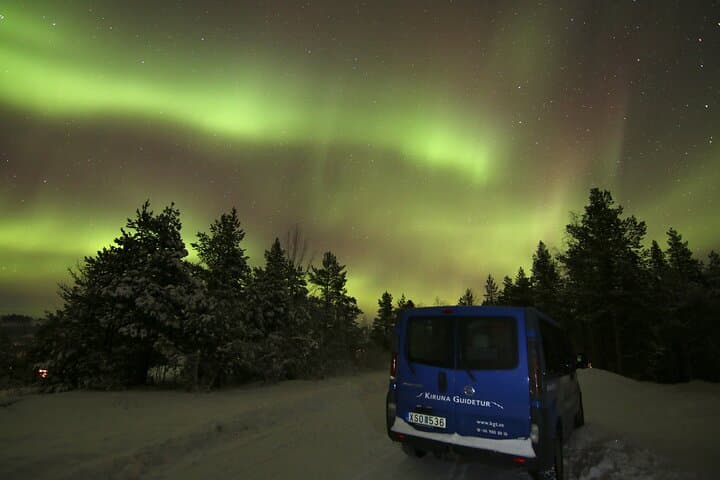
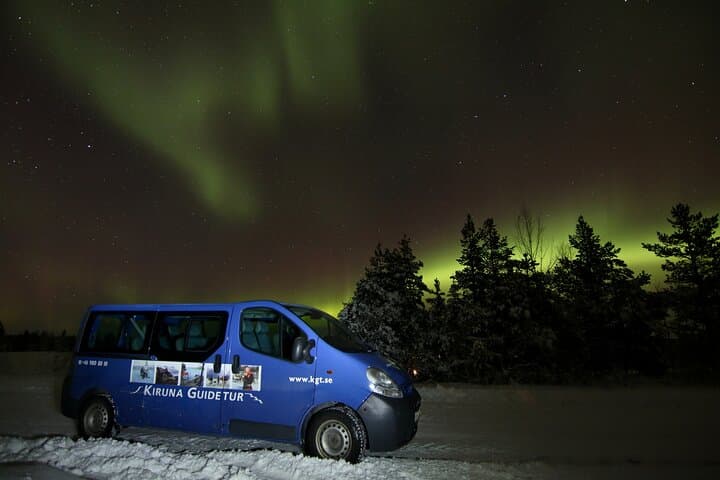
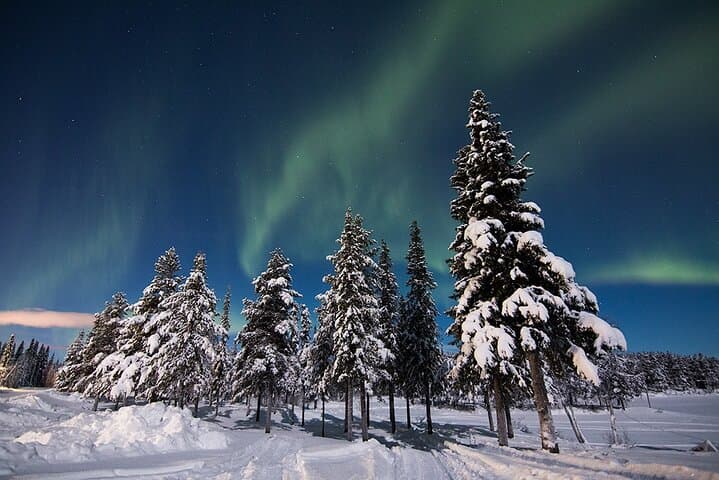
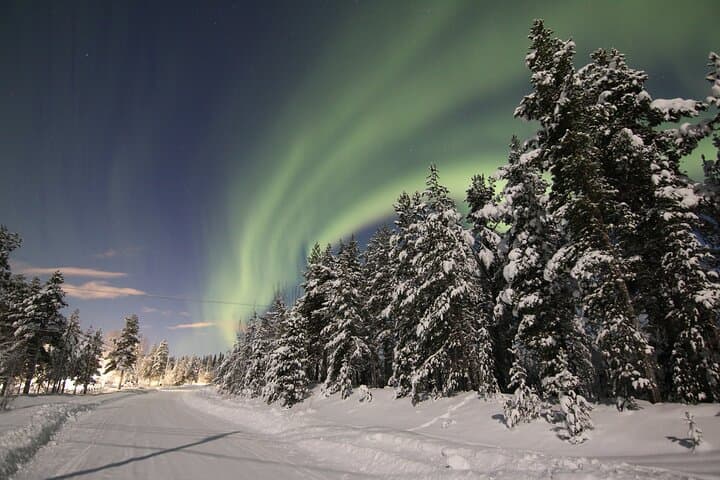
Night in Kiruna is a living compass: the sky is wide, the air clean and thin, and the aurora waits like a reluctant performer just beyond the town lights.
Night in Kiruna is a living compass: the sky is wide, the air clean and thin, and the aurora waits like a reluctant performer just beyond the town lights.
On this guided minivan chase, experienced guides read forecasts and local microclimates, and will drive up to 125 km from Kiruna to find clear, dark skies—often steering toward the Abisko National Park corridor where conditions frequently favor visibility. The region sits on the ancient Fennoscandian Shield; geology here is dominated by hard bedrock carved by ice, with broad lakes and tundra that let the sky dominate the scene.
Kiruna’s history is shaped by iron ore mining and Sami reindeer culture; guides typically respect seasonal herding routes and explain local customs as part of the tour. Expect small-group dynamics, hot coffee or tea included, and frequent stops so photographers can frame the aurora over lakes or pine-fringed ridgelines.
Practically: tours run about four hours, from early evening into deep night. Dress for Arctic winter conditions—temperatures can drop well below freezing—bring spare camera batteries, and a sturdy tripod for long exposures. Guides will choose routes based on cloud cover and geomagnetic activity, but sightings are never guaranteed; cancellations occur in poor weather.
This is an entry-level way to aurora-spot without backcountry travel: minimal fitness required, mobility-friendly stops, and an emphasis on timing, patient watching, and basic cold-weather preparedness. For travelers wanting to maximize odds, plan multiple nights and keep evenings flexible.